
Reviewed · SELF-GUIDED TOURS IN LONDON
London Charles Dickens Puzzle Questo and Self-Guided Tour
Dickens turns London into a puzzle. This self-guided Questo game links the author’s home, old inns, churches, theaters, libraries, and literary landmarks in central London. You use your phone to solve clues, then follow the answer to the next stop. I like the freedom to begin at any hour and pause for a pub stop, coffee, or lunch. I also like the price: at $8.33 per person, it costs far less than most guided city walks.
The main trade-off is simple: there is no human guide. You need to read the clues, look closely at your surroundings, and keep the game moving yourself. That makes the experience private and flexible, but it also means you will not have someone on hand to explain a detail or rescue you if a clue feels confusing.
In This Review
- Key points to know before you book
- Starting with Dickens at 47 Doughty Street
- Vine Street and the changing city around Piccadilly
- The pub that became the Three Cripples
- Staple Inn and layers of London’s past
- The lost theater at Lincoln’s Inn Fields
- The Maughan Library and a later chapter of learning
- Dr Johnson’s House and London’s literary company
- Ye Olde Cheshire Cheese after the Great Fire
- The church consecrated in 1863
- The Royal College of Surgeons and professional London
- St Dunstan-in-the-West and the Romanian Orthodox chapel
- How the puzzle format works in practice
- Price, pace, and practical value
- Who should book this Dickens route?
- FAQ
- How much does the London Charles Dickens Puzzle Questo cost?
- How long does the experience take?
- Where does the puzzle begin?
- Where does the route end?
- Is a physical tour guide included?
- Can I pause the game and continue later?
- Do I need an internet connection to play?
- Should you book it?
Key points to know before you book
- Start at Charles Dickens’s former home: The game begins at 47 Doughty Street, beside the Charles Dickens Museum.
- Follow a literary route through central London: Stops include Staple Inn, Dr Johnson’s House, Ye Olde Cheshire Cheese, and Fleet Street.
- Solve clues at every location: You must inspect each place to find the answer that reveals the next stop.
- Pause whenever you want: The game can be started, stopped, and resumed at your own pace.
- Play without mobile data: The experience works offline after you have what you need on your phone.
- Expect a private, low-contact outing: Only your group takes part, with no physical guide and no shared tour group.
Starting with Dickens at 47 Doughty Street
The opening stop is the Charles Dickens Museum at 48 Doughty Street, while the stated meeting point is 47 Doughty Street. This is a useful detail to note, since you should check the exact starting pin before setting off.
Dickens lived in this Georgian terraced house from March 1837 until December 1839. He moved there about a year after his marriage, during a crucial period in his writing life. The house gives the game a strong opening because you are not beginning with a general city square. You are beginning at a place tied directly to Dickens himself.
The challenge asks you to look around and find the answer that sends you onward. That format changes the way you see the building. Instead of simply taking a quick photo and moving on, you need to pay attention to signs, architectural details, and the surrounding street.
The museum itself is named as a stop, but the experience does not include a physical guide or state that admission is included. I would treat this as an outdoor puzzle route unless you have separately arranged museum entry. If you want to visit the interiors, confirm the museum’s admission details before booking.
More Self-Guided Tours in London
- Westminster Abbey Entrance Ticket Including Audio Guide
★ 4.0 · 661 reviews - Windsor Castle Tour from London with Transportation & Audio Guide
★ 3.5 · 222 reviews - London Panoramic Open Top Bus Tour with Audio Guide
★ 4.0 · 209 reviews
Vine Street and the changing city around Piccadilly
The next historical reference takes you to Vine Street, a street first laid out around 1686. Older maps show it running from Piccadilly toward Warwick Street, with a brewery and a carpenter’s yard among its main properties in 1720.
This stop helps show how quickly London’s streets change. A modern street can look polished and ordinary, yet the puzzle asks you to think back to a time when breweries, workshops, and older passages shaped the area. The reference to Man in the Moon Passage adds another layer, giving you a specific feature to seek out rather than asking you to wander without purpose.
This is one of the better reasons to choose a puzzle instead of a standard walk. You are given a small historical question, then encouraged to inspect the street for yourself. The information is not delivered as a long speech. You earn it by paying attention.
The pub that became the Three Cripples
One stop is a stylish inn dating to 1759. Its Dickens connection comes from 1838, when he changed its name to the Three Cripples in Oliver Twist and made it Bill Sykes’s favored drinking place.
This is the sort of literary link that can be easy to miss on an ordinary day in London. The building is not simply an old inn. It also connects a real place with one of Dickens’s most memorable fictional characters.
The game’s pub references also make a pause feel natural. One participant completed the route on a sunny day and stopped at several pubs along the way, enjoying the relaxed pace and quiet atmosphere around the City. You can do the same, but remember that each long break makes the one-hour estimate less useful.
Staple Inn and layers of London’s past
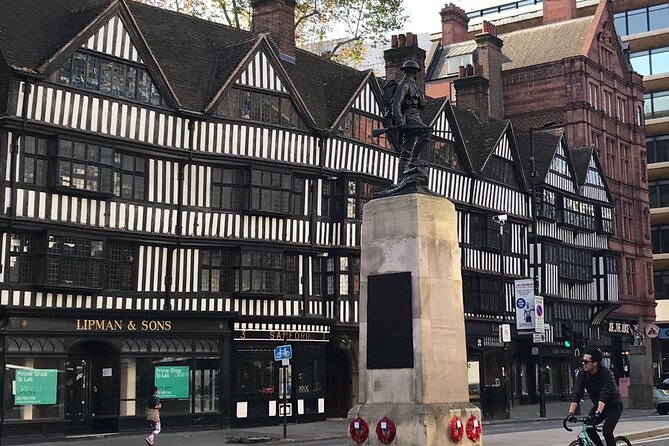
Staple Inn dates from 1585 and began as a wool staple, where wool was weighed and taxed. It survived the Great Fire of London in 1666, then suffered major damage from a Luftwaffe bomb in 1944 before being restored.
This single stop covers several periods of London’s story: Tudor commerce, the Great Fire, wartime destruction, and restoration. It is also a good example of why you should not rush from clue to clue. Look up, inspect the timbered frontage, and consider how many different versions of London have occupied the same ground.
The drawback is that a self-guided puzzle gives you only as much context as you choose to absorb. If you already enjoy reading plaques and checking details, you will get more from this stop. If you prefer a guide to explain the story in person, the route may feel too quiet.
A completely different sort of day out:
- Stonehenge, Windsor Castle, and Bath from London
★ 4.5 · 18,662 reviews - London Big Bus Hop-On Hop-Off Tour with Optional River Cruise
★ 3.5 · 10,803 reviews - London Small Group Tour of Historical Pubs
★ 5.0 · 10,422 reviews - Stonehenge, Windsor Castle and Bath with Pub Lunch in Lacock
★ 4.5 · 7,402 reviews
The lost theater at Lincoln’s Inn Fields
Lincoln’s Inn Fields once held a theater that operated from 1661 until 1848. Originally called the Duke’s Theatre, it was created by converting Lisle’s Tennis Court in 1695.
The theater is gone, but its absence is the point. This stop asks you to imagine a place that once drew crowds but no longer looks like a theater district. The puzzle format works well here because the clue gives you a reason to connect the present-day setting with its vanished past.
I would not book this experience expecting every stop to offer a visible Dickens building. Some locations are connected to the author, while others open a wider view of the literary and urban world around him. Lincoln’s Inn Fields fits that second group.
The Maughan Library and a later chapter of learning
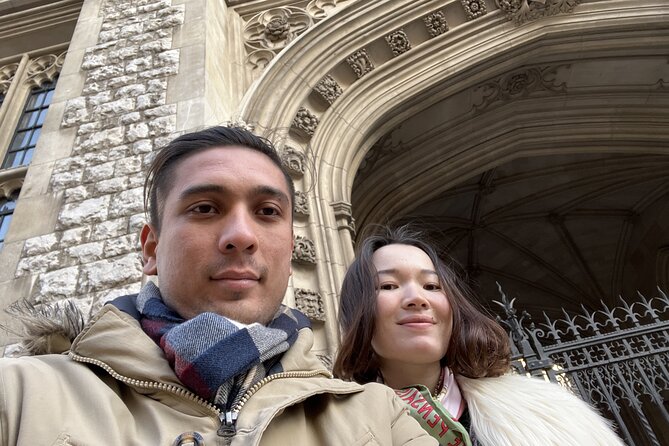
The Maughan Library occupies a Grade II listed building designed by Sir James Pennethorne and built in 1851. Extensions followed between 1868 and 1900, and a £35 million renovation made it the largest new university library in the United Kingdom since World War II.
This is a striking change of mood from Dickens’s home and the older pub references. The building connects the route to education, books, and the preservation of knowledge. Its scale also gives the game a visual pause amid the tighter streets of central London.
The details here are especially useful for anyone who likes architecture. You can look beyond Dickens and notice how London reused older civic buildings for modern purposes. Since the tour is played on foot and without a guide, allow yourself time to look carefully instead of treating the library only as an answer station.
Dr Johnson’s House and London’s literary company
Dr Johnson’s House was probably built for a City merchant. Samuel Johnson rented it from 1748 to 1759, and he remains its most famous resident.
Dickens is not the only writer shaping this route. Dr Johnson’s connection gives you a second major literary figure and places Dickens within a much older London tradition of writers, editors, and word makers. The route becomes less about one author’s biography and more about the city that supported generations of literary work.
The stop also offers a useful contrast with the Charles Dickens Museum. Dickens lived in a family home during a rising stage of his career, while Johnson’s house recalls an earlier intellectual world. You may find the clue easier if you slow down and search the building and its immediate surroundings rather than relying only on your phone.
Ye Olde Cheshire Cheese after the Great Fire
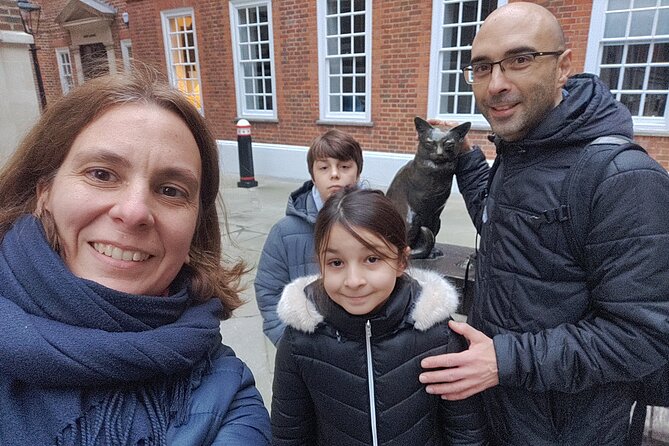
Ye Olde Cheshire Cheese was originally built in the 1530s, but that pub was destroyed in the Great Fire of London. The present building dates from 1667 and was among the first London buildings reconstructed after the fire.
This stop is likely to be one of the route’s most atmospheric. It combines a functioning pub with a clear date, a major city disaster, and a building that survived by being rebuilt. It also fits the relaxed character of the game. You can stop for a drink or simply look at the exterior before solving the next challenge.
The pub stop may be less rewarding if you want every location to be tightly tied to Dickens. It is better understood as part of the London setting behind his stories. Dickens wrote about streets, businesses, poverty, social class, and city life. A pub with centuries of rebuilding helps put that urban setting in view.
The church consecrated in 1863
Another stop is a church consecrated on April 16, 1863, as the Church of St Peter of All Nations. At the time, it was the only basilica-style church in the United Kingdom. Its organ was built in 1886 by the Belgian maker Anneesen.
The church also carries a wartime connection. During World War II, when Italian immigrants were interned, Irish Pallottines used the church. That detail gives the stop a human dimension beyond its architecture and date.
As with the other religious buildings, be respectful if you are solving the clue near an active place of worship. The provided information does not promise interior access, so do not assume you can enter at any hour simply because the digital game is available around the clock.
The Royal College of Surgeons and professional London
The Royal College of Surgeons traces its early origins to the 1540s, when the Company of Barbers and the Fellowship of Surgeons joined to form the Company of Barber-Surgeons. By the 1700s, medicine had become an academic discipline, and surgeons pushed for greater recognition of their expertise.
This stop widens the route again. You are no longer looking only at writers and pubs. You are seeing how London’s professional institutions developed and how skilled trades sought academic status.
It also gives the tour a practical rhythm. The route moves among homes, streets, inns, churches, libraries, and institutions instead of repeating one type of sight. If you enjoy city walks that mix architecture with social history, this variety is a strong point.
St Dunstan-in-the-West and the Romanian Orthodox chapel
The final stop is St Dunstan-in-the-West, which shares its building with the Romanian Orthodox community at St George Church. The chapel beside the main altar is closed by an iconostasis that came from Antim Monastery in Bucharest and was dedicated in 1966.
This is a particularly distinctive ending because it connects London with Romanian religious life. The building is not presented as a single, unchanging institution. It has been adapted and shared by different communities, giving you one last reminder that central London’s identity has always shifted.
The tour ends at 145 Fleet Street, London EC4A 2BU. Fleet Street is a fitting place to finish a route focused on writing, publishing, and the city’s literary past, even though the supplied information does not promise a final Dickens attraction at the endpoint.
How the puzzle format works in practice
At each location, you look around for the answer to a challenge. Enter the correct answer to advance to the next stop and learn the story connected with that place.
The clues are designed to be neither impossibly hard nor automatic. One person described the balance as just right and especially enjoyed searching for the Man in Black*. That detail suggests the game rewards close observation without turning into an exhausting scavenger hunt.
I like this format for pairs, families with older children, and small private groups. You can discuss the clue together, split up briefly to inspect details, and move on when everyone agrees. Since only your group participates, you do not need to match the pace of strangers.
The route is also designed for full flexibility. It is available every day, around the clock, and you can start at any hour, pause at any point, then resume later. The game can be played offline, so it is useful if you want to avoid relying on a constant data connection.
Price, pace, and practical value
At $8.33 per person, this is a low-cost way to spend roughly an hour exploring central London. The value is strongest if you want a framework for walking rather than a long lecture or a formal attraction with timed admission.
The one-hour estimate should be treated as a basic playing time. You will need extra time if you stop at pubs, enter any attraction independently, take photos, or read more about the buildings. The route may also feel longer if you pause often to solve a difficult clue.
A mobile ticket is included, and confirmation arrives at booking. The activity is offered in English. It is near public transportation, service animals are allowed, and most people can take part. It is also a private activity, so only your own group participates.
Free cancellation is available up to 24 hours before the start time. Cancellations made within 24 hours are not refunded, and changes inside that period are not accepted. The stated price and advance booking pattern suggest that many people reserve well ahead, with bookings averaging 25 days before the experience.
Who should book this Dickens route?
I would choose it if you like self-guided walks, small historical puzzles, and the freedom to stop whenever you wish. It is also a good pick for a budget-conscious visitor who wants to see several central London locations without paying for a private guide.
It suits people who enjoy mixed subject matter. Dickens is the thread, but the route also includes Samuel Johnson, old trades, wartime damage, religious communities, medical institutions, theater history, and historic pubs.
I would think twice if you want a detailed lecture about Dickens’s books or a guide who can answer questions on the spot. The game gives you prompts and place-based stories, but you must supply your own curiosity and pace.
FAQ
How much does the London Charles Dickens Puzzle Questo cost?
The listed price is $8.33 per person. Group discounts are available.
How long does the experience take?
The estimated playing time is about one hour. You can make it longer by taking breaks, stopping at pubs, or spending extra time at the locations.
Where does the puzzle begin?
The stated start point is 47 Doughty Street, London WC1N 2LW, near the Charles Dickens Museum at 48 Doughty Street.
Where does the route end?
The experience ends at 145 Fleet Street, London EC4A 2BU.
Is a physical tour guide included?
No. This is a self-guided experience played on your mobile device, with no physical guide.
Can I pause the game and continue later?
Yes. You can start at any hour, take a break whenever you wish, and resume later. The experience is available every day from midnight to 11:59 p.m.
Do I need an internet connection to play?
No. The game can be played offline, so you do not need a continuous internet connection.
Should you book it?
Book this puzzle if flexibility, price, and independent exploration matter most to you. For $8.33, you get a private route through a useful mix of Dickens sites and central London landmarks, with clues that encourage you to look around instead of simply following a guide.
Skip it if you want museum entry, a fully narrated history walk, or expert commentary at every stop. For everyone else, especially couples, families, and small groups who enjoy a little friendly problem-solving, this is a smart way to turn a literary walk through London into an active afternoon.
Just added in London
- Private Tour: Royal High Tea At Kensington Palace Gardens★ 5.0 · 39 reviews
- Private Tour: Personal Travel Photographer Tour in London★ 4.5 · 27 reviews
- London East End Private Walking Food Tour – Secret Food Tours★ 5.0 · 26 reviews
- Private Tour: Night Photography Tour in London★ 5.0 · 48 reviews
- London Like a Local, Private & Personalized (2-3 hrs)★ 4.5 · 11 reviews
- British Museum & National Gallery of London – Exclusive Guided Combo Tour★ 5.0 · 48 reviews
- London Soho District – Exclusive Guided Walking Tour★ 5.0 · 2 reviews
- Private Tour: Tower of London and St Paul’s Cathedral★ 5.0 · 1 review
Self-Guided Tours in London, compared.
Westminster Abbey Entrance Ticket Including Audio Guide
Read our review →
Windsor Castle Tour from London with Transportation & Audio Guide
Read our review →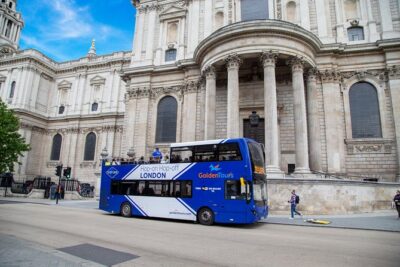
London Panoramic Open Top Bus Tour with Audio Guide
Read our review →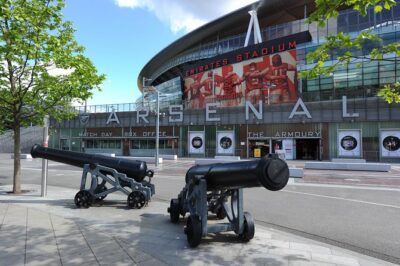
Emirates Stadium and Arsenal Museum Entrance Ticket Including Audio Guide
Read our review →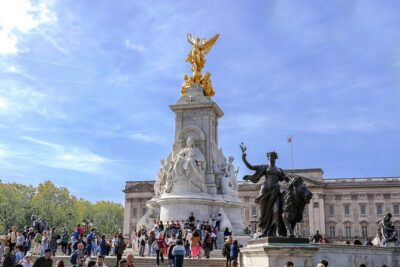
Buckingham Palace: Walking Tour with Entry & Audio Guide
Read our review →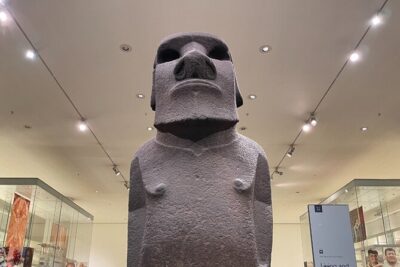
British Museum Audio Tour with Free Guaranteed Entry
Read our review →
Covent Garden’s Hidden Gems: A Self-Guided Walking Tour
Read our review →Browse the lists this tour appears in