
Reviewed · HISTORICAL TOURS
Lightfoot Tours: Historical Tour
Newcastle reveals itself one street at a time. Lightfoot Tours’ Historical Tour packs medieval landmarks, railway history, the Great Fire of 1854, and industrial-era stories into a brisk walk through the city centre. I like the small group limit of 15 and the way guides such as Wes and Adam bring the past to life with personal stories and local pride. I also like that the walk ends at Grey’s Monument, close to central shops and restaurants.
The main drawback is the pace. With four stops planned at about 20 minutes each, this is a whistle-stop introduction rather than a slow, detailed study of every building. You should also expect a moderate amount of walking and plan for Newcastle’s streets, slopes, and changing weather.
In This Review
- Key things to know before you go
- Why this short Newcastle walk works
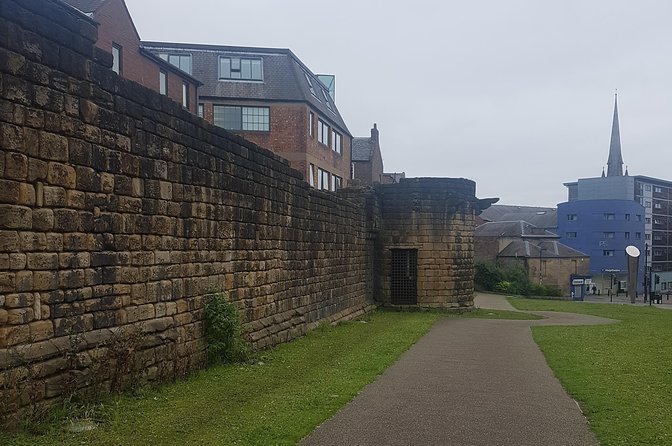
- Starting at Blackfriars Court and the old city walls
- Newcastle Central Station and the railway city
- Grainger Town, St John’s, and the Bigg Market
- Grey’s Monument, Grey Street, and the final stories
- What the guides add to the experience
- Is $40 good value?
- Timing, walking, and practical details
- Who should book this Newcastle tour?
- Should you book Lightfoot Tours’ Historical Tour?
- FAQ
- How long does the Historical Tour last?
- What time does the tour begin?
- Where does the tour start?
- Where does the tour finish?
- What sights are included?
- How many people can join the tour?
- Is the tour suitable for people with limited fitness?
- Can I cancel for a refund?
Key things to know before you go
- Blackfriars Court opens the story in medieval Newcastle, with talk of religious life, war, and the old city walls.
- Newcastle Central Station connects Roman origins with railway expansion, St Mary’s Cathedral, and the city’s social history.
- The route passes major central sights, including Newcastle Castle, Quayside, the Tyne Bridge, Grainger Town, and Grey Street.
- Guides make the difference, with Wes praised for tailoring explanations and Adam noted for his clever, entertaining stories.
- The $40 price is fair for a compact orientation, especially if you want context without doing hours of research first.
- The 10 a.m. start fits neatly into a sightseeing day, and free cancellation is available up to 24 hours before departure.
Why this short Newcastle walk works
Newcastle-upon-Tyne can feel like several cities joined together. Medieval walls, grand Georgian streets, railway engineering, bridges, theatres, churches, and working-city memories all sit within a fairly compact central area.
That mix is exactly why a guided walk helps. You can see the buildings on your own, but it is harder to understand how the pieces connect. The guide provides the links: war shaped the walls, railways changed the city, industrial growth altered its fortunes, and famous local people added to its identity.
This tour is designed for people who want a useful first look rather than an exhaustive historical lecture. The route takes roughly one hour to one hour and 30 minutes, though one account describes spending closer to a couple of hours with the guide. I would allow extra time if you enjoy questions, conversation, or recommendations for places to eat.
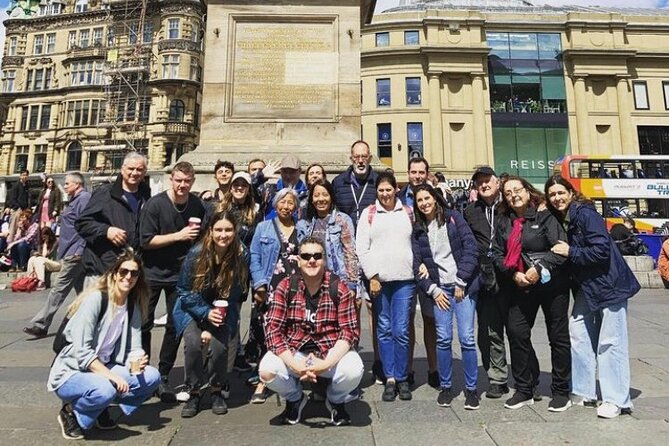
The small group format is a real advantage. A maximum of 15 people gives the guide a better chance to hear questions and keep the walk personal. One particularly useful feature is the possibility of a more tailored explanation when the group is very small. Wes has adjusted information to suit individual interests and offered suggestions for food and further exploring.
The guides appear to be the heart of the experience. Wes is described as enthusiastic, friendly, and proud of Newcastle people who made their mark on the wider world. Adam is praised for being helpful, amusing, and clever with his stories. That combination of facts and local feeling should suit you if you prefer a city walk with a human voice rather than a rehearsed list of dates.
More History Tours in Newcastle upon Tyne:
- Newcastle: History and Highlights Private Guided Walking Tour
★ 5.0 · 29 reviews - Newcastle Upon Tyne Private Historic Pub Tour With Free Drinks!
★ 5.0 · 4 reviews - London Small Group Tour of Historical Pubs
★ 5.0 · 10,422 reviews
Starting at Blackfriars Court and the old city walls
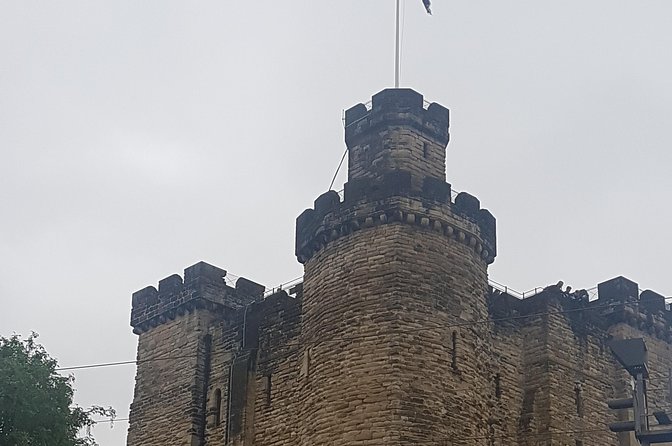
The walk begins on Newgate Street and moves to Blackfriars Court, where the focus turns to medieval and religious Newcastle.
Blackfriars was a medieval friary, so this first stop gives you an early sense of the city before its industrial age. The discussion also covers war and the city walls. That is useful context, since Newcastle’s defensive past is easy to miss when you are focused on shops, traffic, and modern streets.
You will spend about 20 minutes here, with no separate admission charge. The stop is less about entering a major museum and more about learning how the city was organized, defended, and shaped by religious institutions.
A nice feature of this section is the attention to small details. One local account recalls learning about the monastery at Blackfriars, the wall at Westgate, and the reason for a gap in the wall. Those are the sorts of details that can change how you read the city afterward. Instead of seeing old masonry as a leftover fragment, you begin to ask what it protected, where it once ran, and why it was altered.
This is also a good place to ask questions if medieval Newcastle interests you. The pace is short, so you should not expect a full history of the friary or a long architectural inspection. Still, as an opening chapter, it gets the walk moving through time quickly.
Newcastle Central Station and the railway city
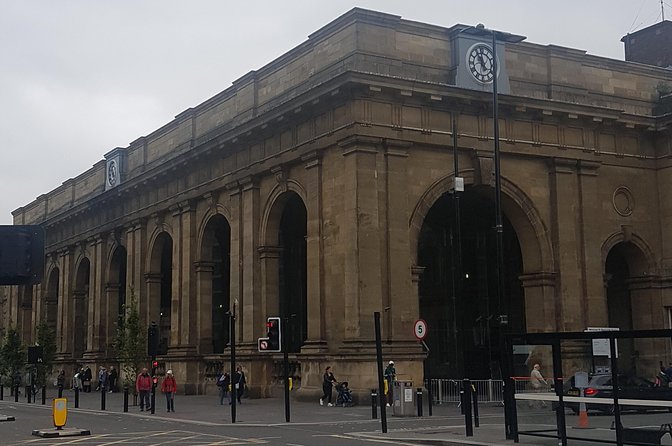
The second stop shifts from medieval defenses to transport, engineering, and urban change. At Newcastle Central Station, the guide discusses the station’s construction, the railway, St Mary’s Cathedral, Roman origins, and the city’s social story.
That is a lot to cover in about 20 minutes, but the range gives you a clear idea of the tour’s method. Newcastle is not presented as a collection of isolated sights. Instead, the station becomes a starting point for discussing how people arrived, moved, worked, worshipped, and lived in the growing city.
The railway section should appeal to anyone interested in engineering or the industrial revolution. It also helps explain why Newcastle became such an important northern centre. You are not simply looking at a handsome station building. You are considering what rail travel meant for trade, employment, migration, and daily life.
The inclusion of St Mary’s Cathedral adds another layer. Its presence near the station links civic growth with religious and social history. The Roman origins of Newcastle widen the timeline again, taking you back before the medieval walls and later railways.
I like this stop because it gives the city a broader frame. Many short walking tours focus only on attractive façades. Here, the guide uses transport and public buildings to explain change. If you are visiting Newcastle for the first time, this is the kind of context that helps the city make sense.
Keep in mind that this remains an outdoor walking stop. The itinerary lists no admission fee, and the emphasis is on commentary around the area rather than a long interior visit.
Grainger Town, St John’s, and the Bigg Market
The third section takes you to the Church of St John the Baptist and through Grainger Town toward the Bigg Market and High Bridge.
Grainger Town is one of central Newcastle’s most recognizable areas, with grand streets and civic architecture. The walk uses St John’s as a way to introduce this part of the city, then continues through places with different social and commercial histories.
This transition is valuable because it shows how Newcastle’s character changes within a short distance. The city’s formal, planned streets sit close to older routes and lively market spaces. A guide can point out those contrasts as you walk, while you get a sense of how the centre developed rather than viewing each road as a separate attraction.
The Bigg Market and High Bridge bring a more everyday side of Newcastle into the story. The tour is not limited to grand monuments. It also includes old haunts, entertainment venues, and places connected with ordinary city life.
One memorable set of local details concerns the former Stoll theatre, the steps down toward Quayside via the Castle, and Pink Lane. These references are especially useful if you want to see Newcastle beyond the standard postcard stops. They add the kind of local texture that can be missed when you only follow a map of headline sights.
Again, allow around 20 minutes for this section. That is enough for an introduction and several stories, but not enough for a detailed architectural survey of every building in Grainger Town. If you like stopping to take photographs, you may need to do that quickly or return later on your own.
A few more to weigh up in Newcastle upon Tyne
- Guided City Walking Tour of Newcastle
★ 5.0 · 548 reviews - Annual Admission Newcastle Castle Ticket
★ 4.5 · 114 reviews - Pilgrims’ Path walk across the sands to Holy Island
★ 5.0 · 89 reviews - 1-Hour and a Half Walking Guided Tour in Medieval Newcastle
★ 5.0 · 87 reviews
Grey’s Monument, Grey Street, and the final stories

The final part leads to Grey’s Monument and includes Grey Street, Newcastle’s grandest theatre, inventions, underground rivers, and Viking connections.
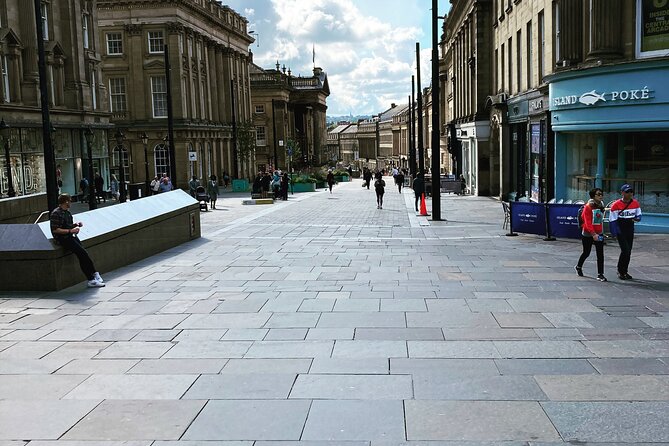
Ending at Grey’s Monument makes practical sense. You finish in the heart of the city, close to shops and restaurants, rather than being left at an isolated starting point. It also gives the tour a strong visual endpoint after moving through less obvious historical corners.
Grey Street is one of the city centre’s most impressive streets, and the theatre adds a cultural note to the final section. The guide also turns to inventions and underground rivers, which brings out Newcastle’s less visible history. These subjects should be particularly enjoyable if you like stories that explain what lies beneath the present-day city.
The Viking material gives the final section another change of period. By this point, the tour has moved from medieval religious life and defense to railways, urban planning, entertainment, invention, and older northern connections. The range is broad, but that is the point. You leave with a set of themes rather than a single narrow story.
There are also entertaining cultural details attached to this area. One account recalls the Grey’s Hotel and a connection with The Beatles writing A Hard Day’s Night. You should treat such stories as part of the city’s social character, alongside the more formal history of monuments and institutions.
The tour’s official endpoint is at Grey’s Monument, 150 Grainger Street, Newcastle upon Tyne NE1 5AF. From there, you can continue around the centre without needing another ride.
What the guides add to the experience
A history walk depends heavily on the person leading it. In this case, the strongest praise centers on the guides’ ability to make facts feel connected to real places.
Wes comes across as particularly strong at combining historical information with personal anecdotes. He is also described as proud of Newcastle’s achievements and of people from the city who influenced the wider world. That local connection matters in a place where civic identity is a large part of the experience.
Adam receives praise for being helpful, good-humored, and inventive in the way he explains the past. If you enjoy stories rather than a formal lecture, his style sounds well suited to you.
The most useful practical quality is a willingness to answer questions. The guide can adjust the emphasis when the group is small, and one very small group received restaurant suggestions as well as historical information. That flexibility is hard to get from an audio guide or guidebook.
The rating of 4.9 out of 5 from 38 ratings, with 100 percent recommending the experience, supports the idea that the guiding is its strongest feature. Still, your experience will depend on the guide assigned and the exact size of the group. The supplied information names Wes and Adam, but it does not promise a particular guide.
Is $40 good value?
At $40, this is not the cheapest way to walk around Newcastle. You can see many of the exterior sights without paying for a guide. The question is what you value.
I think the price makes sense if you want to understand what you are seeing and do not want to spend hours researching the city beforehand. In roughly 60 to 90 minutes, you cover several major themes and a useful collection of landmarks. You also get the chance to ask questions and receive local suggestions.
The value is strongest at the start of a Newcastle visit. Take the walk early, then return to the places that catch your interest. For example, you might later revisit Grey Street, spend more time around the Castle and Quayside, or explore the areas around Central Station and Grainger Town at your own pace.
The value is weaker if you want a long, specialist tour focused on one period. The route covers a wide span, from Roman origins and medieval religion to railways, Vikings, inventions, and popular culture. That breadth is helpful for orientation, but it means no single topic receives a very deep treatment.
Timing, walking, and practical details
The meeting point is on Newgate Street in central Newcastle, and the tour starts at 10 a.m. The end at Grey’s Monument is close to shops and restaurants, which makes the experience easy to pair with lunch or more sightseeing.
The tour uses a mobile ticket, and confirmation is provided when you book. It is near public transportation, though the supplied details do not specify a particular station or bus stop.
You should have a moderate level of physical fitness. The walk lasts around one hour to one hour and 30 minutes and includes several central-city stops. Wear comfortable shoes and check the weather before setting out. No separate admission fee is listed for the four stops.
Service animals are allowed. The maximum group size is 15 people, which should help keep the guide audible and make questions practical.
Cancellation is flexible up to 24 hours before the start time, with a full refund available if you cancel by then. Cancellations or changes made within 24 hours are not refunded or accepted, and the cut-off follows local time.
Who should book this Newcastle tour?
I would choose this walk if you are visiting Newcastle for the first time and want a quick framework for the city. It is also a good fit if you enjoy history but would rather hear the important threads from a local guide than prepare your own research notes.
It should suit families with older children, couples, solo visitors, and people who want a manageable morning activity. The small group can also work well for anyone who prefers conversation over a large crowd.
Local residents may find more here than expected. The route includes familiar places, but the stories about the walls, old theatres, Pink Lane, the Tyne Bridge, and famous Newcastle people can make known streets look different.
I would hesitate only if you want a long walk with plenty of time for photographs, or a specialist tour devoted to one period. This experience moves quickly and covers a lot.
Should you book Lightfoot Tours’ Historical Tour?
Book it if you want a lively introduction to Newcastle’s past in a compact format. The route covers Blackfriars, Central Station, St John’s, Grainger Town, Grey Street, and Grey’s Monument, while also reaching toward Newcastle Castle, Quayside, and the Tyne Bridge.
The strongest reason to go is the guiding. Wes and Adam are praised for warmth, humor, clear explanations, and local insight. At $40, the tour offers solid value when you use it as a first orientation, then spend the rest of your day returning to the sights that interest you most.
Skip it if you prefer exploring alone or need a slow, highly specialized history lesson. For most visitors with a morning free, this is a practical way to get Newcastle under your skin without sacrificing a whole day.
FAQ
How long does the Historical Tour last?
The tour lasts approximately one hour to one hour and 30 minutes. Some outings may take longer if the group asks questions or spends additional time with the guide.
What time does the tour begin?
The tour starts at 10 a.m.
Where does the tour start?
The meeting point is on Newgate Street, Newcastle upon Tyne, NE1 5TG, UK.
Where does the tour finish?
The tour ends at Grey’s Monument, 150 Grainger Street, Newcastle upon Tyne, NE1 5AF, UK. The endpoint is close to shops and restaurants in Newcastle city centre.
What sights are included?
The route includes Blackfriars Court, Newcastle Central Station, the Church of St John the Baptist, Grainger Town, the Bigg Market, High Bridge, Grey’s Monument, and Grey Street. The tour also passes Newcastle Castle, Quayside, and the Tyne Bridge.
How many people can join the tour?
The tour has a maximum of 15 travelers.
Is the tour suitable for people with limited fitness?
The tour requires a moderate level of physical fitness. It is a walking experience through central Newcastle.
Can I cancel for a refund?
Yes. You can cancel at least 24 hours before the start time for a full refund. Cancellations or changes made less than 24 hours before the start time are not refunded or accepted.
Just added in Newcastle upon Tyne
- Fun, Flexible Treasure Hunt Around Newcastle with Cryptic Clues & Hidden Gems★ 4.5 · 78 reviews
- 3 Hour Walking Tour through Newcastle upon Tyne★ 5.0 · 61 reviews
- Private Half Day Vera Tour of Newcastle TV Locations★ 4.5 · 50 reviews
- Vera Tour of Northumberland TV Locations★ 5.0 · 55 reviews
- Private Newcastle Pub Tour★ 5.0 · 3 reviews
- Newcastle : Private Walking Tour With A Guide (Private Tour)★ 4.5 · 22 reviews
- Private Tour – The Scottish Borders★ 5.0 · 1 review
- Newcastle Cycling Tour★ 5.0 · 4 reviews
Historical Tours, compared.

Shadows of York: Ghost Walk and Horrible History.
Read our review →

A Walk Through Time: History of Liverpool Walking Tour
Read our review →
Royal Historic Pubs Walking Guided Tour in London
Read our review →
Private Group: Historical Pub Walking Tour of London
Read our review →
Best Of Liverpool Heritage, History & Culture Guided Walking Tour
Read our review →Browse the lists this tour appears in