
Reviewed · HISTORICAL TOURS
Jane Austen’s Bath And History Trail
Bath reads like an Austen novel. This small-group walk connects Jane Austen’s former homes with the city’s grand Georgian streets, Bath Abbey, Roman sites, and the social world that shaped her writing. I especially like the way it mixes literary detail with architecture and local history, rather than treating Austen as the only subject. The visit to No. 4 Sydney Place, where a plaque marks her first Bath residence, is another strong touch.
The main drawback is the amount of walking. You cover much of central Bath in about two and a half hours, with some uphill stretches and steep steps. The tour is also outdoors for much of its length, so rain can affect the experience. Guide Ulrich Wenske is praised for his warmth and detailed knowledge, though his German accent and quick delivery may occasionally make listening harder.
In This Review
- Key points to know before you book
- Starting at Pulteney Bridge and Great Pulteney Street
- What Bath meant to Jane Austen
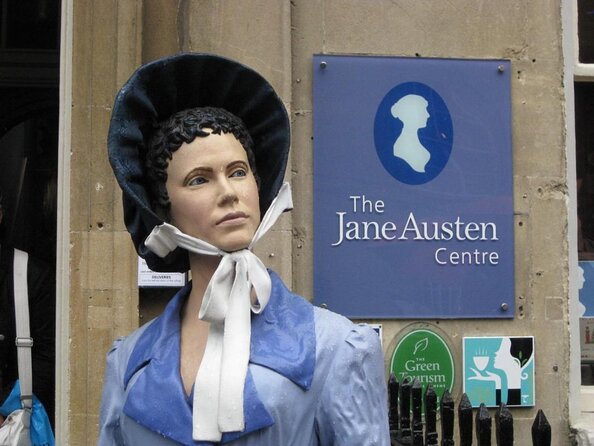
- A short stop at the Jane Austen Centre
- No. 1 Royal Crescent and Bath’s grandest address
- Bath Abbey, memorials, and medieval history
- Thermal water and the Roman heart of Bath
- Queen Square and Austen’s short residence
- The Circus and the surprising design story
- The Assembly Rooms and Regency social life
- Guide style, group size, and the pace
- Price, extra admissions, and overall value
- Who should take this Bath walk?
- Should you book Jane Austen’s Bath and History Trail?
- FAQ
- Where does the tour begin?
- Where does the tour end?
- How long does the experience last?
- How much does the tour cost?
- Is entry to the Jane Austen Centre included?
- Are museum admissions included?
- How many people can join the tour?
- What happens if the weather is poor?
Key points to know before you book
- Jane Austen’s actual Bath addresses: See the plaque at No. 4 Sydney Place and learn about her short stay at No. 13 Queen Square.
- A small group of no more than 10: The size allows time for questions and can make the walk feel personal, especially if the group is small.
- A city tour as well as an Austen tour: You visit Pulteney Bridge, the Circus, Bath Abbey, the Assembly Rooms, the Roman Baths area, and more.
- Free entry to the Jane Austen Centre: You can enter and visit the bookshop, but the centre’s full internal tour is not included.
- Museum admissions cost extra: The Roman Baths and No. 1 Royal Crescent are viewed from outside unless you buy separate admission.
- Comfortable shoes matter: The route is slow-paced, but it involves a fair amount of walking and some uphill sections.
Starting at Pulteney Bridge and Great Pulteney Street
The meeting point is the Pulteney Bridge Coffee Shop at 17 Pulteney Bridge, not the Jane Austen Centre. This detail matters. The bridge is a short walk from many central sights, but it is not beside the Austen Centre, and one person missed the start after going to the wrong location.
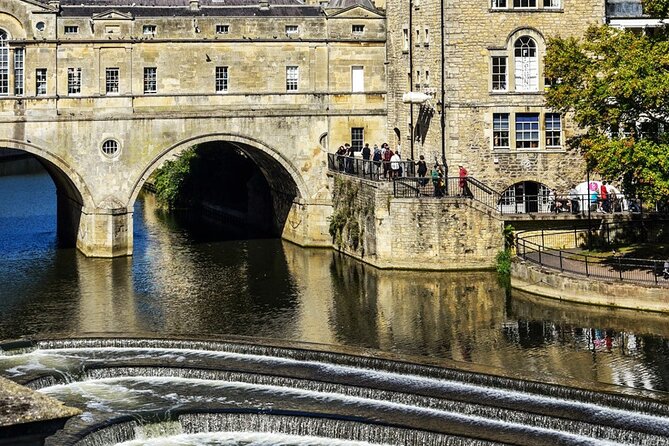
Pulteney Bridge makes a fine opening scene. Built in 1769 and inspired by Florence’s Ponte Vecchio, it has shops lining both sides. From the bridge, you move along Argyle Street and pause at Laura Place before looking toward Great Pulteney Street.
Great Pulteney Street is one of Bath’s grandest Georgian avenues. Its broad scale and ordered town houses show how the city’s wealthy residents wanted to be seen in the eighteenth and nineteenth centuries. Ulrich explains the architecture and points out notable residents, giving you useful context before the walk turns more directly toward Austen.
You can also see the Holburne Museum of Art from this area. The route may take you toward Sydney Place, where No. 4 has a plaque marking Jane Austen’s first dwelling in Bath. There is no admission charge for seeing the plaque, and you do not enter a museum or visitor centre at this stop.
This is one of the most meaningful moments for Austen fans because it connects the writer to an ordinary address rather than a grand literary monument. You are looking at a real place where Austen lived, not simply a site named after her.
More History Tours in Bath:
- Bath: Local Pubs & Historic Sights Walking Tour (3h)
★ 5.0 · 31 reviews - London Small Group Tour of Historical Pubs
★ 5.0 · 10,422 reviews - Soho Music & Historic Pubs Tour
★ 5.0 · 1,993 reviews
What Bath meant to Jane Austen
The tour’s central idea is that Bath was not just a setting in Austen’s life. It helped shape her view of fashion, money, marriage, status, and social performance. Bath’s streets brought together people who had come to take the waters, attend balls, visit friends, and find suitable connections.
That social mix appears in Northanger Abbey, where Bath becomes both an entertaining resort and a place of misunderstandings. The walk helps you connect the city’s elegant spaces with the behavior Austen observed and later turned into fiction.
I like this approach because it keeps the literary material tied to the pavement beneath your feet. You are not only hearing when Austen lived in Bath. You are also seeing the streets, squares, meeting places, and buildings that formed the setting for her experience.
The guide also adds pieces of wider British history and architecture. Past groups have enjoyed Ulrich’s stories about the Beatles, including his memory of seeing them perform in Hamburg before they became famous. That is not an Austen topic, but it shows the conversational style of the walk. You can expect questions and side stories rather than a strictly memorized script.
A short stop at the Jane Austen Centre
The Jane Austen Centre offers a look at Regency life and the way Bath affected Austen’s writing. The walk includes free entry to the centre and its bookshop, which adds value to the ticket price.
There is an important distinction here. The centre’s full internal tour with its own guides is not included. You may book that separately if you want displays and interpretation inside the museum. During this walk, you are given access to enter and browse, but you should not expect the separate guided centre experience to be part of the two-and-a-half-hour route.
For a first visit to Bath, this arrangement can work well. You get the outdoor city walk and a taste of the Austen Centre without paying for every attraction in one package. If you are a serious Austen enthusiast, you may want to return for the centre’s full visit after the walking tour.
No. 1 Royal Crescent and Bath’s grandest address
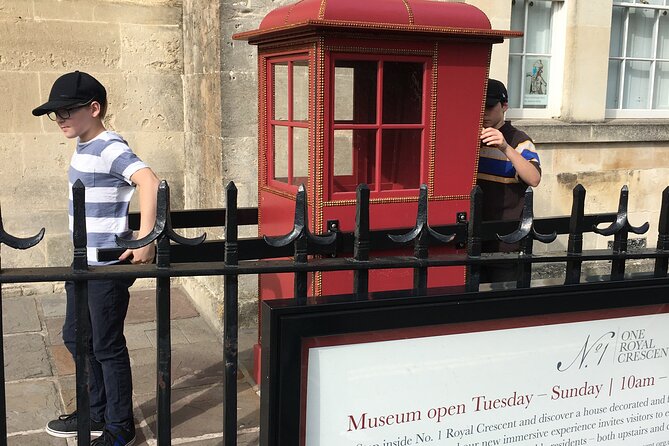
No. 1 Royal Crescent gives you a view of how Bath’s wealthiest residents lived. The crescent was built in the second half of the eighteenth century and contains 30 terraced houses joined by giant Ionic columns.
The building is one of Bath’s most photographed sights, and the curved façade is easy to admire from outside. The tour explains its architecture and place in Georgian Bath. You can also enter No. 1, which operates as a museum showing the interiors of a grand eighteenth-century home, but the admission charge is not included.
This is a good place to decide how you want to spend the rest of your day. If you care most about Austen and city orientation, the exterior explanation may be enough. If you want rooms, furnishings, and a clearer sense of domestic life in Georgian Bath, budget extra time and money for the museum.
The walk gives you the historical frame, but it does not pretend that every museum entrance is included. That keeps the base price at a reasonable level, though you need to plan for additional admissions.
A few more to weigh up in Bath
- Walking Tour of Bath with Blue Badge Tourist Guide
★ 5.0 · 1,877 reviews - Stonehenge, Avebury & the Cotswolds from Bath (Small group)
★ 5.0 · 798 reviews - Roman Baths and Bath City Walking Tour
★ 4.5 · 762 reviews - Fully Guided Bath Ghost Tours
★ 5.0 · 539 reviews
Bath Abbey, memorials, and medieval history
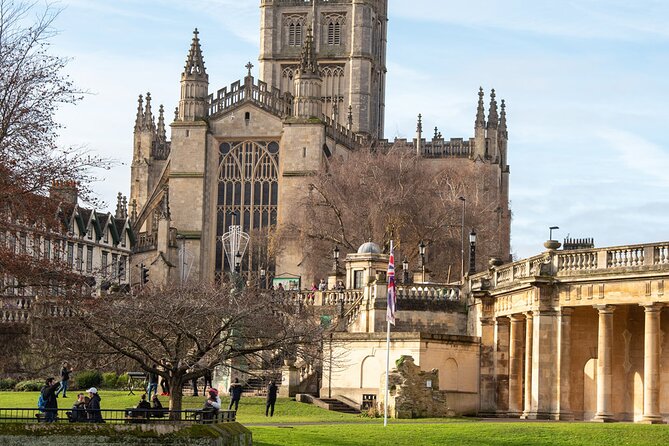
Bath Abbey changes the mood of the route. After the Georgian streets and Austen connections, you enter a much older part of the city’s story.
The abbey began as a medieval cathedral in the early twelfth century. Restoration began under Bishop Oliver King in 1499, and the building was completed under Elizabeth I in 1611. Inside, the guide points out memorials, wall plaques, and other details that are easy to miss if you simply step inside for a quick photograph.
The site is also linked to the crowning of Edgar in 977, described as the first king of England. That early royal connection adds weight to the building’s long story, while the later restoration helps explain why the abbey looks so different from Bath’s Georgian terraces.
You can visit the abbey interior during the walk, but the timing is limited to about 20 minutes. I would treat this as an introduction rather than a full architectural visit. If stained glass, monuments, or church history matter to you, return later when you can look around without the group moving on.
Thermal water and the Roman heart of Bath
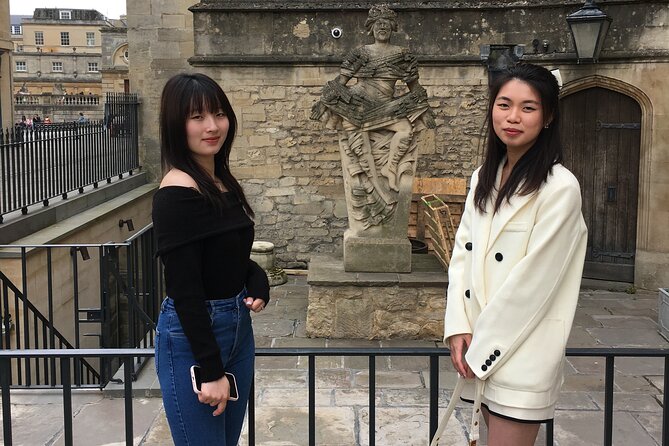
Bath’s fame began long before Jane Austen arrived. The tour explains the city’s natural thermal springs, including the Hetling Spring, Cross Spring, and King’s Spring. Their origins are described as reaching back about 10,000 years.
The modern thermal bathing option is also discussed. Bath is presented as the only place in Britain where you can swim in natural thermal water, including a rooftop pool kept at about 35 degrees Celsius and open in summer and winter. This refers to the city’s modern spa experience, not admission to the walking tour.
The Roman Baths area recalls the city’s first-century origins. The Roman temple of Sulis Minerva and the pools show why this place became a center for worship, healing, and social life long before the Georgian era.
The Roman Baths are adjacent to the Pump Room, the elegant Georgian building where fashionable society gathered for balls, tea, and the custom of taking the waters. The guide connects the Pump Room to Northanger Abbey, where Catherine and Isabella meet.
You do not receive admission to the Roman Baths as part of the tour. An audio tour is recommended separately, either before or after the walk. This is practical advice: the exterior explanation gives you a useful orientation, but the Roman Baths deserve more time than this walking route can provide.
Queen Square and Austen’s short residence
Another Austen-related stop concerns No. 13 in 1799. The tour explains Jane Austen’s short residence there and sets it within the design of the surrounding square.
This kind of detail is easy to miss when you walk through Bath on your own. A house number can look like just another doorway unless someone explains who lived there and why the address matters. The stop also reinforces how often Austen’s life in Bath involved temporary stays and changing homes rather than one permanent literary residence.
The tour does not turn every Austen address into a museum. Instead, it uses the locations as points for conversation about her family, her movements, and the city she knew.
The Circus and the surprising design story
The Circus is one of the best architectural stops on the route. Built from 1754, it was designed by John Wood and inspired by prehistoric stone circles. Its curved form was also intended to recall the Colosseum in Rome.
The three curved blocks create a powerful sense of enclosure. Look up at the repeated façades, then compare the rhythm of the buildings with the central open space. The guide explains why the design is unusual and how Bath’s architects used classical ideas to create something distinctly their own.
One memorable detail from the walk involves the trees at the center of the Circus. Their arrangement creates an echoing effect, and you may be invited to try it. It is a small, playful moment that breaks up the architectural explanation and makes the site easier to remember.
The Circus is also where the tour’s walking demands become clear. You are moving between major sights rather than standing in one place, so sensible shoes and water are useful.
The Assembly Rooms and Regency social life
The Assembly Rooms were built for the fashionable world of the Regency period. Their grand rooms included the ballroom, octagon, card room, and tea room, all designed for socializing, dancing, and being seen.
For Austen readers, this is an essential stop because it gives physical shape to the social rules in her novels. A ball was not simply an evening of entertainment. It was a public stage where clothing, manners, family connections, and marriage prospects all mattered.
The tour explains the role of the rooms and their continuing use for events. Admission is not included, so you see and discuss the building from the route rather than taking a full interior visit.
If you have read Persuasion, Northanger Abbey, or Pride and Prejudice, you will likely find this section especially useful. It turns familiar scenes of dances and introductions into real social spaces.
Guide style, group size, and the pace
Ulrich Wenske is the guide and provider. His strongest quality is the amount of information he brings to the walk, covering Bath’s architecture, Roman beginnings, medieval buildings, Georgian society, and Austen’s family and residences.
His manner is also personal. He has been praised for answering questions, adapting to small groups, and helping people who arrive a little late to find the meeting point. In poor weather, he has offered choices such as shelter or a virtual explanation, though the route can still go ahead if the group wants to continue.
The group limit is 10 people. That is small enough for questions and conversation, and a very small booking can feel almost private. One person found themselves alone on the tour, while another group enjoyed the relaxed pace and interactive style.
There are two practical cautions. Some people have found parts of the commentary difficult to hear, and Ulrich may speak quickly at times. His German accent is clear to some listeners but may require extra concentration for others. If you have hearing concerns, position yourself close to the guide and ask him to repeat key points.
Price, extra admissions, and overall value
At $40.24 per person, the tour is priced as a guided city walk rather than an all-inclusive attraction pass. I think the value is strongest if you want a well-organized introduction to Bath and plan to choose your own museums afterward.
You receive about two and a half hours with a guide, a small group, access to the Jane Austen Centre and bookshop, and explanations at many of Bath’s major sights. The route also helps you get your bearings quickly, which can save time during the rest of your stay.
You should budget separately for:
- The full Jane Austen Centre tour
- No. 1 Royal Crescent
- The Roman Baths
- Any other museum visit you choose
That extra cost is not a flaw, but it does affect your final budget. If you want to enter every major attraction, buying the walking tour alone will not cover the day. If you mainly want context, outdoor sightseeing, and a few Austen addresses, the price is fair.
The tour is booked an average of 40 days ahead, so I would reserve early if your Bath dates are fixed. It is offered in English, with English or German guide service listed, and you receive a mobile ticket.
Who should take this Bath walk?
I would choose this experience if you:
- Have read Jane Austen and want to connect her life to real Bath streets
- Want a first orientation to Bath before visiting museums
- Enjoy architecture, local stories, and social history
- Prefer a small group over a large city tour
- Have about two and a half hours available
- Do not mind walking outdoors in changeable weather
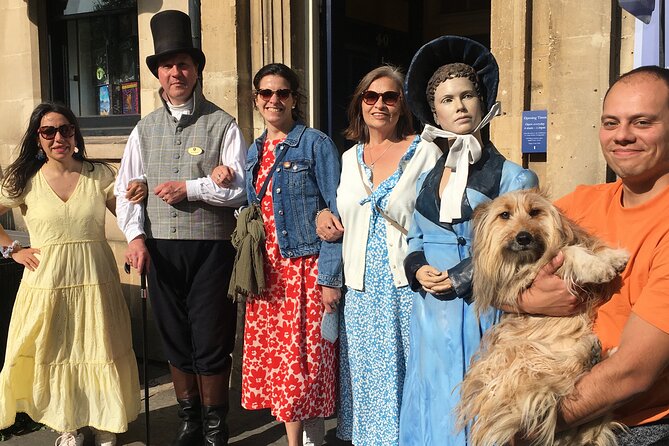
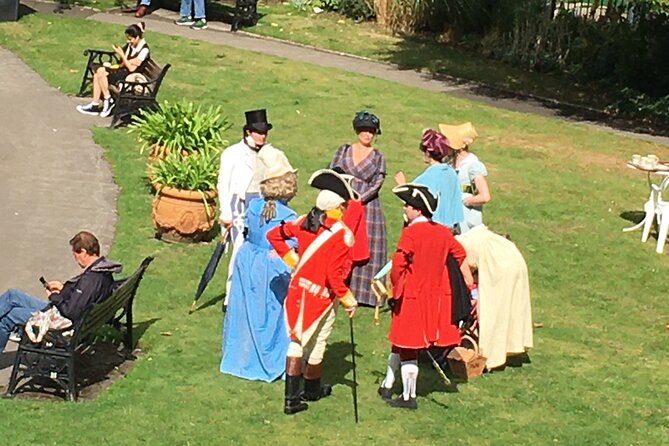
I would think twice if you want a formal, period-costumed presentation. One person expected a guide dressed in Regency clothing and found the actual experience different. This is a straightforward walking tour led by an older German guide, not a theatrical performance.
I would also avoid booking it as your only Bath activity if you want long interior visits. The abbey, Roman Baths, Assembly Rooms, and Royal Crescent all deserve more time than the route can give them.
Should you book Jane Austen’s Bath and History Trail?
Book it if you want Austen, architecture, and Bath’s wider story in one walk. The best parts are the real Austen addresses, the explanation of how the city shaped her writing, the Circus and Great Pulteney Street, and Ulrich’s relaxed willingness to answer questions.
Skip it if you dislike walking, need a slow indoor tour, or want admission to every major museum included. Also mark the starting point carefully: meet at the Pulteney Bridge Coffee Shop at 17 Pulteney Bridge, not at the Jane Austen Centre.
For most first-time visitors with comfortable shoes and a free morning or afternoon, this is a useful way to see Bath with purpose. It gives you the city’s outline, then lets you decide which interiors deserve your time and admission money.
FAQ
Where does the tour begin?
It begins at the Pulteney Bridge Coffee Shop, 17 Pulteney Bridge, Bath BA2 4AY, UK.
Where does the tour end?
The tour ends back at the meeting point.
How long does the experience last?
The walk lasts approximately two hours and 30 minutes.
How much does the tour cost?
The listed price is $40.24 per person.
Is entry to the Jane Austen Centre included?
Entry to the centre and a visit to its bookshop are included. The centre’s internal guided tour is not included and can be booked separately.
Are museum admissions included?
No. Admission to museums, including No. 1 Royal Crescent and the Roman Baths, is not included.
How many people can join the tour?
The maximum group size is 10 people.
What happens if the weather is poor?
The experience requires good weather. If it is canceled because of poor weather, you can be offered another date or a full refund. You can also cancel up to 24 hours before the start time for a full refund.
Just added in Bath
- Highlights from Bath’s Canal Walk: A Self-Guided Audio Tour★ 5.0 · 1 review
- The Splendour of Georgian and Victorian Era Bath: A Self-Guided Audio Tour★ 4.0 · 3 reviews
- Wells, Cheddar Cheese and Cheddar Gorge – Private Day Trip from Bath★ 5.0 · 10 reviews
- ‘Stonehenge & Secret England’ from Bath for 2-8 curious adventurers★ 5.0 · 54 reviews
- Stonehenge and Bath City Tour – Private tour from Bath★ 5.0 · 33 reviews
- Stonehenge & the Cotswolds Including Admission from Bath★ 5.0 · 145 reviews
- Stonehenge Private Tour – Half-Day Tour from Bath★ 5.0 · 145 reviews
- Interactive Treasure Hunt Experience of Bath’s Secrets★ 5.0 · 1 review
Historical Tours, compared.

Shadows of York: Ghost Walk and Horrible History.
Read our review →

A Walk Through Time: History of Liverpool Walking Tour
Read our review →
Royal Historic Pubs Walking Guided Tour in London
Read our review →
Private Group: Historical Pub Walking Tour of London
Read our review →
Best Of Liverpool Heritage, History & Culture Guided Walking Tour
Read our review →Browse the lists this tour appears in