
Reviewed · HISTORICAL TOURS
Isle of Man Viking and Celtic Heritage Tour
Ancient stones tell the Isle of Man’s story. This private seven-and-a-half-hour tour links Celtic chapels, Viking burial sites, medieval castles, and Tynwald Hill, with guide Louise providing context about island life today. I especially like the small-group format for up to four people and the way the route reaches several scattered sites that would be awkward to connect without a car.
I also like the mix of famous places and quiet churchyards, from Peel Castle to lonely Balladoole. The main consideration is pace: seven stops plus driving makes for a full day, and the tour is best for you if old stones, religion, archaeology, and local politics interest you more than a slow afternoon in one town.
In This Review
- Key points at a glance
- Why this Isle of Man tour works
- Lonan Old Church and the 12th-century starting point
- Maughold’s crosses and first monastery
- Jurby Church and Viking burial mounds
- Peel Castle, St. Patrick’s Isle, and House of Manannan
- Tynwald Hill and the island’s political identity
- Balladoole and the layers beneath one hillside
- Castletown, Castle Rushen, and the final chapter
- Fairy Bridge, The Braaid, and the ride back
- Price, comfort, and the value of going private
- Who should book this tour?
- Final call
- FAQ
- How long is the Isle of Man Viking and Celtic Heritage Tour?
- How many people can join the private tour?
- Where does the tour start?
- Can pickup and drop-off be arranged elsewhere?
- Is lunch included?
- Is admission to the historic sites included?
- Is the tour offered in English?
- What is the cancellation policy?
Key points at a glance

- A private tour for up to four people: The $563.89 group price can offer good value when shared by a small party.
- Seven and a half hours on the road: The schedule covers much of the island, with time allowed for travel and refreshment breaks.
- Celtic and Viking sites together: You will see carved crosses, a monastery site, Viking burials, longhouses, a ship burial, and medieval fortresses.
- Guide Louise adds modern context: Her commentary can extend beyond archaeology to the island’s government, health system, finances, TT race, customs, and daily life.
- Free cancellation up to 24 hours ahead: You can cancel for a full refund if you meet the stated cutoff.
- Comfortable private transport: Pickup can be arranged at a convenient point, and the return point does not have to match the start.
Why this Isle of Man tour works

The Isle of Man is compact, but its important sites are spread across the island. A churchyard in Lonan, a monastery site at Maughold, Viking mounds at Jurby, Peel’s castle, Tynwald, and Balladoole do not form a neat walking route. A private vehicle solves that problem.
The tour also gives you a useful historical sequence. You begin with early Christian sites, see Norse influence take hold, visit places tied to Manx government, and finish among later medieval buildings and abandoned settlements. It is not just a parade of ruins. The route shows how religious, political, and military power shifted over many centuries.
Your guide is Louise, a Blue Badge driver guide. Her role matters here because several stops need explanation. A carved stone can look like an old slab if you do not know what you are seeing. A grassy mound can seem ordinary until you learn it is a burial site. The strongest praise for Louise centers on her friendly manner, humor, clear explanations, and broad knowledge of how the Isle of Man works today.
More History Tours in Isle of Man:
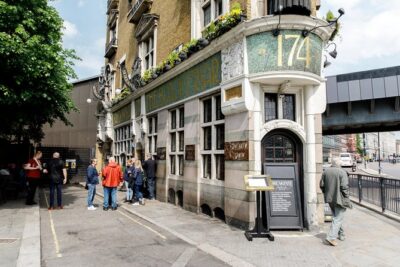
- London Small Group Tour of Historical Pubs
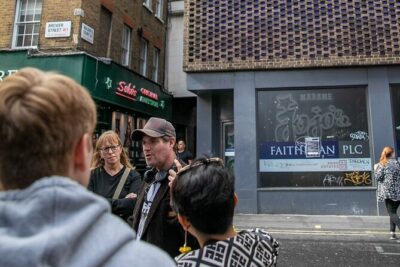
★ 5.0 · 10,422 reviews - Soho Music & Historic Pubs Tour
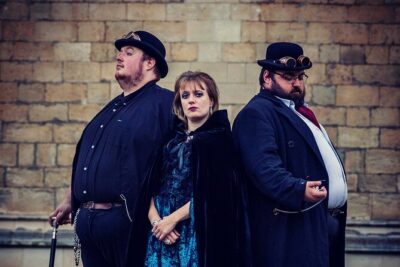
★ 5.0 · 1,993 reviews - Shadows of York: Ghost Walk and Horrible History.
★ 5.0 · 1,403 reviews
Lonan Old Church and the 12th-century starting point
The first stop is Lonan Old Church, also called St. Adamnan’s. The church is dedicated to St. Adamnan, the Abbot of Iona, and dates to the 12th century.
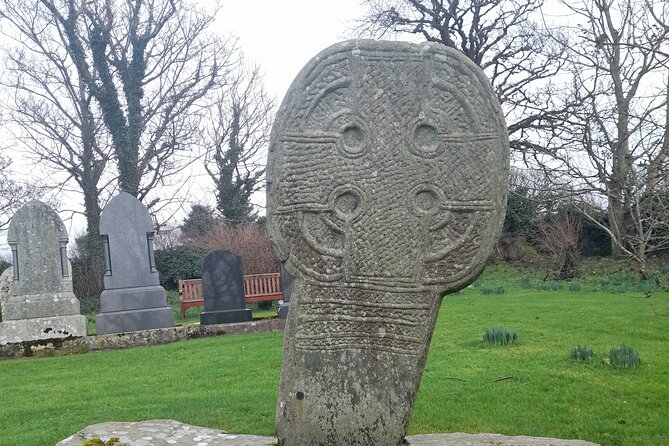
The real appeal is outside the building. This secluded site contains carved stone crosses from the 7th century, including a striking 10th-century wheel-head cross still in its original position. That detail gives the stop unusual value. You are not simply looking at an object moved into a museum. You are seeing a monument where it has remained for centuries.
You have about 30 minutes here, enough for a focused visit. I would listen carefully to the explanation of the cross designs and the religious setting rather than expecting a long church tour. Admission is listed as free.
This is a quiet beginning, and that suits the subject. The site does not try to entertain you with a large display. Its power comes from age, setting, and the chance to consider how Christianity took root on the island.
Maughold’s crosses and first monastery
Kirk Maughold receives the longest early stop, about one hour. It lies in an area of striking natural beauty and brings together two parts of the island’s story: Celtic Christianity and Viking influence.
Here you can see carved stone crosses and explore remains connected with the island’s first monastery, dating to the 6th century. The collection gives you a better sense of how early religious communities used carved stone to mark belief, memory, and place.
Maughold is one of the most important stops for anyone interested in early Christian art. You have enough time to look closely rather than rush past the stones for a quick photograph. The setting also helps. A church site surrounded by open scenery makes the old monastery feel connected to the wider island, not sealed away in a display room.
The drawback is that this stop may appeal less if you need a lot of intact buildings or lively interpretation. Much of the interest lies in details that Louise points out. Stay close, ask questions, and give yourself time to inspect the carvings.
Jurby Church and Viking burial mounds
At St. Patrick’s Church in Jurby, the focus shifts toward Viking burial customs. The coastal churchyard contains untouched Viking burial mounds, while the church itself has more carved stone crosses.
You have roughly 30 minutes. That is enough for a concise look at the church, the yard, and the stones, but not a leisurely archaeological study. The contrast is what makes Jurby useful. The church connects with Christian practice, while the burial mounds point to the Norse presence that shaped Manx culture.
This stop is also a reminder that Viking heritage is not limited to ships and battles. Burial places reveal beliefs, status, and how communities treated their dead. I would expect the site to feel simple rather than polished. That is part of its appeal, but it also means your enjoyment depends on the guide’s explanation and your interest in reading the ground carefully.
A few more to weigh up in Isle of Man
- Viking Tour of the Isle of Man – Half Day – Private Tour
★ 5.0 · 29 reviews - Southern Manxland Tour of Isle of Man 1-6 person upto 30 person
★ 5.0 · 28 reviews - Half day private tours of the Isle of Man with a qualified Driver Guide
★ 5.0 · 27 reviews - Isle of Man Discovery Tour with experienced Driver Guide
★ 5.0 · 26 reviews
Peel Castle, St. Patrick’s Isle, and House of Manannan
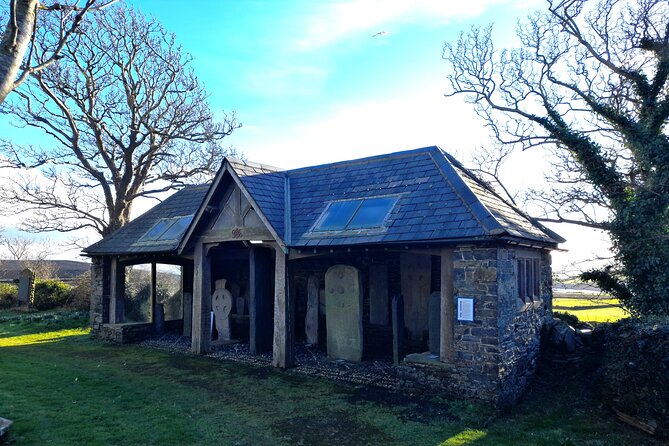
Peel is the busiest historical chapter of the day. The town’s adjacent St. Patrick’s Isle has been used for more than 7,000 years as a settlement, Celtic monastery, religious center, Viking stronghold, and fortress.
Peel Castle dominates the site. Its broad ruins carry layers of legend, religion, and military history. You can imagine the same strategic ground serving very different communities over time. The site is especially valuable because the Viking story here is not isolated from the Christian story. Both developed on the same island and, at times, in the same place.
The tour also includes the House of Manannan. Here, you can see reconstructions of a Celtic roundhouse and a Viking longhouse, plus the replica Viking ship Odin’s Raven. These reconstructions help if you find bare ruins hard to picture. Instead of guessing how people lived inside a timber structure, you get a physical sense of the space.
The stated visit lasts about one hour. That is a reasonable introduction, but Peel contains enough to occupy much longer. You will need to accept an overview rather than a slow, detailed exploration of every corner. Admission is listed as free in the stop details, while the tour also includes entry to museums and castles where applicable.
Peel is probably the most satisfying stop for families or anyone who wants the Viking theme made visible. The reconstructed buildings and ship provide a break from churchyards and carved stones.
Tynwald Hill and the island’s political identity
Tynwald Hill is not simply another historic mound. Tynwald is believed to have been established by Norse Viking settlers more than a thousand years ago and is described as the world’s oldest continuous parliament.
The hill symbolizes the Isle of Man’s position as a self-governing Crown dependency. That political status is one of the reasons this stop matters. The island is closely connected to the United Kingdom, but it has its own government and traditions. Tynwald gives you a place to discuss that distinction rather than leaving it as a confusing footnote.
The nearby Royal Chapel was likely built on the site of an ancient keeill, an early Manx chapel. In about 45 minutes, you can explore the hill, chapel, and surrounding history without feeling stranded at a single monument.
This is a good point to ask Louise about the island today. Her commentary has included the political system, finances, health service, TT race, traditions, and local culture. That wider view can turn the tour from an archaeology outing into an introduction to Manx identity.
Balladoole and the layers beneath one hillside
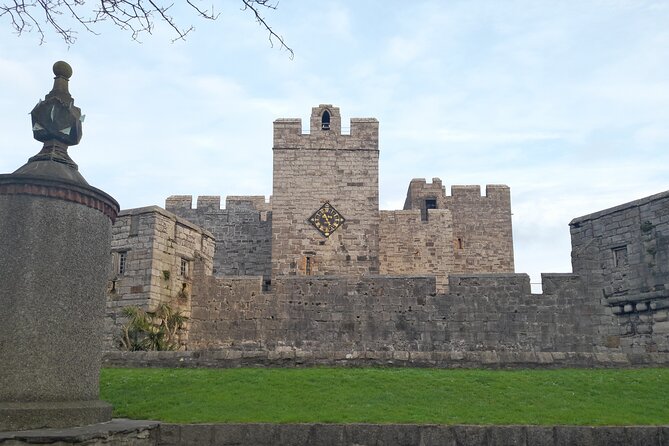
Gansey brings you to the Balladoole Heritage Site, where several periods of history occupy the same place. The site includes a Viking ship burial, a Bronze Age burial, and a Christian keeill.
That combination is the kind of detail that makes the route memorable. You are not seeing one isolated Viking relic. You are seeing evidence of changing communities and beliefs across a long span of time. The Christian chapel, older burial, and Viking ship burial show how one location could be reused and reinterpreted.
The visit lasts around 30 minutes. Expect scenery and broad views as well as archaeology. The site is likely to feel open and exposed compared with a museum, so practical shoes and weather-ready clothing make sense, although the tour information does not set out a specific clothing requirement.
Balladoole may be less instantly dramatic than Peel Castle. Its value is in the layers. If you enjoy working out how different periods fit together, give this stop your full attention.
Castletown, Castle Rushen, and the final chapter
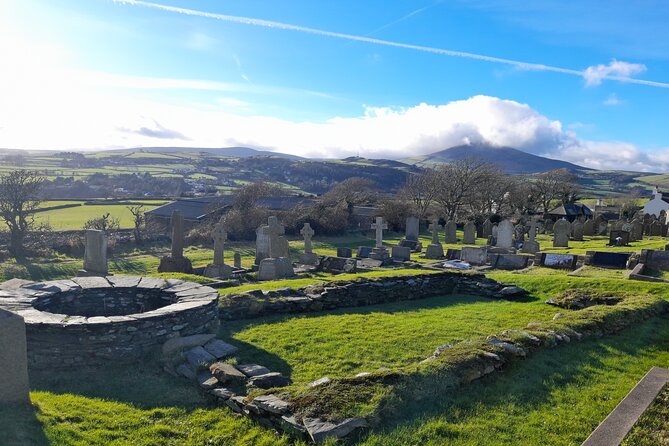
The tour finishes in Castletown, one of the island’s key historic towns. Castle Rushen is the main attraction. It was built by a Viking king and is associated with the death of the last Viking king on the Isle of Man.
That connection gives the castle a strong closing role. Earlier stops show scattered traces of Viking life. Here, Viking power is tied to a major stone fortress and the later medieval story of rule. The building is more substantial than the carved crosses and burial mounds, so you get a change of scale.
There may also be an opportunity to visit Rushen Abbey, another important Christian site. The wording matters: this is a possibility, not a guaranteed stop. Ask Louise on the day if the visit fits the schedule.
You have about one hour in Castletown. That is enough to see the main sights, but the day has already covered a great deal. If you prefer lingering in one place, the schedule may feel tight near the end. If you want a broad introduction to the island, the variety is a strength.
Fairy Bridge, The Braaid, and the ride back
The return route passes Fairy Bridge and The Braaid. The Braaid offers views associated with John Martin’s painting The Plains of Heaven, now held at Tate Modern. You will also see an abandoned farmstead with an Iron Age roundhouse and two Norse longhouses.
These final views add atmosphere after the formal stops. They connect the island’s archaeology with its scenery and artistic record. You are not promised a long stop at every feature, so think of this part as a scenic and interpretive finish rather than another full museum visit.
The tour ends back at the meeting point unless you arrange a different drop-off. Pickup can be organized at a convenient location, and the stated meeting point is the Isle of Man Steam Packet Company Ferry Travel Shop at Douglas Sea Terminal.
Price, comfort, and the value of going private
The price is $563.89 per group of up to four. For one person, that is expensive. For four people, it works out to about $141 per person for seven and a half hours, before lunch and refreshments.
The value comes from the private vehicle, the ability to arrange pickup, and the guide’s attention. Public transport would not provide the same easy connection between remote churchyards, Balladoole, Jurby, and The Braaid. A private tour also lets your group ask about subjects beyond the formal Viking and Celtic theme.
The price includes an air-conditioned private vehicle, a Blue Badge driver guide, and entry where applicable into museums and castles. Lunch and refreshments are not included, though the schedule allows time for stops. Bring your own budget for food and drinks.
The tour runs Monday through Saturday during the stated operating period, with the supplied hours listed as 9:00 a.m. to 10:30 a.m. Because pickup details are arranged by email, message, or telephone, confirm the exact meeting time and location before setting out.
Who should book this tour?
I would recommend it most strongly if you want a broad, guided introduction to Manx history and have only one day to see the island. It suits people who enjoy archaeology, church architecture, Viking culture, Celtic Christianity, political history, and scenic driving.
It is also a smart choice for a group of two to four. Louise’s commentary appears to be a major part of the experience, and a private setting makes it easier to ask about the TT race, island traditions, government, or anything else that catches your interest.
I would think twice if you want a relaxed day with long visits in each town. The route covers seven main stops, and some visits last only 30 minutes. It is also not the best fit if your main goal is shopping, nightlife, or a single castle tour.
Most travelers can participate, service animals are allowed, and the tour is near public transportation. The activity is private, so only your group takes part. Free cancellation is available up to 24 hours before the start time, while later cancellations or changes are not accepted.
Final call
Book this tour if you want the Isle of Man’s Viking and Celtic story explained across the whole island, not reduced to one castle and a few photographs. The route is ambitious, the private transport is practical, and Louise’s friendly local commentary adds modern Manx life to the ancient sites.
Skip it if you prefer to set your own slow pace or want a day centered on one town. For a small group with limited time, though, the combination of Lonan, Maughold, Jurby, Peel, Tynwald, Balladoole, and Castletown offers unusually good historical coverage.
FAQ
How long is the Isle of Man Viking and Celtic Heritage Tour?
The tour lasts approximately seven hours and 30 minutes, including travel between the sites and time for refreshment stops.
How many people can join the private tour?
The price covers one private group of up to four people. Only your group participates in the activity.
Where does the tour start?
The listed meeting point is the Isle of Man Steam Packet Company Ferry Travel Shop at the Douglas Sea Terminal, Douglas, Isle of Man IM1 2RF.
Can pickup and drop-off be arranged elsewhere?
Yes. Pickup can be arranged at a convenient location with instructions provided in advance. The drop-off point does not have to be the same as the pickup point.
Is lunch included?
No. Lunch and refreshments are not included, although the schedule allows time for refreshment stops.
Is admission to the historic sites included?
The stop information lists admission as free. The tour also includes entry where applicable into museums and castles.
Is the tour offered in English?
Yes. The tour is offered in English.
What is the cancellation policy?
You can cancel up to 24 hours before the experience start time for a full refund. Cancellations or changes made less than 24 hours before the start time are not accepted.
Just added in Isle of Man
- Isle of Man Northern Discovery Tour – Half Day★ 5.0 · 19 reviews
- Cooking Class in the Isle of Man with a Professional Chef★ 5.0 · 1 review
- Steam Trains and Castles with qualified Isle of Man Tour Guide★ 3.5 · 3 reviews
- Isle of Man Tour App, Hidden Gems Game and Big Britain Quiz (7 Day Pass) UK★ 5.0 · 1 review
- Isle of Man Wildlife & Scenic Adventure with Wildlife enthusiast★ 5.0 · 7 reviews
- Discover your Manx Ancestors on the Isle of Man★ 5.0 · 15 reviews
- Full day Private Tour of the Isle of Man with experienced qualified driver guide★ 5.0 · 20 reviews
- Isle of Man Southern Discovery Tour – Half Day★ 5.0 · 12 reviews
Historical Tours, compared.
Shadows of York: Ghost Walk and Horrible History.
Read our review →

A Walk Through Time: History of Liverpool Walking Tour
Read our review →
Royal Historic Pubs Walking Guided Tour in London
Read our review →
Private Group: Historical Pub Walking Tour of London
Read our review →
Best Of Liverpool Heritage, History & Culture Guided Walking Tour
Read our review →Browse the lists this tour appears in