
Reviewed · HISTORICAL TOURS
Curious Cambridge – The History Tour that’s FUN!!!
Cambridge has more stories than stone. Curious Cambridge turns a 90-minute walk into a lively introduction to the city, mixing university history, old rivalries, odd customs, and memorable local characters. I like the entertaining storytelling, and I like that the route covers both famous college streets and less polished corners of town. The main drawback is clear: you see the colleges from outside, since admission is not included.
The tour suits families, first-time visitors, and anyone who finds a list of dates a poor substitute for a good tale. Guides such as Peter, Ben, Simon, Chuck, and Chris have been praised for adjusting their stories to the group, including younger children and teenagers. Still, late cancellations can happen if a guide falls ill and no replacement is available.
In This Review
- Key points to know before you book
- Why Cambridge is better with a few good stories
- Start at Jesus Green and follow the old port road
- St. John’s and the first seeds of the university
- Trinity College, Newton, and a famous prank
- Trinity Lane and the less polished side of university life
- Caius College and the nightclimbers
- Market Square and the town versus gown quarrels
- St. Bene’t’s, the oldest building, and the secret of life
- Castle Hill and the city before the colleges
- What the guide style adds
- Is $27.74 good value?
- Who should book Curious Cambridge?
- Should you book this Cambridge walk?
- FAQ
- How long does Curious Cambridge last?
- How much does the tour cost?
- Where does the tour start?
- Where does the tour finish?
- Does the tour enter the colleges?
- Which colleges are included on the route?
- Is the tour offered in English?
- How large can the group be?
- Is the tour suitable for children?
- Can I cancel for a refund?
Key points to know before you book
- A 90-minute story-led walk: Cambridge’s past is explained through amusing anecdotes rather than a long lecture.
- Nine planned stops: The route links Magdalene College, St. John’s, Trinity, Trinity Hall, Caius, the market, St Bene’t’s Church, and Castle Hill.
- No college interiors: You will see important buildings from the street, but entry to the colleges is not included.
- A useful route through old Cambridge: The walk begins at Jesus Green Lock House and ends beside the Corpus Clock opposite King’s College.
- Good for mixed ages: Simon’s storytelling won over a 15-year-old, while Chris kept a 9-year-old interested.
- Small-group format: The maximum group size is 25, which should make questions easier than on a large coach tour.
Why Cambridge is better with a few good stories
Cambridge can be hard to read at first. You see grand gates, narrow lanes, chapels, towers, and courtyards, but the meaning of each place is not always obvious from the pavement. This tour gives those buildings a human edge.
You hear about Newton, university pranks, secretive night climbers, old town and gown fights, and the changing role of the River Cam. That range matters. Cambridge is not only an academic showcase. It is also a market town, a former port, a Roman and Viking settlement, and a place where university privilege has rubbed against ordinary town life for centuries.
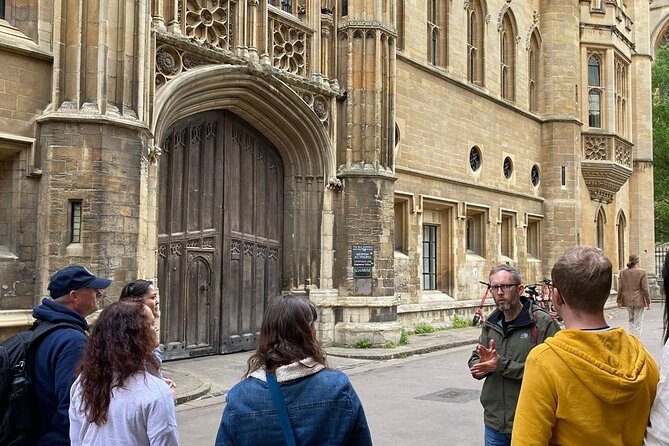
The guides appear to use the route as a framework rather than a rigid script. The exact emphasis can change with questions and the interests of the group. That is a strength if you enjoy conversation, though it means the experience may not feel identical every time.
I would not choose this walk if you want detailed architectural access or a formal college tour. I would choose it if you want to understand how the city fits together before spending more time on your own.
More History Tours in Cambridge:
- Cambridge’s History & Secrets with Self-Guided Walking Tours
★ 4.5 · 9 reviews - London Small Group Tour of Historical Pubs
★ 5.0 · 10,422 reviews - Soho Music & Historic Pubs Tour
★ 5.0 · 1,993 reviews
Start at Jesus Green and follow the old port road
The meeting point is Jesus Green Lock House, Cambridge CB4 3AX. This puts you near the river and the northern edge of the central area, rather than starting beside the most photographed college gates.
That choice helps set the scene. The walk begins with Cambridge as a settlement shaped by water and crossings, not simply as a university town. The planned route then moves toward Magdalene Street and Bridge, an ancient roadway linked to the old port of Cambridge.
At Magdalene College, expect about ten minutes of explanation from outside. The stop connects the modern street with the days when the river made Cambridge an important trading point. It is a useful reminder that the university did not create the town from nothing. The town had its own life, work, and traffic before the colleges became the main reason people knew Cambridge.
You do not need a ticket for this stop, but you also do not enter the college. Bring comfortable shoes and be ready to keep moving. This is a walking tour through public streets, not a seated presentation.
St. John’s and the first seeds of the university
The next planned stop is St. John’s College and the Round Church area. The tour uses this part of Cambridge to explain the early growth of the university.
The Round Church is especially useful as a visual marker. Rather than giving you an abstract account of medieval education, the guide can point to a building and a street and show how the university took root among older religious and civic spaces.
The pace is about ten minutes at each main stop, although questions may change the timing. That makes the tour easy to fit into a morning or afternoon. You receive enough context to recognize the places later, without committing half a day to a single walk.
Families should find this section manageable. Simon has been praised for making the material work for a teenager, and Chris for keeping a 9-year-old interested. The humor helps, but the tour still has enough historical content to satisfy adults.
Trinity College, Newton, and a famous prank
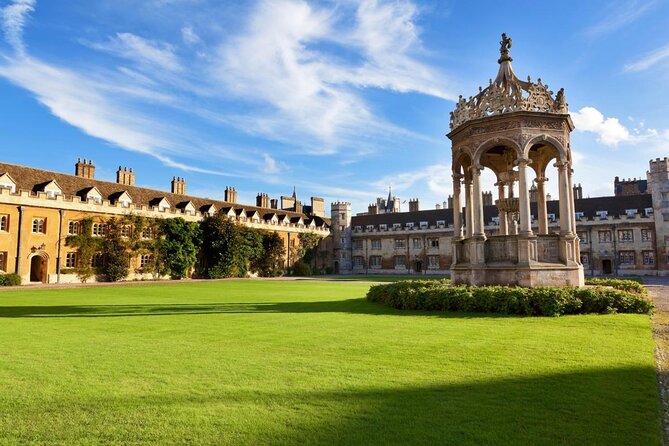
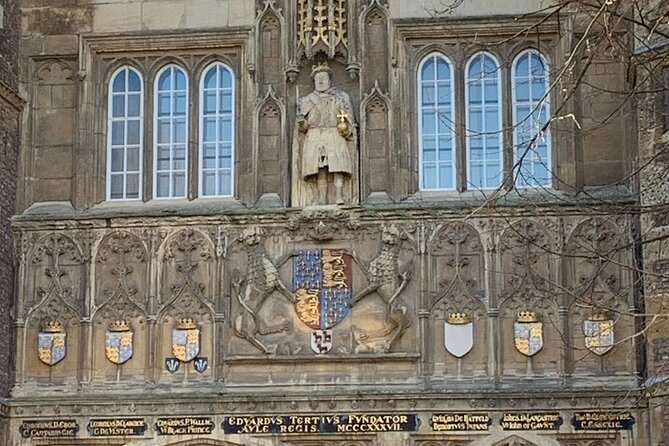
Trinity College is one of the major visual moments on the route. The college is described as the richest in Oxford or Cambridge, and the stop brings in Isaac Newton along with one of Cambridge’s longest-running pranks.
This is where the tour’s method becomes clear. Instead of listing founders, dates, and endowments, the guide attaches the institution to people and stories. Newton gives the college scientific weight. The prank gives it a mischievous, very human side.
You will see Trinity from the outside only. That limitation matters because Trinity’s courtyards, chapel, and library are major attractions in their own right. If entering a college is your main reason for visiting Cambridge, you will need a separate admission plan and more time.
For a first orientation, though, an exterior stop can be good value. You learn which buildings deserve a closer look, and you can return later with a better sense of what you are seeing.
A few more to weigh up in Cambridge
- Cambridge University Walking Tour by Alumni™ Kings College Option
★ 5.0 · 2,336 reviews - Cambridge University With Alumni: Optional Kings College Entrance
★ 5.0 · 1,987 reviews - Punting Tour in Cambridge
★ 4.5 · 1,690 reviews - Cambridge: Guided River Cam Punting Tour
★ 4.7 · 1,469 reviews
Trinity Lane and the less polished side of university life

Trinity Lane offers a change of tone. The lane was once known as Pisspot Lane, a blunt name that says plenty about historic street life. The tour uses that detail to puncture the polished image of Cambridge.
The point is not just the joke. Old university towns often preserve grand facades while hiding the messy daily habits that made those places function. A name like this brings the past down to street level.
The guide also makes a playful reference to umbrellas, so expect a lighter ten minutes here rather than a formal account of college administration. This is one reason the walk works well for mixed groups. Children get a memorable fact, while adults get a glimpse of how language and local memory preserve details that official histories might skip.
Caius College and the nightclimbers

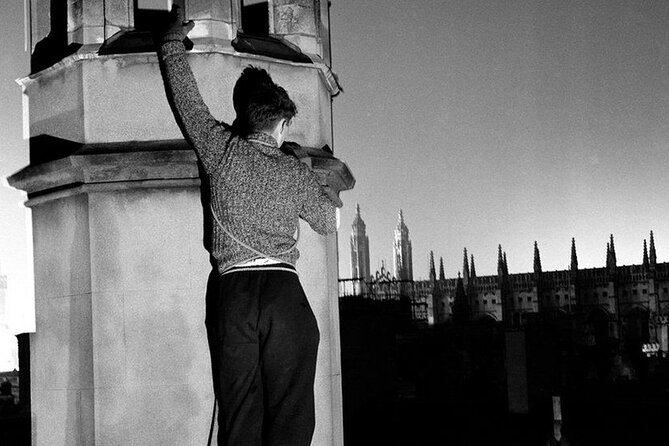
At Gonville and Caius College, the focus turns to the famous Nightclimbers and a strange instruction left by the college founder.
The Nightclimbers story adds an adventurous note to the route. Cambridge’s buildings are not treated only as static monuments. Their walls and roofs become part of student life, risk, tradition, and rule-breaking.
I would pay attention here if you enjoy unusual details more than grand institutional facts. This is the kind of stop that can help you remember Caius later, even if you do not retain every date connected with the college.
Again, you remain outside. The tour offers a useful introduction to the college’s character, but not a substitute for an interior visit. Since the walk is capped at 25 people, you should have a reasonable chance to hear the guide clearly, though the route takes place in public streets and crowd conditions can vary.
Market Square and the town versus gown quarrels
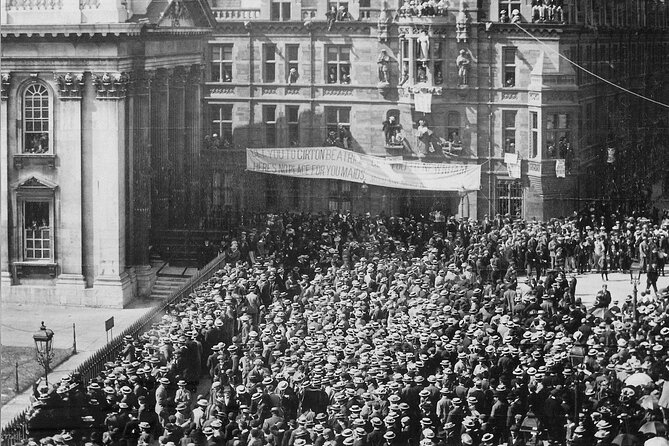
Cambridge Market Square gives the walk its strongest civic contrast. This is not simply university territory. It is one of England’s oldest markets and a public space where town life has long met student life.
The stop includes the famous bell chimes and stories of serious town versus gown punch-ups. That combination tells you plenty about Cambridge. The university may dominate postcards and guidebooks, but the city has never been only a campus.
Market Square is also a practical place to return after the tour. You can use it to get your bearings in central Cambridge, then choose between food, shopping, or a closer look at nearby sights. The tour itself does not include food or market purchases, so allow extra time if you want to browse.
This stop may be one of the most useful for families because the subject is easy to picture. Conflicts between townspeople and students are more engaging than a dry explanation of municipal boundaries, especially when the guide tells the story with humor.
St. Bene’t’s, the oldest building, and the secret of life
The stop on Benet Street gathers several remarkable sights into one stretch. You see St Bene’t’s Church, identified as the oldest building in Cambridge, and hear about the laboratory where the secret of life was discovered.
The story continues at the pub where that discovery was announced over a pint, then moves to the Corpus Clock. These details connect religious history, modern science, university culture, and everyday Cambridge drinking places in a short distance.
That mix is one of the best reasons to take the tour. You are not being shown a series of isolated monuments. You are being shown how different layers of the city sit beside one another.
The Corpus Clock is also the finish point. Its famous Chronophage, or time-eater, sits opposite King’s College at 58 Trumpington Street. Ending here is practical because you are left beside one of Cambridge’s most recognizable sights, with the rest of central Cambridge close at hand.
Castle Hill and the city before the colleges
Castle Hill covers the oldest part of the story. This is where Cambridge began, with Roman, Viking, and Norman forces all connected to the site. The setting also relates to the last bridge before the sea, a detail that brings the river’s old strategic importance into view.
This stop gives the tour its broadest time span. You move from the early settlement to the medieval period, then through the university centuries and into modern scientific Cambridge. The city’s age becomes easier to grasp when you can connect it to a real rise, river crossing, and fortified position.
The route does not promise an archaeological visit or entry into a castle structure. Think of Castle Hill as a place for historical orientation and storytelling. If you prefer a walk that explains why the city developed where it did, this part adds real value.
The exact order or emphasis can change with group questions, so you should not expect a minute-by-minute performance. That flexibility is helpful for curious groups, but less ideal if you need a tightly timed schedule.
What the guide style adds
The strongest praise has gone to the guides’ ability to make history feel personal and easy to remember. Peter has been noted for using images of landmarks and tailoring explanations to the group’s background and interests. Ben has been praised for a gentle, amusing walk packed with ancient and recent facts.
Simon’s enthusiastic storytelling worked particularly well for a 15-year-old. Chris handled different ages in one family group, including a 9-year-old, while Chuck was praised for an informative walk through key Cambridge sights.
Those names do not guarantee who will lead your departure. They do show the intended style: friendly, story-based, and adaptable rather than stiff or heavily academic.
The tour has a 4.8 rating from 80 reviews, with 94 percent recommending it. I would read those figures as strong evidence that the format works for most people, while keeping the cancellation risk in mind. One departure was cancelled at short notice because of guide illness and no replacement was available. That appears to be unusual, but it is a real possibility.
Is $27.74 good value?
At $27.74 per person, the walk is fairly priced for a 90-minute guided introduction to central Cambridge. You are paying for a human guide, local stories, route planning, and the chance to ask questions, not for admission to a college.
The value is strongest if this is your first Cambridge visit. A good orientation can save you from wandering past important places without understanding them. It also helps you decide which colleges, museums, chapels, or streets deserve another look.
The value is weaker if you already know central Cambridge well or mainly want to enter Trinity, St. John’s, or Caius. Since all college stops are exterior views, you should budget separately for any paid attractions you want to visit afterward.
The mobile ticket is convenient, and confirmation is sent at booking. The tour is offered in English, allows service animals, is near public transportation, and is open to most participants. You should still expect a continuous walk for roughly an hour and a half.
Who should book Curious Cambridge?
I would recommend it for:
- First-time visitors who want a clear introduction to the city
- Families with children or teenagers
- Adults who prefer stories and humor to a formal lecture
- People with only a short time in Cambridge
- Anyone interested in the tension between town and university
- Visitors who want to finish near King’s College and the Corpus Clock
I would be more cautious if you need step-by-step accessibility details beyond the stated general participation information, or if you require guaranteed departure because of a tight onward connection. The late cancellation example means you should avoid placing an important same-day commitment immediately afterward.
You can cancel for a full refund up to 24 hours before the start time. Changes or cancellations inside that window are not accepted for a refund. If the minimum number is not reached and the experience is cancelled, you are offered another date or experience, or a full refund.
Should you book this Cambridge walk?
Book Curious Cambridge if you want Cambridge explained through odd facts, old rivalries, science, religion, student mischief, and local history. The route covers a lot in 90 minutes, and the guide style appears especially good for families and people who lose interest during formal lectures.
Do not book it expecting college interiors or a deep architectural study. Instead, use it as a lively first pass through the city, then return to the buildings that caught your attention. At $27.74, that is a sensible way to get your bearings and turn Cambridge’s impressive streets into places with stories attached.
FAQ
How long does Curious Cambridge last?
The tour lasts approximately 1 hour and 30 minutes.
How much does the tour cost?
The listed price is $27.74 per person.
Where does the tour start?
It starts at Jesus Green Lock House, Cambridge CB4 3AX, United Kingdom.
Where does the tour finish?
It finishes at the Corpus Clock at 58 Trumpington Street, Cambridge CB2 1RH, opposite King’s College.
Does the tour enter the colleges?
No. You see the colleges from outside, but college entry is not included because of time and cost.
Which colleges are included on the route?
The planned route passes Magdalene College, St. John’s College, Trinity College, Trinity Hall, and Gonville and Caius College.
Is the tour offered in English?
Yes. The tour is offered in English.
How large can the group be?
The tour has a maximum of 25 participants.
Is the tour suitable for children?
Most participants can take part, and the tour has been enjoyed by children and teenagers, including a 9-year-old and a 15-year-old.
Can I cancel for a refund?
Yes. You can cancel at least 24 hours before the start time for a full refund. Cancellations made less than 24 hours before the start time are not refunded.
Just added in Cambridge
- Explore Cambridge Student Life & Top Colleges Walking Tour★ 3.5 · 18 reviews
- Tangential Cambridge: Group Walking Tour of Sights and Highlights★ 5.0 · 79 reviews
- Town Food Tour in Saffron Walden★ 5.0 · 32 reviews
- Private Custom Tour With a Local Guide In Cambridge★ 5.0 · 2 reviews
- Fun, Flexible Treasure Hunt Around Cambridge with Cryptic Clues & Hidden Gems★ 5.0 · 142 reviews
- Cambridge University Ghost Tour by Alumni™★ 5.0 · 117 reviews
- Welcome to Cambridge: Private Tour including King’s College Chapel★ 5.0 · 1 review
- Private | Cambridge University Colleges Guided Punting Tour★ 4.5 · 13 reviews
Historical Tours, compared.
Shadows of York: Ghost Walk and Horrible History.
Read our review →
A Walk Through Time: History of Liverpool Walking Tour
Read our review →
Royal Historic Pubs Walking Guided Tour in London
Read our review →
Private Group: Historical Pub Walking Tour of London
Read our review →
Best Of Liverpool Heritage, History & Culture Guided Walking Tour
Read our review →Browse the lists this tour appears in