
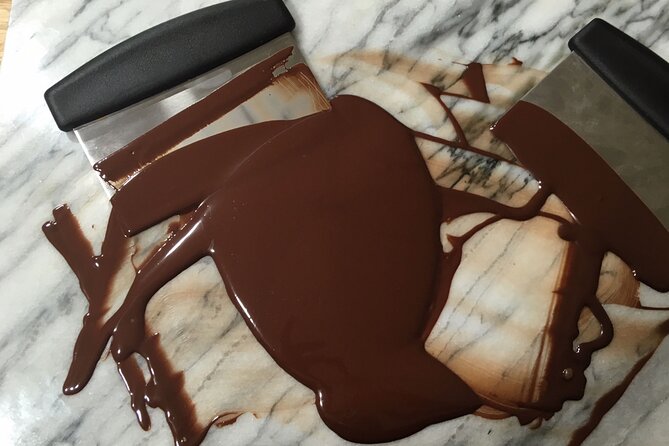
Reviewed · WORKSHOPS
Class – Introduction to Chocolate Making at York Cocoa Works
Chocolate gets serious in York. At York Cocoa Works, you learn how cocoa becomes chocolate, make traditional truffles, and practice tempering in a small workshop setting. I like the hands-on format and the useful take-home package: about 300 grams of your own chocolate plus recipes. The main drawback is that the class depends on an accurate booking date, so check the schedule carefully before you set off.
The two-and-a-half-hour session costs $67.88 per person. That is not a cheap chocolate tasting, but it includes ingredients, equipment, packaging, instruction, and chocolate you make yourself. The group limit of 12 should keep the class personal, though one booking problem reported for a Thursday makes it sensible to confirm the date directly if your plans are tight.
In This Review
- Key points at a glance
- What happens inside the 10:00 a.m. workshop
- From cocoa bean to chocolate bar
- Making ganache, the heart of a truffle
- Tempering chocolate without guesswork
- Shaping and wrapping your own truffles
- What the $67.88 price really covers
- A small group, but check the date
- Who will enjoy this chocolate class?
- Planning the class into your York day
- What you take home beyond the chocolate
- Cancellation and practical booking advice
- Should you book York Cocoa Works?
- FAQ
- Where does the chocolate-making class take place?
- What time does the class start?
- How long does the class last?
- What language is the workshop offered in?
- How much does the class cost?
- Is the class suitable for beginners?
- What will I make during the workshop?
- How much chocolate can I take home?
- Are ingredients and equipment included?
- Are drinks included?
- Is the class suitable for people with milk allergies?
- How many people can join the class?
- Where does the activity finish?
- Can I cancel for a refund?
Key points at a glance
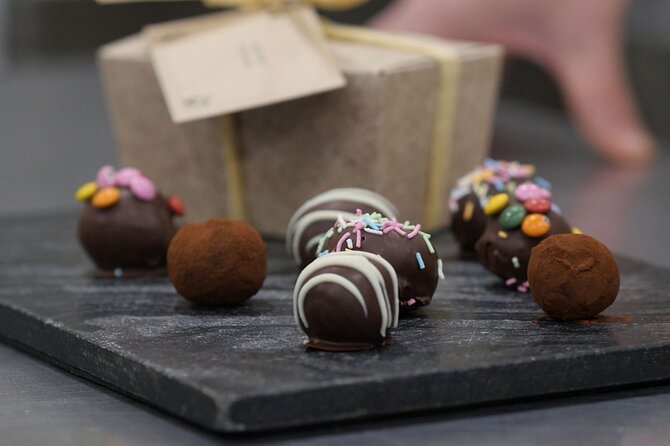
- Make about 300 grams of chocolate: You prepare your own truffles and take the finished creations home.
- Learn proper tempering: The class covers the technique that gives chocolate a smooth finish and firm snap.
- Start with ganache: You learn a basic chocolate ganache before shaping it into truffles.
- Connect chocolate with York: Sampling chocolate is paired with an introduction to York’s long chocolate-making story.
- Everything needed is supplied: Ingredients, tools, and packaging are included in the price.
- Small group, fixed start: The class begins at 10:00 a.m. and accepts no more than 12 participants.
What happens inside the 10:00 a.m. workshop
The class takes place at York Cocoa Works, at 10 Castlegate, York YO1 9RN. You meet there at 10:00 a.m., and the session finishes back at the same address. The location is near public transportation, which makes it practical to fit into a day of sightseeing in central York.
The workshop lasts about two hours and 30 minutes. That gives you enough time to move beyond a quick demonstration. You are not simply watching someone make a box of chocolates while you nibble from the sidelines. The aim is to give you a working introduction to several basic chocolate skills.
The class is designed as a starting point. If you are curious about chocolate making, enjoy baking, or want to understand why chocolate sometimes turns dull or soft at home, this is the right level. You do not need to arrive as an amateur pastry chef.
More dessert tours in York:
- Chocolate Bar Making Workshop – York Cocoa Works
★ 4.5 · 170 reviews - York Historical Gems Tour & A Taste of York Chocolate
★ 5.0 · 101 reviews - Mayfair Chocolate Tour
★ 5.0 · 443 reviews
From cocoa bean to chocolate bar
The first part explains where cocoa comes from and how it is turned into chocolate. That context matters because chocolate can seem like a finished ingredient when you buy it in a shop. Here, you get a clearer sense of the work and processes behind it before you start handling the material yourself.
You also learn about York’s connection with chocolate while sampling different chocolates. This gives the class a local angle rather than making it a generic kitchen lesson. York is a strong setting for this subject, and the session uses that connection to explain why chocolate matters to the city.
The sampling is useful for more than pleasure. Tasting different chocolates helps you notice differences in flavor and texture before you begin making your own. It also gives you a better idea of the qualities you may want in a finished truffle.
The supplied information does not specify the exact chocolate varieties or number of samples, so you should not expect a formal tasting flight with a printed menu. Think of the tasting as part of the teaching, linked to the story of chocolate and the work that follows.
Making ganache, the heart of a truffle
The practical work begins with a simple ganache. Ganache is the soft chocolate mixture that forms the center of a traditional truffle, and learning to make it is a useful home skill. It is also a sensible first recipe because the same basic mixture can support many chocolate desserts.
You work with chocolate to create ganache, then use it as the foundation for your truffles. The class is described as an introduction, so the focus is on the core method rather than a long list of complex fillings or advanced decorations.
This part should appeal to home bakers. If you have ever followed a recipe but ended up with a filling that was too runny, too firm, or difficult to shape, a guided class can make the process easier to understand. You can ask questions as you work and see how the mixture should behave.
The exact truffle flavors are not stated, so do not book expecting a particular filling, alcohol flavor, or special decoration. The clear promise is traditional chocolate truffles, with the ingredients and equipment provided.
Tempering chocolate without guesswork
Tempering is the more technical skill covered in the class. You prepare tempered chocolate for making truffles and learn how to work with it professionally. In simple terms, tempering controls how the chocolate sets, helping produce a smoother finish and a firmer texture.
This is the part that may offer the most long-term value. Ganache is useful, but tempering is often the step that makes home chocolate work feel difficult. A class gives you a chance to see the process in action instead of trying to decode a recipe on your own.
The description does not state which tempering method is used or whether each participant works at an individual station. I would treat the session as guided practice, not a full professional chocolatier qualification. You should leave with a basic understanding, not mastery of every type of chocolate work.
Still, the skill is a good reason to choose this class over a simple chocolate tasting. You are learning something that can be repeated at home, and the recipes help you continue after the workshop.
A few more to weigh up in York
- Mad Alice’s The Bloody Tour of York -Best Tour Award Europe
★ 5.0 · 2,749 reviews - Ghost Bus Tour of York
★ 4.5 · 2,404 reviews - Shadows of York: Ghost Walk and Horrible History.
★ 5.0 · 1,403 reviews - Private Historical Walking Tour of York
★ 5.0 · 1,324 reviews
Shaping and wrapping your own truffles
Once the chocolate work is underway, you make your own traditional truffles. The format gives you a clear result to work toward, and the finished chocolate is yours to take away.
Packaging is included, and you learn to wrap the creations attractively. That small finishing step matters if you want to make chocolates as gifts. It also means you are not left carrying a loose pile of truffles in a paper bag after class.
Each participant takes home roughly 300 grams of handmade chocolate. The exact number of truffles will depend on their size and the final recipe, but 300 grams is a generous amount for a two-and-a-half-hour workshop. You get something edible from the class, not just a certificate or a few samples.
Remember that homemade chocolates may need careful handling on the way back to your hotel or home. The supplied information does not state special transport instructions, storage advice, or shelf life, so ask the team for guidance before you leave if you are not eating them soon.
What the $67.88 price really covers
At $67.88 per person, the price sits above a casual tasting but includes much more than tasting. Your fee covers all chocolate-making ingredients, equipment, and packaging. It also includes the teaching, chocolate sampling, recipes, and about 300 grams of your own creations.
That makes the value fairly strong for someone who wants a practical lesson. If you only want to eat chocolate in York, the price may feel high. If you want to learn ganache, practice tempering, make truffles, and leave with a sizeable box of chocolate, the fee is easier to justify.
The class also saves you from buying ingredients and equipment for a first attempt at home. Chocolate, tools, and packaging can add up, especially when you are still learning what you need. The workshop lets you try the process before investing in supplies.
Coffee and tea are not included. Chocolate refreshments can be bought at the Chocolate Cafe before or after the workshop, but you should budget separately for those drinks or snacks. That is a minor extra cost, though it is worth knowing if you expect refreshments to be part of the class fee.
A small group, but check the date
The maximum group size is 12 people. That is a useful limit for a practical class because chocolate work is easier when you can see the demonstration and get help when needed. The supplied details do not promise one-to-one instruction or a particular teacher, so the group limit should be viewed as a reasonable safeguard rather than a guarantee of private coaching.
The start time is fixed at 10:00 a.m. Plan to arrive with enough time to find 10 Castlegate and settle in. The activity ends at the same meeting point, so you do not need to arrange a separate pickup.
There is one important booking warning. A ticket was apparently available for a Thursday even though master classes were not held on Thursdays, and the person affected had difficulty getting a response by email. I cannot tell from the available information how common this problem is, but it is specific enough to take seriously.
If you are visiting York for only one or two days, confirm that your chosen date is an actual workshop day before relying on it. Keep your booking confirmation handy, and do not assume that every date shown in a booking system is valid without checking.
Who will enjoy this chocolate class?
I would recommend York Cocoa Works to several kinds of visitors:
- Home bakers who want a better grasp of ganache and tempering.
- Chocolate fans who prefer making something over sitting through a standard tasting.
- Couples and friends looking for a creative activity in York.
- Families with older children, provided the children can follow instructions and work carefully with chocolate.
- Gift seekers who like the idea of taking home handmade truffles.
- Visitors interested in York’s food story, since the class links chocolate making with the city.
It may not suit someone who wants a quick stop between other attractions. Two and a half hours is a real block of time, and the practical work requires attention. It is also not the right choice if you have a milk allergy unless you contact the team at least 48 hours before the workshop.
Cream and butter are used. The class may therefore be unsuitable for people avoiding dairy, and the available details do not promise substitutions. Contact York Cocoa Works before booking if this affects you.
Planning the class into your York day
The 10:00 a.m. start makes the workshop a useful morning activity. You finish around lunchtime, depending on the pace of the group, and can then continue sightseeing in York. Since the class ends where it begins, you can plan your next stop without arranging transport across town.
The central meeting point also helps. You will not need to travel out to a distant factory or industrial estate for the chocolate lesson. Public transportation is nearby, though the information does not name specific bus routes or provide parking details.
A mobile ticket is available, and the workshop is offered in English. Confirmation is normally sent when you book, though bookings made within one day of the activity may be confirmed as soon as possible depending on availability.
Wear something practical that you do not mind getting a little chocolate on. The supplied information does not state a dress code or provide a list of protective clothing, so it is sensible to avoid your finest outfit. Chocolate is a poor travel companion and an even worse dry-cleaning surprise.
What you take home beyond the chocolate
The recipes are a useful part of the package. They turn the workshop into something you can repeat at home rather than a one-off activity that ends when you leave the building.
The recipes should help you remember the main steps for ganache and truffles. They cannot replace the experience of seeing chocolate being handled, but they give you a reference when you try again. Your newly learned skills are meant to continue in your own kitchen.
The 300 grams of chocolate also give you a chance to see how your work holds up after the session. You can enjoy it yourself, share it with friends, or use it as a small handmade gift. Packaging is included, so the result should be easier to carry and present.
The final product may not look exactly like professional confectionery. That is part of the appeal. You are learning a craft, and the value lies in understanding the method as well as taking home something delicious.
Cancellation and practical booking advice
Free cancellation is available when you cancel at least 24 hours before the local start time. If you cancel less than 24 hours before the class, the amount paid is not refunded, and changes made inside that window are not accepted.
That cutoff matters because the class has a maximum of 12 people. If your York plans are uncertain, book only once your morning is reasonably secure. If your date matters greatly, check that the workshop runs on that day before finalizing other arrangements.
The experience has a 4.3 rating based on six reviews, but the sample is small. One detailed complaint concerns an incorrect Thursday booking and a delayed email response, not the chocolate-making content itself. I would give that practical issue attention without letting it outweigh the clear strengths of the class format.
Should you book York Cocoa Works?
Book this class if you want to make chocolate rather than simply eat it. The combination of York chocolate stories, tasting, ganache, tempering, truffle making, recipes, and roughly 300 grams to take home gives you a worthwhile two-and-a-half-hour activity.
The price makes the most sense for people who value instruction and hands-on practice. It is less compelling if your main goal is a low-cost snack or a short sightseeing stop. Check the workshop date carefully, contact the team about any milk allergy, and allow the full morning for the session.
For a first step into chocolate making, York Cocoa Works offers a practical and tasty introduction, with enough technique to keep you experimenting after your York visit.
FAQ
Where does the chocolate-making class take place?
It takes place at York Cocoa Works, The Cocoa Works, 10 Castlegate, York YO1 9RN, United Kingdom.
What time does the class start?
The workshop starts at 10:00 a.m.
How long does the class last?
The class lasts approximately two hours and 30 minutes.
What language is the workshop offered in?
The workshop is offered in English.
How much does the class cost?
The listed price is $67.88 per person.
Is the class suitable for beginners?
Yes. It is described as an introductory workshop and is intended as a starting point for people who want to understand how chocolate works.
What will I make during the workshop?
You will make traditional chocolate truffles, including the ganache and tempered chocolate used in the process.
How much chocolate can I take home?
Each participant takes home approximately 300 grams of their own chocolate creations.
Are ingredients and equipment included?
Yes. Chocolate-making ingredients, equipment, and packaging are included.
Are drinks included?
Coffee and tea are not included. Chocolate refreshments are available to buy at the Chocolate Cafe before or after the workshop.
Is the class suitable for people with milk allergies?
The workshop uses cream and butter. Contact York Cocoa Works at least 48 hours before the workshop if you have a milk allergy.
How many people can join the class?
The workshop has a maximum of 12 participants.
Where does the activity finish?
The activity ends back at the meeting point at York Cocoa Works.
Can I cancel for a refund?
You can cancel for a full refund up to 24 hours before the experience start time. Cancellations made less than 24 hours before the start are not refunded.
Just added in York
- The Yorkshire Dales of All Creatures Great & Small★ 5.0 · 109 reviews
- The Treasures of Bloodaxe – A Fun Viking Treasure Hunt in York★ 4.5 · 21 reviews
- Welcome to York – The River Route★ 5.0 · 7 reviews
- York’s Famous Ghosts Smartphone App walking tour★ 5.0 · 2 reviews
- York City Pass: Access 35+ Attractions for One Great Price★ 4.5 · 122 reviews
- Welcome to York – The Royal Route★ 5.0 · 6 reviews
- York Private Walking Tour with a Professional Guide★ 5.0 · 3 reviews
- York Tour App, Hidden Gems Game and Big Britain Quiz (1 Day Pass) UK★ 4.0 · 4 reviews
Workshops, compared.

London Traditional English Scone Making and Tea Workshop
Read our review →


Chocolate Bar Making Workshop – York Cocoa Works
Read our review →

Browse the lists this tour appears in