
Reviewed · WORKSHOPS
Beginners Photography Course – Small Group Workshop
Your camera has more tricks than auto mode. This four-hour London workshop is interesting because you learn those tricks while photographing City Hall, Tower Bridge, and the Tower of London. I like the maximum six-person group, which leaves room for real questions, and I like that the tutor works with the camera you actually own. The main drawback is the price: at $336.07 per person, this is a serious investment for a half-day class.
The course is built for people who have spent years taking decent but forgettable photos on auto or scene settings. You practice ISO, shutter speed, aperture, focus, composition, and light on location, not just at a desk. If your camera manual still feels like a small technical novel, this could be a much friendlier way into it.
In This Review
- Key points to know before booking
- What this London photography class is really teaching
- City Hall: taking control of the camera
- Tower Bridge: composition, focus, and changing light
- The Tower of London: choosing lenses and using light
- Why the six-person limit matters
- The teaching style and what you may learn
- Price and practical value at $336.07
- Meeting point, equipment, and age limit
- Who should book this workshop
- Should you book the Beginners Photography Course?
- FAQ
- How long does the Beginners Photography Course last?
- Where does the workshop start?
- Where does the activity finish?
- How many people can join the group?
- What equipment should I bring?
- Is the course suitable for complete beginners?
- What is the cancellation policy?
Key points to know before booking
- Small group of no more than six: You get a better chance to ask camera-specific questions and receive one-to-one help.
- Your own camera is the subject: Teaching is adjusted to the model you bring, rather than based on one standard camera.
- Hands-on work at three London sights: Short assignments turn technical lessons into actual photographs.
- Core manual settings are covered: ISO, shutter speed, aperture, white balance, focus, depth of field, and composition all enter the lesson.
- London Bridge meeting point: The workshop begins and ends at London Bridge Station Approach Road.
- Best for beginners aged 16 and older: Bring a fully charged camera, spare battery if available, and memory cards.
What this London photography class is really teaching
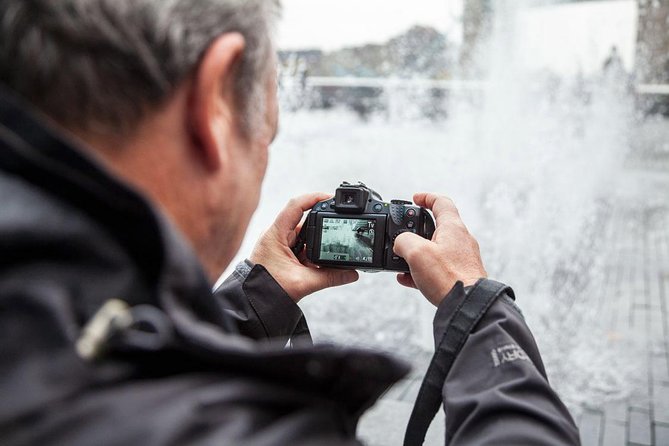
The useful thing here is the mix of camera instruction and practical shooting. You are not simply shown which button to press. You are asked to change settings, make a picture, check the result, and see how the change affects the image.
That matters because photography terms make sense faster when you can see them at work. A slow shutter speed, for example, is not just a number on a screen. It changes how movement appears. Aperture affects how much of the scene looks sharp. ISO affects how your camera handles available light.
The tutor sets short assignments during the session. These tasks give you something clear to do while you learn, which is helpful if your camera has a maze of menus and controls. You can also ask for assistance with the exact make and model in your hands.
That camera-specific teaching is one of the strongest reasons to consider this workshop. A general class can explain photography well but still leave you hunting through your own manual. Here, the instruction is geared to your equipment, and the tutor is described as familiar with a wide range of cameras.
More Workshops in London
- London Traditional English Scone Making and Tea Workshop
★ 5.0 · 271 reviews - Street Art Tour and Spray Painting Workshop in London
★ 5.0 · 98 reviews - Street Art Walking Tour and Workshop in London
★ 5.0 · 58 reviews
City Hall: taking control of the camera
The first and longest part of the course takes place around More London and City Hall. You spend about two hours here, working in an open riverside setting with strong architectural subjects.
This is where the technical foundation is built. You learn how to use the main functions and settings of your digital camera, then test them through short exercises. The focus is on ISO, shutter speed, and aperture, the three controls that shape much of a photograph’s look.
You also receive advice on how to approach different subjects. That may mean considering the angle, the light, the amount of the scene you want sharp, or how quickly your camera needs to respond. The point is not to memorize a list of camera terms. It is to understand what each setting does and when you might use it.
The two-hour block is important. Beginners often need time to make a mistake, ask a question, try again, and see the result. With a group capped at six, the tutor can provide individual help instead of moving on before everyone has caught up.
You should expect to do the work yourself. This is not a sightseeing walk where you occasionally stop for a quick photo. You will be handling your camera throughout, changing settings and applying the lesson to real scenes.
City Hall and More London also provide a practical setting for learning composition. Buildings offer lines, shapes, reflections, and changing viewpoints. You can test how framing affects a picture without needing a complicated subject.
Tower Bridge: composition, focus, and changing light
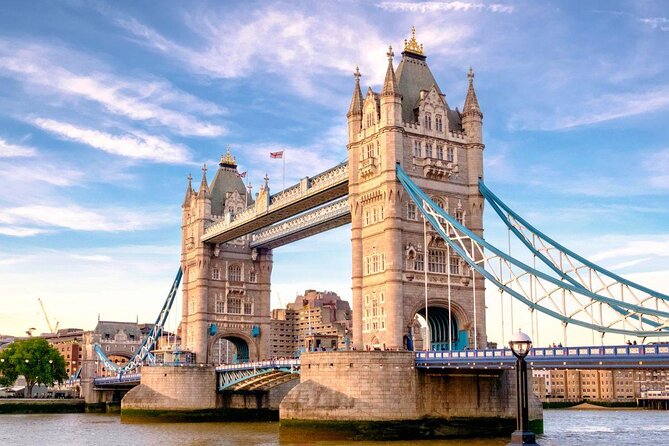
The group then spends about 30 minutes photographing Tower Bridge from across the river. The view gives you a clear subject for practicing composition, framing, and depth of field.
At this point, the tutor can help you think beyond simply fitting the landmark into the frame. You learn how to position the bridge, how much surrounding space to include, and how the light affects the final image. These are small choices, but they often separate a record shot from a more deliberate photograph.
Focusing techniques are also covered. That is valuable for anyone who has found a camera focusing on the wrong part of a scene. The lesson is tied to your own camera, so the controls and settings should relate directly to what you see in your hands.
The short stop is practical rather than leisurely. You will have time to work on the bridge, but this is not a long photo session with unlimited room for repeated attempts. If you want to make the most of it, listen closely during the City Hall section and arrive at Tower Bridge ready to apply the basics.
The Tower of London: choosing lenses and using light
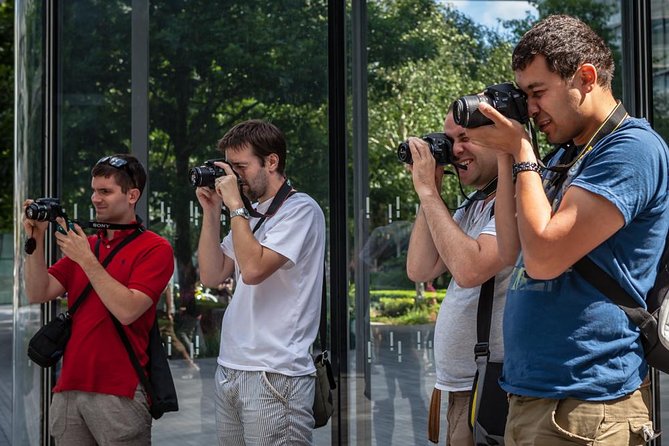
The final listed photography stop is the Tower of London, photographed from across the river. This section lasts about 30 minutes and adds lens choices, shutter speed, composition, and light to the skills already introduced.
The setting gives you another historic London subject, but the real value is comparison. You have already worked around modern architecture at City Hall and Tower Bridge. Now you can apply the same camera controls to a different subject and see how your approach changes.
Lens choice is especially useful here. You can consider how different focal lengths alter the way a building appears in the frame. You also continue working with shutter speed and light, rather than treating each setting as an isolated topic.
The tutor remains available throughout the stop. That means you can ask for help when your camera behaves differently from the example or when a setting does not produce the result you expected.
The Tower of London section is also a reminder that the course is designed for future travel, not only for London souvenirs. The stated aim is to help you use what you learn on later trips and create better memories. You leave with practice in handling real subjects, not just a set of definitions.
More Photo Tours in London:
- Professional Photoshoot in London Photographer
★ 5.0 · 102 reviews - Private landmarks photoshoot for families and couples
★ 5.0 · 92 reviews - 30 Major London Attractions Walking Tour With Photos
★ 4.5 · 51 reviews - Private Tour: Night Photography Tour in London
★ 5.0 · 48 reviews
Why the six-person limit matters
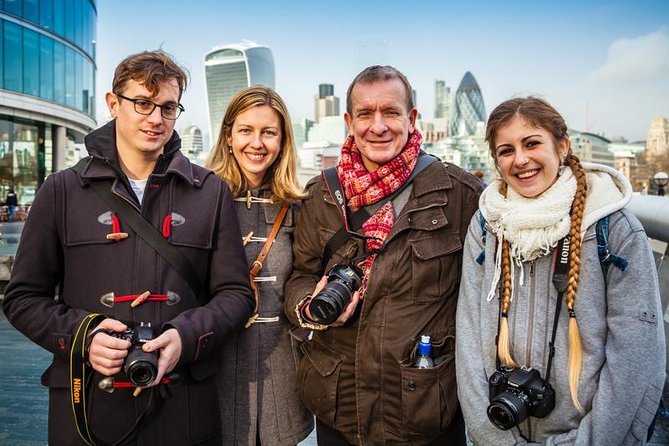
A group size of six is a major part of the experience. Beginners often arrive with very different cameras, confidence levels, and questions. A large class would make it hard for the tutor to explain menu settings or troubleshoot individual problems.
Here, there should be time for one-to-one tuition during the course. That is particularly useful if you inherit a camera, upgrade to a DSLR, or own a model that feels intimidating. One participant needed a factory reset, and the tutor took time to help sort out the problem. That kind of assistance can save a morning of frustration.
The small format does not mean the class will be private. You are still learning alongside other people, and the tutor must keep the group moving. The benefit is that the teaching can include personal help without turning into a lecture aimed at one generic camera.
People with slightly different skill levels can also fit into the same session. The course is aimed at beginners, but the practical exercises allow someone with a little experience to work on manual settings while a complete beginner gets help with the basics.
The teaching style and what you may learn
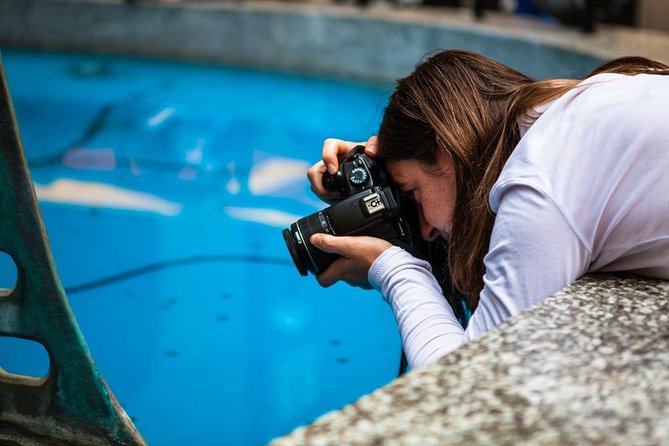
The teaching is described as practical, patient, and easy to understand. That is a good match for beginners who have struggled to remember the difference between ISO, aperture, shutter speed, and focus.
You should expect the tutor to explain how these controls interact. Changing one setting can affect the others, and understanding that relationship is more useful than memorizing isolated instructions.
White balance also appears in the teaching, even though it is not listed in the main itinerary. This setting affects the color appearance of your photos. It is one of the controls that can seem obscure until you see how it changes an image.
The course also introduces depth of field, composition, framing, lens choices, and light. That is a lot for roughly four hours, so you should not expect to leave as an accomplished photographer. The realistic goal is greater control and confidence, plus a clear path for practice afterward.
That limitation is worth noting. Four hours can remove the mystery from your camera, but it cannot replace repeated use. You will still need to practice after the workshop for the settings to become second nature.
Price and practical value at $336.07
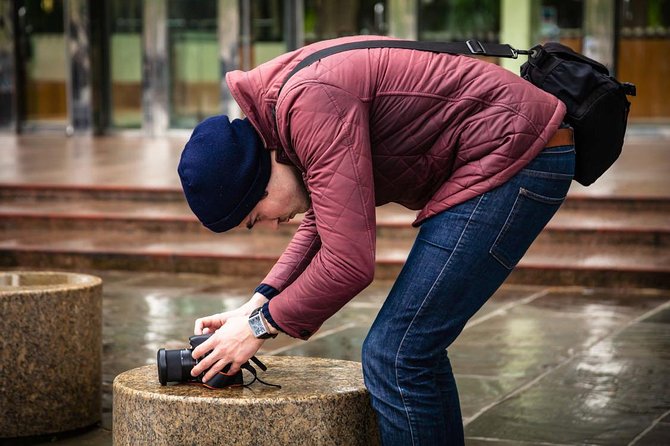
At $336.07 per person, this is not a casual add-on to a London sightseeing day. You are paying for a small group, an experienced photography tutor, and instruction tailored to your own camera.
The value improves if you have already bought a camera but rarely use its manual controls. It can also make sense if you have tried to learn from a manual or online videos and still cannot remember which setting does what. In those cases, direct help with your own equipment may save a good deal of time.
The price is harder to justify if you only want attractive photos of London and do not care about learning photography. The bridge and Tower of London views are part of the setting, but the class is primarily an educational experience.
Food and drinks are not included, and lunch is not included. The activity ends back at the meeting point, so plan your own meal before or after the workshop rather than expecting a catered break.
Group discounts are available, which may help if you are booking with friends or family. The maximum is six people, so a larger party may not be accommodated in one group.
Meeting point, equipment, and age limit
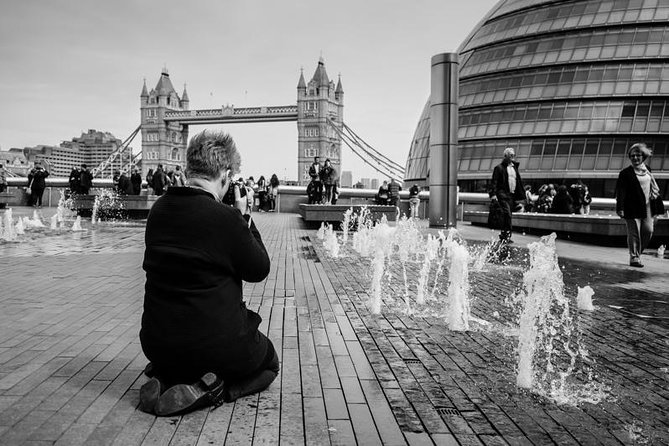
The workshop starts at London Bridge Station Approach Road, London SE1 9SP, and returns to the same meeting point. It is near public transportation, making the start and finish fairly straightforward to plan.
You must bring your own camera. Charge the battery fully, bring a spare if you have one, and pack your memory cards. Those details sound basic, but a low battery or full card can turn a practical class into an expensive lesson in preparation.
The course is offered in English and accepts mobile tickets. Confirmation is provided when you book. The minimum age is 16, and service animals are allowed. Most people can participate, though the experience is an outdoor walking photography workshop, so you should be comfortable moving between the listed locations.
Free cancellation is available if you cancel at least 24 hours before the start time. A later cancellation does not qualify for a refund, and changes made inside that window are not accepted. The minimum number of participants must also be met, or the provider will offer another date or experience, or a full refund.
Who should book this workshop
I would point this course toward the person who owns a capable camera but still leaves it on auto. It also suits someone who has inherited a camera and wants a calm introduction before trying to make sense of every control.
You will get the most from it if you are willing to take short assignments and practice in public. You do not need prior technical skill, but you do need to bring the camera you want to learn.
This is also a good choice if you prefer personal instruction to self-study. The small group and camera-specific approach can help when your problem is not photography in general, but finding a particular setting on your own camera.
It is less suitable if you want a relaxed sightseeing tour with only occasional photography tips. The sights are useful subjects, but the session asks you to concentrate, adjust settings, and learn as you go.
Should you book the Beginners Photography Course?
Book it if your camera has been stuck on auto, your manual settings feel confusing, or you want help that relates directly to your own equipment. The most praised features are the patient teaching, clear explanations, individual attention, and hands-on tasks.
Think carefully about the price before committing. At $336.07, this is worthwhile when you value structured instruction and plan to keep practicing after the class. If you only want a few London snapshots, a general walking tour will cost less and may suit you better.
For a beginner ready to understand ISO, shutter speed, aperture, focus, light, and composition in real London settings, this workshop offers a focused start. Bring a charged camera, arrive ready to work, and expect to leave with more control than you had at the beginning.
FAQ
How long does the Beginners Photography Course last?
The experience lasts approximately four hours.
Where does the workshop start?
It starts at London Bridge Station Approach Road, London SE1 9SP, United Kingdom.
Where does the activity finish?
The workshop ends back at the meeting point.
How many people can join the group?
The maximum group size is six travelers.
What equipment should I bring?
Bring your own camera, a fully charged battery, a spare battery if you have one, and memory cards.
Is the course suitable for complete beginners?
Yes. The workshop is designed for beginners and covers basic camera settings, including ISO, shutter speed, aperture, focus, composition, and light.
What is the cancellation policy?
You can cancel at least 24 hours before the experience starts for a full refund. Cancellations or changes made less than 24 hours before the start time are not accepted for a refund.
Just added in London
- Private Transfers between London & Windsor★ 5.0 · 9 reviews
- Private Transfer: Heathrow Airport to London Kings Cross or St Pancras Stations★ 5.0 · 3 reviews
- London to Southampton Transfers★ 5.0 · 7 reviews
- Private 3-hour Tour of The Iconic Tower of London & Tower Bridge★ 4.5 · 6 reviews
- London to Southampton Cruise Port | Private Transfer★ 5.0 · 6 reviews
- Private Tour to Westminster Abbey with optional Houses of Parliament in London★ 4.0 · 15 reviews
- Private Tours to Stonehenge & Oxford★ 4.0 · 4 reviews
- Private Tour to Stonehenge and Windsor Castle★ 5.0 · 11 reviews
Workshops, compared.

London Traditional English Scone Making and Tea Workshop
Read our review →


Street Art Tour and Spray Painting Workshop in London
Read our review →Browse the lists this tour appears in