
Reviewed · WALKING TOURS
Bath Private Guided Walking Tour
Bath rewards slow looking. This private two-hour walk brings Roman ruins, Georgian buildings, medieval trade, royal history, and Jane Austen into one easy introduction. I like the one-guide-for-your-group format, and I like that your guide can adjust the tour on the spot. The main catch is clear: entrance fees are not included, so the Roman Baths require extra planning and payment.
The tour costs $290.90 for a group of up to 15. That can be fair value for a full family or friend group, but less so for one or two people. Guides such as Alison, Andrew, Tony, Jamie, Paul, Ingrid, and the guide known as the Duchess have been praised for warmth, humor, local knowledge, and personal stories. Jamie Morris, who grew up in Bath, is especially noted for his wit and understanding of the city.
In This Review
- Key points to know before booking
- Bath in two hours: a useful first look
- King Bladud and Bath’s earliest story
- Pulteney Bridge and the wool trade
- Bath Abbey and King Edgar’s coronation
- The Roman Baths and Aqua Sulis
- Parade Gardens, Jane Austen, and modern Bath
- Royal Crescent and the Georgian ideal
- Royal Victoria Park and English garden style
- Why the private format matters
- Is $290.90 good value?
- Who should book this Bath walk?
- Should you book it?
- FAQ
- Where does the Bath private walking tour begin?
- Where does the tour end?
- How long does the tour last?
- Is this a private tour?
- What language is the tour offered in?
- Are entrance fees included?
- Is admission to the Roman Baths included?
- Can the tour be customized?
- What is the cancellation policy?
Key points to know before booking
- Private access to a local guide: Only your group takes part, with a maximum group size of 15.
- A broad Bath introduction in two hours: The walk covers Bath’s Roman beginnings, medieval trade, Georgian architecture, the Abbey, parks, and Jane Austen connections.
- Roman Baths admission is extra: The Roman city of Aqua Sulis is discussed, but the main entrance ticket is not included.
- Flexible content: You can ask your guide to adjust the emphasis during the walk.
- Meet at Bath Abbey: The tour starts at Bath Abbey and ends back at the meeting point.
- Strong guide feedback: Alison, Andrew, Tony, Jamie, Paul, Ingrid, and the Duchess are praised for making history lively and personal.
Bath in two hours: a useful first look
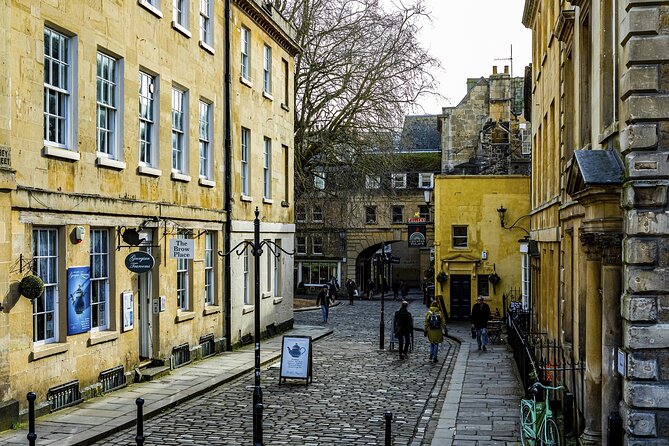
Bath is compact enough to explore on foot, but its story has many layers. The city moves from the legend of King Bladud to Roman bathing, medieval wool wealth, Georgian town planning, royal ceremonies, and Jane Austen’s years in the city. A good guide helps you see how those eras overlap instead of treating Bath as a row of pretty buildings.
That is the real value here. You are not simply walking past the Royal Crescent and Bath Abbey while someone recites dates. You are given a framework for understanding why the city developed where it did and how its buildings reflect changing fortunes.
The tour is offered in English and lasts about two hours. That is enough time to get your bearings and see major sights from the outside, but not enough for a detailed visit inside every major attraction. I would treat it as a guided orientation, not a complete substitute for independent sightseeing.
The private setup makes a difference. You can ask about architecture, Roman life, local families, Jane Austen, or filming connected with Bridgerton. If one subject interests your group more than another, the guide may be able to shift the focus.
More Walking Tours in Bath
- Walking Tour of Bath with Blue Badge Tourist Guide
★ 5.0 · 1,877 reviews - Roman Baths and Bath City Walking Tour
★ 4.5 · 762 reviews - Best of Bath Walking Tours – Georgian Tour
★ 5.0 · 449 reviews
King Bladud and Bath’s earliest story
The opening section introduces King Bladud and the foundation of Bath around 2,800 years ago. This is a useful beginning because it connects the city to its famous hot springs and its long attraction for people seeking health, status, and relaxation.
King Bladud belongs to Bath’s foundation legend, so you should expect a traditional story rather than a firmly documented biography. A good guide can explain the difference between legend and established history without draining the story of its charm.
This part takes about 20 minutes and has no separate admission fee. It gives you an early sense of why Bath exists at all. The city’s appeal begins with its natural springs, and nearly every later chapter, Roman, medieval, Georgian, and modern, builds on that starting point.
If you are visiting Bath for the first time, pay attention to the connections your guide makes between the springs and the city’s later fame. The point is not just that hot water comes out of the ground. The springs helped give Bath a purpose and an identity.
Pulteney Bridge and the wool trade
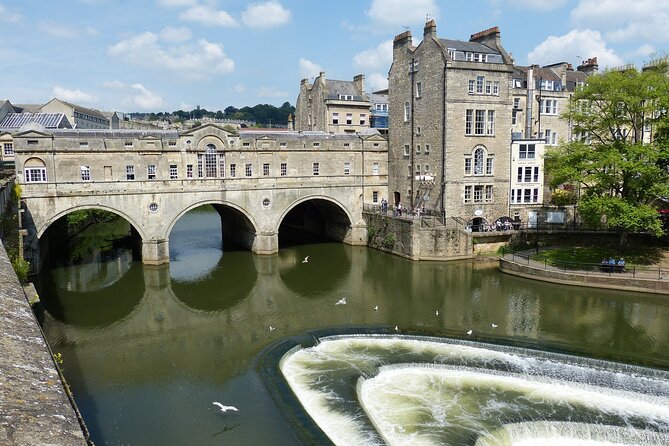
Pulteney Bridge provides a short but worthwhile stop, lasting about 10 minutes. The discussion here turns to Bath as a medieval religious center and an important place in the wool trade.
Bath can look overwhelmingly Georgian today, so it is easy to forget that the city had a significant medieval life long before the elegant crescents were built. Wool helped support English towns and merchants, and Bath’s religious importance also shaped its status and daily life.
Pulteney Bridge is especially useful as a reminder that bridges were not only ways to cross water. They could carry shops and connect commercial parts of a city. The tour does not charge admission for this stop, so you can focus on the setting and the explanation without another ticket.
I like this section because it breaks up the usual Bath story. Many short walks focus almost entirely on Romans and Georgian architecture. Here, the medieval city gets a proper place in the timeline.
Bath Abbey and King Edgar’s coronation
Bath Abbey is the meeting point and one of the central sights on the walk. The tour discusses the coronation of King Edgar, described here as the first ruler of the United Kingdom, and places the Abbey within Bath’s religious and royal story.
The Abbey’s importance is not limited to its stonework. Its history is tied to worship, political power, ceremony, and the growth of Bath as a center of influence. Your guide can help you look beyond the facade and understand why this location mattered to rulers and church authorities.
The Abbey discussion lasts about 15 minutes. The supplied details do not promise entry, so you should not assume that the tour includes an interior visit or an Abbey ticket. The same practical rule applies to the Roman Baths: sightseeing and explanation are included, but admission fees are not.
Starting at Bath Abbey is convenient if you are already in the city center. The activity ends back at the meeting point, which gives you an easy point from which to continue your own sightseeing, return to the station area, or visit one of the attractions discussed during the walk.
A completely different sort of day out:
- Stonehenge, Avebury & the Cotswolds from Bath (Small group)
★ 5.0 · 798 reviews - Fully Guided Bath Ghost Tours
★ 5.0 · 539 reviews - Bad of Bath fun Walking Tour of Bath
★ 5.0 · 402 reviews - The Cotswolds Tour From Bath (Small group)
★ 5.0 · 349 reviews
The Roman Baths and Aqua Sulis
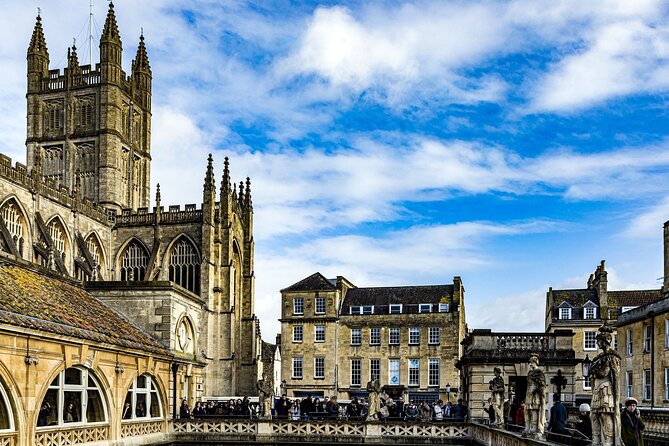
The Roman section explains Bath as Aqua Sulis, the Roman city built around the springs. This is one of the most important parts of any first visit because it shows how the Romans developed the site into a major bathing and religious center.
You will hear about the Roman city during the walk, but the main Roman Baths entrance is not included. One person who took the tour went inside during the outing and specifically noted that the admission cost was separate. Plan for that extra expense if seeing the preserved baths is high on your list.
This separation can be a drawback for some groups. The $290.90 price covers the private guide, not attraction tickets. If you are comparing this with a larger group walk, calculate the total cost with Roman Baths admission added.
Still, the guided introduction has value. Once you understand the role of Aqua Sulis, the ruins make more sense. You can see them as part of a Roman city with religious, social, and engineering functions, not simply as old stone chambers.
Parade Gardens, Jane Austen, and modern Bath
The walk also includes Parade Gardens and Bath’s connection with Jane Austen. Austen lived in Bath and used the city in her writing, making its streets and social customs part of the city’s literary identity.
The supplied details do not promise a visit to every Austen-related location, so think of this as a guided look at her presence in Bath rather than a dedicated literary tour. You might hear about the city’s society, manners, and locations connected with her time there.
One guide, Tony, added Bridgerton and Jane Austen details to the history, which made the tour more entertaining for a group interested in both real and fictional Bath. That is a smart way to connect the city’s past with the way modern audiences know it.
Parade Gardens adds a calmer note to the walk. It also helps show how Bath presented itself as a place for strolling, display, and leisure. If your group likes architecture and social history more than battles and dates, this may be one of the more enjoyable parts.
Royal Crescent and the Georgian ideal
No Bath walking tour is complete without the Royal Crescent. The stop at No. 1 Royal Crescent lasts about 10 minutes and focuses on the remarkable architecture of the crescent and the work of John Wood the Elder and John Wood the Younger.
This is where a good guide earns the fee. Bath’s Georgian buildings are beautiful, but their design can seem repetitive until someone explains the planning behind them. The use of Bath stone, the long curved facade, and the careful relationship between buildings and open space all contribute to the city’s distinctive appearance.
Ingrid was praised for explaining Bath’s architectural history, including the use of Bath stone and the influence of the two John Woods. Those details help you read the city instead of merely photographing it.
No. 1 Royal Crescent is also an important reminder that Georgian elegance had a social cost. The grand fronts were designed to impress, while the people who supported this way of life are less visible at first glance. Ask your guide about the residents, servants, builders, and commercial interests behind the architecture if that side of the story matters to you.
The stop is brief, so do not expect a full house visit as part of the tour. You may want to return later if you want to see the interior attraction in detail.
Royal Victoria Park and English garden style
The final listed stop is Royal Victoria Park, with about 10 minutes devoted to the park and the English style of garden. This broadens the tour beyond stone, churches, and ruins.
Bath’s parks are part of its identity. They show how the city’s planners and residents valued open space, views, walking, and carefully arranged planting. The English garden tradition is less formal than a strictly geometric French garden, and your guide can help you notice how natural-looking scenery can still be carefully designed.
Royal Victoria Park is a pleasant ending because it gives the tour room to breathe. After the denser city-center sights, a park offers a different view of Bath’s character.
The time is short, so this is more of an introduction than a full garden visit. If gardens are a major reason for your trip, plan extra time on your own. The same goes for anyone who wants a leisurely walk rather than a quick overview.
Why the private format matters
The strongest feature is not a single monument. It is the ability to have one guide work only with your group. A large public walk must keep moving at one pace. A private guide can respond to your questions and, when possible, customize the emphasis during the tour.
That flexibility is useful for mixed groups. One person may care about Roman engineering, another about Georgian architecture, and another about Jane Austen or Bridgerton. You can ask for a balance instead of accepting a fixed script.
The guides also seem to bring different personalities. Alison is described as warm and well informed. Andrew is praised for being friendly and engaging. Tony brings local history together with Austen and Bridgerton. Jamie is noted for wit and local roots, while Paul is described as born and raised in Bath and able to show places a newcomer might miss.
The guide known as the Duchess is praised for knowing the city’s history, gossip, and personal stories about who lived where. That sort of detail can make a walking tour feel more human, though tastes differ. Some people want formal history, while others enjoy anecdotes and local color.
The private format is also useful for locals. One group included people who already knew Bath, yet the tour still held their interest. That suggests the guide may add context and small details that are easy to miss on your own.
Is $290.90 good value?
The listed price is $290.90 per group, with up to 15 people allowed. For a full group, that works out to about $19.39 per person before any attraction tickets. For two people, the same tour costs about $145.45 each, so the value becomes much less obvious.
I would call it reasonable for a family reunion, office group, or gathering of friends that wants a private experience. You are paying for the guide’s time and the ability to shape the walk around your interests.
For a couple or solo visitor, a cheaper shared tour may offer better value if price is your main concern. The case for this private option becomes stronger if you want privacy, have limited time, or care about asking plenty of questions.
Remember to add entrance fees for the Roman Baths and any other attraction you choose to enter. The tour itself includes the local guide and private walking experience, not admission tickets.
The tour is booked an average of 46 days ahead, so popular dates may need early planning. The operating window shown is 7:00 AM to 8:00 PM daily, from July 1, 2021 through October 12, 2026. Confirm the exact time available for your date when booking.
Who should book this Bath walk?
I would recommend it to first-time visitors who want a clear introduction before exploring Bath independently. It also suits families and friend groups that value a private guide and want to adjust the subject matter as they go.
History fans will get a broad range of subjects, from King Bladud and Aqua Sulis to medieval wool, King Edgar, the Woods, Jane Austen, and garden design. Architecture fans should pay close attention to Ingrid’s approach if she is available, especially her explanations of Bath stone and the two John Woods.
This is also a good choice for people arriving from London by train. One review specifically called the train ride from London easy, though the tour information itself does not provide a route or travel time. Once in Bath, the central meeting point at the Abbey is straightforward.
I would hesitate if you want a long interior visit to the Roman Baths, Bath Abbey, or No. 1 Royal Crescent. The walk can point you toward those places, but the short duration and separate admission fees mean you will need additional time and money.
Should you book it?
Book this tour if you want a private, flexible introduction to Bath and your group can share the $290.90 cost. The guide quality is the biggest reason to choose it, with strong praise for Alison, Andrew, Tony, Jamie, Paul, Ingrid, and the Duchess.
Skip it if you are traveling alone or as a couple on a strict budget, or if you mainly want attraction interiors rather than an overview. For everyone else, the tour offers a well-shaped first look at Bath, with enough local personality to make the city’s stones, springs, gardens, and stories easier to understand.
FAQ
Where does the Bath private walking tour begin?
The tour begins at Bath Abbey, Bath BA1 1LT, United Kingdom.
Where does the tour end?
The activity ends back at the meeting point at Bath Abbey.
How long does the tour last?
The tour lasts approximately two hours.
Is this a private tour?
Yes. Only your group takes part, with a maximum group size of 15 people.
What language is the tour offered in?
The tour is offered in English.
Are entrance fees included?
No. Entrance fees are not included in the tour price.
Is admission to the Roman Baths included?
No. The Roman Baths are discussed during the tour, but admission is separate.
Can the tour be customized?
Yes. Possible customization with your local guide is available during the tour.
What is the cancellation policy?
You can cancel at least 24 hours before the start time for a full refund. Cancellations or changes made less than 24 hours before the start time are not accepted for a refund.
Just added in Bath
- Highlights from Bath’s Canal Walk: A Self-Guided Audio Tour★ 5.0 · 1 review
- The Splendour of Georgian and Victorian Era Bath: A Self-Guided Audio Tour★ 4.0 · 3 reviews
- Wells, Cheddar Cheese and Cheddar Gorge – Private Day Trip from Bath★ 5.0 · 10 reviews
- ‘Stonehenge & Secret England’ from Bath for 2-8 curious adventurers★ 5.0 · 54 reviews
- Stonehenge and Bath City Tour – Private tour from Bath★ 5.0 · 33 reviews
- Stonehenge & the Cotswolds Including Admission from Bath★ 5.0 · 145 reviews
- Stonehenge Private Tour – Half-Day Tour from Bath★ 5.0 · 145 reviews
- Interactive Treasure Hunt Experience of Bath’s Secrets★ 5.0 · 1 review
Walking Tours, compared.

Oxford University Walking Tour With University Alumni Guide
Read our review →
Tour for Muggles The Ultimate Harry Potter Walking Tour in London
Read our review →
Cambridge University Walking Tour by Alumni™ Kings College Option
Read our review →
Blackbeard to Banksy – The Ultimate Walking Tour of Bristol
Read our review →
Air Raid Shelter + St. Nicholas Market Walking Tour
Read our review →
Walking Tour of Bath with Blue Badge Tourist Guide
Read our review →
Changing of the Guard Guided Walking Tour in London
Read our review →Browse the lists this tour appears in