
Reviewed · WALKING TOURS
Small-group New Forest Discovery Walk from Lyndhurst
The New Forest rewards slow walking. This two-hour discovery walk from Lyndhurst brings together wide heath views, ancient woodland, wildlife spotting, and the story of commoning in one well-planned outing. I like the route’s variety, from the open ridge at Bolton’s Bench to the woods of Denny and Pondhead Inclosures. I also like the small group, capped at 12, which gives you a fair chance to ask questions.
The main consideration is the distance. The walk covers about 8 kilometres, or roughly 5 miles, so you need moderate fitness and comfortable walking shoes. Wildlife is never guaranteed, and poor weather can cancel the outing, but the slow pace and expert guides, including Marcus and Emily-Louise, make this a strong introduction to the New Forest.
In This Review
- Key points to know before you go
- Starting at Bolton’s Bench in Lyndhurst
- Following The Ridge across heath and mire
- Entering the ancient woodland of Denny Inclosure
- Seeing the Forest in several forms
- Wildlife watching with Marcus and Emily-Louise
- History from the Parc Pale to wartime use
- How difficult is the 8-kilometre route?
- Is $23.30 good value?
- Who should book this Lyndhurst walk?
- Practical details for a smooth morning
- Should you book the New Forest Discovery Walk?
- FAQ
- Where does the New Forest Discovery Walk begin?
- What time does the walk start?
- How long does the experience last?
- How far do you walk?
- Where does the walk finish?
- How many people can join the walk?
- What fitness level do I need?
- Are service animals allowed?
- What happens if bad weather cancels the walk?
Key points to know before you go
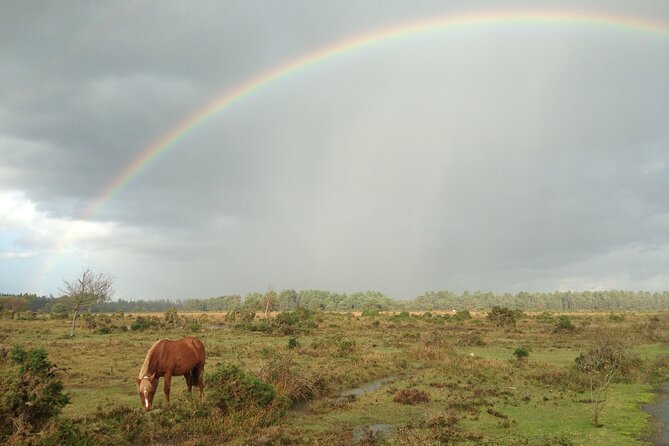
- Bolton’s Bench gives you the grand opening: The walk starts with broad views over heath and mire before entering the woods.
- The route covers several habitats: You move through open heath, ancient woodland, coppice woodland, and wet mire country.
- Wildlife is the main theme: Look and listen for Dartford Warblers, woodland birds, fallow deer, butterflies, fungi, wildflowers, and insects.
- Commoning explains the scenery: Ponies and cattle are not just decoration. Their grazing helps maintain the open character of the Forest.
- Marcus and Emily-Louise add depth: Their strengths include birds, ecology, Forest history, and friendly answers for curious walkers.
- It is good value for a guided morning: At $23.30 per person, you get about two hours of interpretation and a route that would be hard to understand fully on your own.
Starting at Bolton’s Bench in Lyndhurst
The meeting point is Bolton’s Bench, on Beaulieu Road in Lyndhurst, with a 10:00 am start. This is a useful place to begin because you do not have to wait for the Forest to reveal itself. The views open out almost at once.
From here, the route follows The Ridge. You look across classic New Forest heath and mire toward distant woodland. This open ground is one of the defining sights of the area, and it gives you a quick lesson in why the New Forest is more than a collection of trees.
The word forest can mislead you. Much of the New Forest is open heath, grassland, wet mire, and scrub, as well as woodland. That mix supports different plants and animals, and this walk makes that variety part of the experience instead of rushing straight under the canopy.
The first section also gives the guide room to explain how the scenery has been shaped. The New Forest is not untouched wilderness. People have used and managed it for centuries, while ponies and cattle continue to graze parts of it today.
More Walking Tours in South East England:
- Guided Walking Tour of New Forest National Park in Hampshire
★ 5.0 · 31 reviews - Oxford University Walking Tour With University Alumni Guide
★ 5.0 · 6,905 reviews - Tour for Muggles The Ultimate Harry Potter Walking Tour in London
★ 5.0 · 4,684 reviews
Following The Ridge across heath and mire
The Ridge is the scenic payoff early in the walk. You get panoramic views across the heath and mire, with woodland farther off. On a clear day, this should be one of the most memorable parts of the morning because the open setting lets you see how the habitats fit together.
It is also a good place to learn how wildlife uses the Forest. Open heath suits species that would not thrive beneath dense trees, while wetter mire areas support their own plants and insects. The guide may point out birdsong, distant movement, or small details in the vegetation that you could easily miss alone.
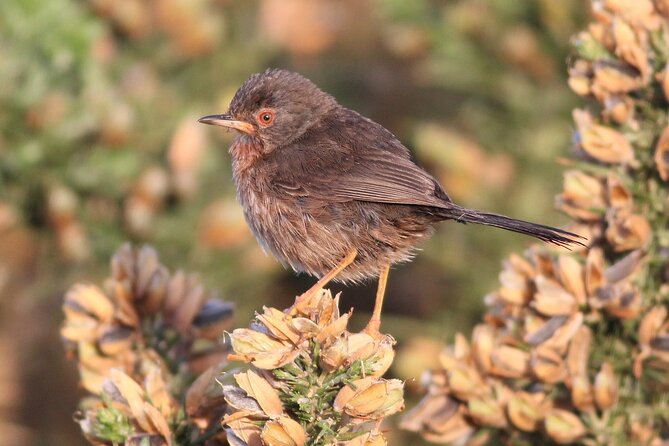
Birdwatchers should pay close attention here. Dartford Warblers are one of the species associated with New Forest heath, although no wildlife sighting can be promised. One of the pleasures of this walk is that the guide does not focus only on large animals. You might spend time on a bird, a butterfly, a fungus, or an invertebrate living close to your feet.
The open section can also feel more exposed than the woodland. Bring clothing suited to the day’s weather, since there is less shelter on the heath. The pace is relaxed, but you are still walking a substantial distance.
Entering the ancient woodland of Denny Inclosure
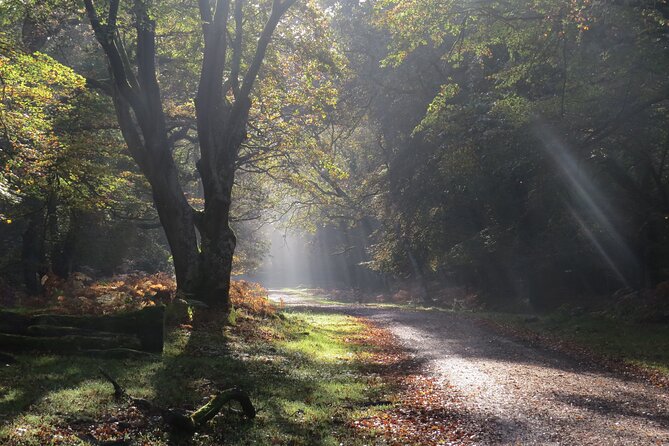
The route then enters Denny Inclosure, an area of ancient woodland. This change is more than a pleasant shift in scenery. You move from open heath, where the sky dominates, into a wooded habitat with older trees, shade, leaf litter, and different wildlife.
The guide’s role matters most here. Ancient woodland can look simply green to an untrained eye, but a careful walk can reveal much more. You may hear woodland birds, find fungi, notice wildflowers, or learn how old beech and oak trees fit into the Forest’s ecology.
Several people who have walked with Marcus praise his bird knowledge and his ability to identify birdsong. That is useful in a place where you may hear a bird long before you see it. You do not need to be a serious birder to benefit. Even a basic explanation of what you are hearing can make an ordinary woodland sound like a busy community.
This part of the route should suit families and first-time nature walkers. The guide can explain complicated subjects in a friendly way, and the group size means you are less likely to feel lost in a crowd. Still, the walk is not designed as a completely effortless stroll. Moderate fitness is required, and the full route reaches about 8 kilometres.
Seeing the Forest in several forms
After Denny Inclosure, the walk continues through a mix of woodland habitats before returning through Pondhead Inclosure. This variety is one of the route’s strongest features. You are not simply repeating the same track under trees.
Pondhead is working coppice woodland. Coppicing is an old woodland practice in which trees are cut back to encourage fresh growth. It connects the present Forest with traditional ways of managing woodland, and it gives the guide another chance to explain how human activity can support, rather than automatically damage, wildlife habitats.
That practical link is important. A visit to the New Forest can become a postcard experience of ponies and pretty trees. This walk goes further by showing you the work behind the scenery. The Forest you see is shaped by grazing, woodland management, old customs, and modern conservation concerns.
The return through Pondhead also gives the outing a satisfying sense of progression. You begin with open views, move into older woodland, explore mixed habitats, and finish by looking at a working forest. It feels like a compact lesson in how the New Forest functions.
A few more to weigh up in South East England
- Leeds Castle Admission – Ultimate Explorer Tickets
★ 3.5 · 344 reviews - Southampton: Post-Cruise Tour to London via Salisbury, Stonehenge and Windsor
★ 4.5 · 333 reviews - Admission Pass to Eagle Heights in Kent
★ 4.5 · 110 reviews - Port Lympne Day Ticket
★ 3.5 · 97 reviews
Wildlife watching with Marcus and Emily-Louise
The guides are the heart of the experience. Marcus is especially strong on birds and mammals, while Marcus and Emily-Louise together bring a broad interest in wildlife, plants, insects, fungi, and the Forest itself.
Their approach appears friendly and inclusive rather than formal. You can ask questions as you go, and the relaxed speed leaves time to stop when something catches the group’s attention. That matters on a nature walk. A rigid schedule would make it harder to notice a butterfly, examine a fungus, or listen properly to birdsong.
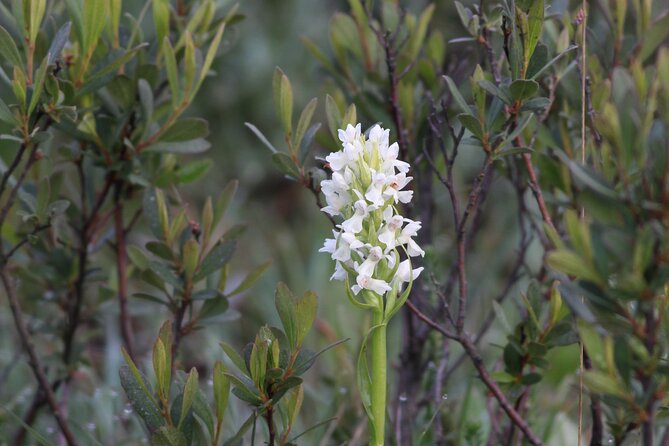
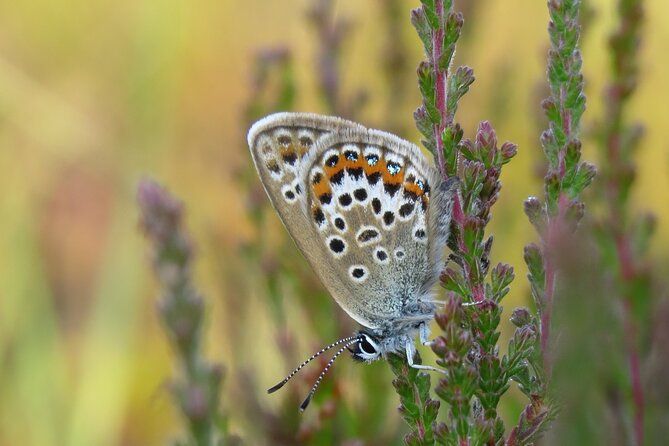
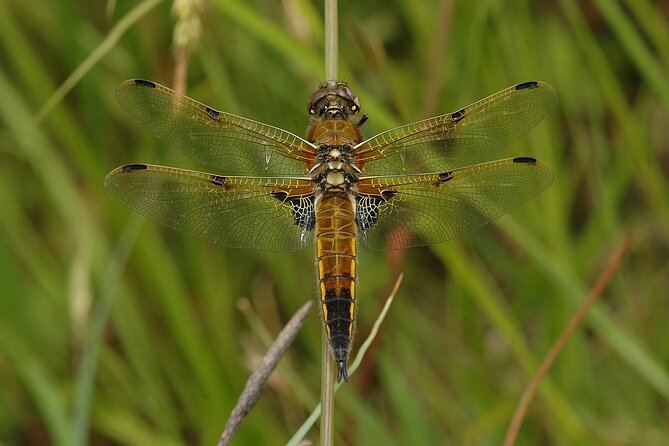
Past sightings on related walks have included a young cuckoo, a silver-washed fritillary, and a bee-wolf colony. Those examples show the range of things you might encounter, but they should not be treated as a checklist. Season, weather, and luck will affect what appears.
The strongest promise is not a particular animal. It is the chance to look at the Forest with better eyes. You might leave better able to recognize birds by sound, understand why ponies graze the heath, or notice insects and fungi that would otherwise pass unseen.
The small group supports that style. With a maximum of 12 people, the guide can keep the group together while still handling questions. A group of around six has been described as comfortable, and extra guide support has sometimes made it easier for people to ask questions. Group size can vary, but it will not become a large coach excursion.
History from the Parc Pale to wartime use
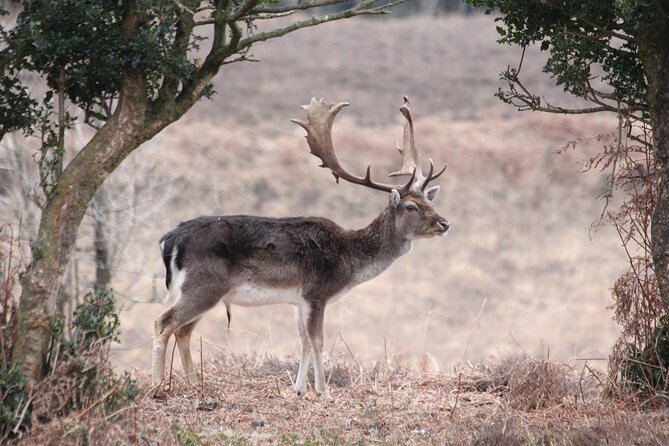
The Forest’s story is not limited to wildlife. Along the route, the guides explain how people lived here 1,000 years ago or more and how commoning still affects the area.
Commoning is central to understanding the New Forest. The ponies and cattle you see are part of a long tradition, and their grazing helps shape the balance between open heath and encroaching woodland. Learning this makes the animals feel less like a tourist attraction and more like working participants in the Forest’s management.
The walk also touches on the remains of the historic Parc Pale. This old boundary feature offers a physical link to an earlier period of Forest use. You also hear about the World War II bombing range, a reminder that the Forest has served very different purposes over time.
These details add needed context. Without them, you might see only scenery. With them, the route becomes a walk through changing patterns of settlement, land use, conservation, and military history.
The balance between natural and human stories is well judged. If you want a walk devoted only to birds, a specialist bird outing may suit you better. If you want to understand why the New Forest looks and works as it does, this broader approach is more useful.
How difficult is the 8-kilometre route?
The walk takes about two hours and follows a relaxed pace. That makes the distance manageable for people who regularly walk, but it does not turn 8 kilometres into a short wander.
You should have moderate fitness, and you should expect to spend the full time outdoors. The supplied information does not give details about exact surfaces, steep sections, toilets, or refreshments, so do not assume the route has every convenience of an urban park walk.
For families, the experience is suitable if children are comfortable with a roughly five-mile walk and with stopping to observe rather than constantly moving. It is also suitable for service animals, which are allowed.
The gentle pace is a major advantage. You have time to look around, and the guides can adjust their attention to whatever wildlife presents itself. A person who wants a brisk workout may find the walk too slow, while a curious walker will likely appreciate the breathing room.
Is $23.30 good value?
At $23.30 per person, this is fairly priced for a two-hour small-group walk led by specialist guides. You are paying for interpretation, not transport, meals, entry to a major attraction, or a packed schedule of stops.
The value comes from access to local understanding. You can walk through the New Forest for free, but you may not recognize the significance of the heath, mire, coppice woodland, grazing animals, old boundary remains, or bird calls. The guide turns a pleasant walk into a more informed one.
The group limit also helps the price feel reasonable. You are not being pushed along with dozens of people. You get a more personal setting, and the guides can respond to questions.
I would see this as particularly good value at the start of a New Forest stay. It gives you a foundation for later walks. Afterward, you are more likely to understand what you are seeing when you explore on your own.
The experience is often booked about 23 days ahead, so popular dates may fill before a last-minute visit. Confirmation arrives when you book, and the mobile ticket is convenient for a phone-based travel plan.
Who should book this Lyndhurst walk?
I would recommend it to you if you enjoy nature but do not want a technical wildlife course. You can come with a basic interest in birds, plants, or history and still find plenty to take away.
It is a good match for:
- Families with children who can manage the distance
- Visitors staying in or near Lyndhurst
- Birdwatchers who want help identifying birdsong
- Walkers interested in ecology and land management
- Repeat visitors who want to understand the Forest better
- People who prefer small groups and a calm pace
You may want another option if you need a very short walk, dislike stopping frequently, or want guaranteed sightings of a particular species. The tour’s strength is breadth and interpretation, not a promise of rare wildlife.
It also suits local residents. A walk can reveal details in familiar surroundings, and the guides’ focus on birds, insects, fungi, and Forest history gives regular walkers a fresh reason to return.
Practical details for a smooth morning
Arrive at Bolton’s Bench for the 10:00 am start. The walk returns to the same meeting point, so you do not need to arrange a separate pickup or work out a return route.
Wear footwear appropriate for an 8-kilometre outdoor walk and dress for changing weather. Since the experience requires good weather, it can be canceled if conditions are poor. You will then be offered another date or a full refund.
Free cancellation is available up to 24 hours before the start time. Inside that window, refunds and changes are not accepted. The cut-off uses local time, so check the timing carefully if you are booking from another time zone.
The walk is near public transportation, and service animals are allowed. The information does not specify every access detail, so anyone with particular mobility needs should confirm the route conditions before booking.
Should you book the New Forest Discovery Walk?
Yes, if you want more than a pleasant stroll. For $23.30, you get a relaxed two-hour introduction to the Forest’s habitats, wildlife, history, and living traditions, with a small group and guides who clearly care about the subject.
I especially like the route’s progression from Bolton’s Bench to Denny Inclosure and Pondhead Inclosure. You see the Forest open, wooded, old, and actively managed. Book it early if your dates are fixed, and choose it with realistic expectations: the walk is about learning to notice, not collecting guaranteed animal sightings.
FAQ
Where does the New Forest Discovery Walk begin?
The walk begins at Bolton’s Bench, Beaulieu Road, Lyndhurst, SO43 7DA, UK.
What time does the walk start?
The scheduled start time is 10:00 am.
How long does the experience last?
The walk lasts approximately two hours.
How far do you walk?
The route covers about 8 kilometres.
Where does the walk finish?
The activity ends back at the meeting point at Bolton’s Bench.
How many people can join the walk?
The maximum group size is 12 travelers.
What fitness level do I need?
You should have a moderate level of physical fitness because the walk covers about 8 kilometres at a relaxed pace.
Are service animals allowed?
Yes, service animals are allowed on the experience.
What happens if bad weather cancels the walk?
Because the experience requires good weather, you will be offered a different date or a full refund if it is canceled due to poor weather.
Just added in South East England
- Wine Tours of Kent Private group booking★ 5.0 · 53 reviews
- Yoga & Forest Bathing Day Retreat★ 5.0 · 10 reviews
- Wakeboarding, Water Skiing or Inflatable Rides★ 5.0 · 16 reviews
- Airport Coach Service from Gatwick to Oxford★ 3.0 · 26 reviews
- Guided Walking Tour of New Forest National Park in Hampshire★ 5.0 · 31 reviews
- Stonehenge Tour from Southampton to London★ 4.0 · 11 reviews
- 60 minute Thames & Medway Estuary Helicopter Tour★ 5.0 · 4 reviews
- Stained Glass Workshop – Full Day★ 5.0 · 2 reviews
Walking Tours, compared.

Oxford University Walking Tour With University Alumni Guide
Read our review →
Tour for Muggles The Ultimate Harry Potter Walking Tour in London
Read our review →
Cambridge University Walking Tour by Alumni™ Kings College Option
Read our review →
Blackbeard to Banksy – The Ultimate Walking Tour of Bristol
Read our review →
Air Raid Shelter + St. Nicholas Market Walking Tour
Read our review →
Walking Tour of Bath with Blue Badge Tourist Guide
Read our review →
Changing of the Guard Guided Walking Tour in London
Read our review →Browse the lists this tour appears in