
Reviewed · WALKING TOURS
London:Winston Churchill Walking Tour with WII War Rooms Entrance
Churchill’s London is hiding beneath your feet. This three-hour experience links wartime landmarks around Westminster with entry to the Churchill War Rooms, where Winston Churchill and his staff directed Britain’s military effort from 1940 to 1945. I like the small group size, capped at 15, and the way the walk connects famous sights to Churchill’s speeches, decisions, and public image. I also like that the War Rooms ticket and audio guide are included.
The main thing to understand is the format. The outdoor portion is led by a guide, but the War Rooms visit is self-guided with audio. The exact balance can feel shorter than expected if you assume a guide will stay with you for the full three hours, and some people find the War Rooms crowded at weekends and during school holidays.
In This Review
- Key points to know before booking
- Why this tour works for Churchill and wartime history
- Starting at the Battle of Britain Monument
- Boudicca, the Embankment, and Churchill’s use of the past
- Big Ben and Parliament Square from outside
- Westminster Abbey and Churchill’s public image
- Downing Street and the Whitehall memorials
- Horse Guards Parade and the final outdoor pause
- Entering the Churchill War Rooms
- How long does the experience really take?
- Price, group size, and practical value
- The communication issue you should take seriously
- Who will enjoy this London tour most?
- Should you book it?
- FAQ
- How long is the Churchill walking tour?
- Is entry to the Churchill War Rooms included?
- Is the entire tour led by a guide?
- What landmarks are seen on the walking route?
- How many people can join the tour?
- Where does the tour begin and end?
- Is the tour suitable for anyone with limited mobility?
Key points to know before booking
- The Battle of Britain Monument sets the tone: You begin with the RAF pilots and Churchill’s speeches during the 1940 air campaign.
- Westminster provides the setting: Big Ben, Parliament Square, Westminster Abbey, Downing Street, and Whitehall all appear from outside.
- The War Rooms are the main event: Your included ticket gives you about 90 minutes underground, with original objects, photographs, and displays.
- You get a small-group guide: The maximum group size is 15, allowing room for questions and a more personal pace.
- The tour is not fully guided indoors: Once inside the War Rooms, you use the audio guide and explore at your own speed.
- Allow for practical snags: The meeting point is on Whitehall, security is required, and bathrooms are limited before reaching the museum.
Why this tour works for Churchill and wartime history
If you simply visit the Churchill War Rooms on your own, you will see an excellent museum but may miss how its story fits into Westminster. This walk gives you that setting first. You hear about Churchill at the places where Britain’s government, military leaders, and public symbols came together.
The route is not a Churchill biography in the usual sense. It is more like a guided introduction to the man through the streets he used and the monuments that helped shape wartime memory. You hear about his speeches, his leadership during the Blitz, his connection with Parliament, and the way he drew on older British stories to inspire resistance.
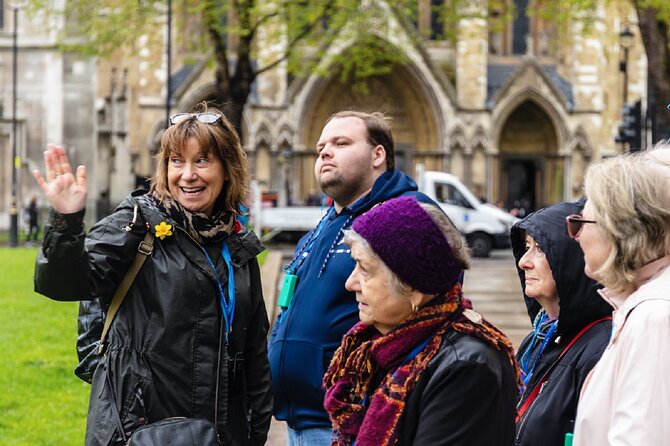
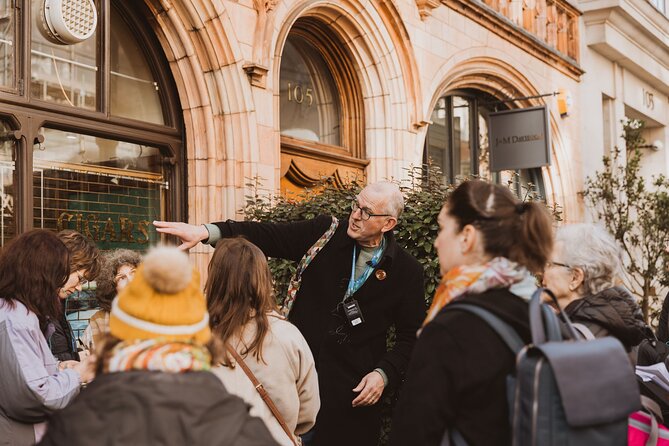
The small group matters here. At 15 people or fewer, you should be able to hear the guide better than in a large coach group and ask questions without turning the walk into a public seminar. The strongest guide experiences have included Danny, Savanah, Peter, Kate, Sue, Judd, Alex, and David. Their styles varied, but the best accounts describe guides who were warm, flexible, and able to tell Churchill’s story with personality rather than simply reciting dates.
The outdoor walk can be noisy. Whitehall and the Embankment carry traffic, and one useful improvement would be a small voice amplifier in the loudest spots. If you have trouble hearing in busy streets, stay close to the guide and avoid drifting to the rear of the group.
More Walking Tours in London
- Tour for Muggles The Ultimate Harry Potter Walking Tour in London
★ 5.0 · 4,684 reviews - London Jack The Ripper Guided Walking Tour
★ 5.0 · 3,131 reviews - Changing of the Guard Guided Walking Tour in London
★ 5.0 · 1,793 reviews
Starting at the Battle of Britain Monument
The walk begins at the Royal Air Force Memorial on Whitehall, at the listed meeting point near the Battle of Britain Monument, London SW1A 2NS. Check your confirmation carefully, since the meeting-point description can look confusing when copied into booking systems.
The Battle of Britain Monument is a good opening stop because it puts ordinary RAF pilots at the center of the story. The guide explains how Churchill’s speeches helped build public resolve during the 1940 air battles. This is not a long stop, about 10 minutes, but it gives the tour an immediate focus: leadership mattered, yet the defense of Britain depended on pilots, ground crews, and civilians too.
The memorial sits in a busy part of London, so expect an outdoor explanation rather than a quiet ceremony. You do not pay an extra admission fee here.
Boudicca, the Embankment, and Churchill’s use of the past
The next pause concerns the Boudiccan Rebellion, with roughly five minutes devoted to the statue of Boudicca and her daughters. The connection is not that Churchill was a Roman Britain expert. It is that he could draw on older national stories when encouraging people to resist a new threat.
This short stop adds texture to the tour. Churchill often used language filled with memory, courage, and defiance. Looking at Boudicca helps explain how he placed the Second World War inside a much longer British story.
Do not expect a full account of Boudicca’s revolt. This is a quick interpretive stop, not a separate ancient-history tour. If your main interest is Churchill, it earns its place because it shows how he used symbols and stories to reach the public.
Big Ben and Parliament Square from outside
Big Ben is next, usually for about 10 minutes. You see the clock tower from outside and hear how it became a reassuring national symbol during wartime, even after the Palace of Westminster suffered damage during the Blitz.
This is one of the tour’s more visual moments. Have your camera ready, but remember that the explanation may compete with traffic and crowds. Admission to the tower is not part of the experience, and the tour does not take you inside Parliament.
At Parliament Square, the guide shifts from symbol to government. You see the Houses of Parliament and Churchill’s statue, then hear how he defended British democracy. The stop lasts about 15 minutes and helps explain why Churchill’s wartime role cannot be separated from the institutions around him.
The square is filled with statues of major political figures. A good guide can use them to explain Churchill’s place in public memory without turning the stop into a long list of names. If you want a detailed visit inside Parliament, you will need a separate ticket and a separate visit.
A completely different sort of day out:
- Stonehenge, Windsor Castle, and Bath from London
★ 4.5 · 18,662 reviews - London Big Bus Hop-On Hop-Off Tour with Optional River Cruise
★ 3.5 · 10,803 reviews - London Small Group Tour of Historical Pubs
★ 5.0 · 10,422 reviews - Stonehenge, Windsor Castle and Bath with Pub Lunch in Lacock
★ 4.5 · 7,402 reviews
Westminster Abbey and Churchill’s public image
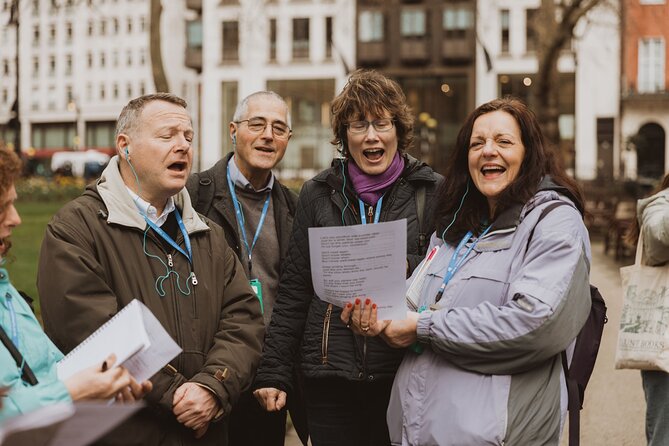
Westminster Abbey appears from outside for about 15 minutes. The tour discusses Churchill’s connection with the abbey, but it does not include entry.
That distinction is important. You get context, architecture, and a good look at one of London’s most important religious and ceremonial buildings, but not the interior spaces. The stop works best as part of the larger route, showing how Churchill’s life intersected with places tied to British national identity.
If you are choosing between this experience and an interior tour of Westminster Abbey, the choice depends on your priorities. This tour gives you Churchill and wartime leadership. It does not replace an abbey visit.
Downing Street and the Whitehall memorials
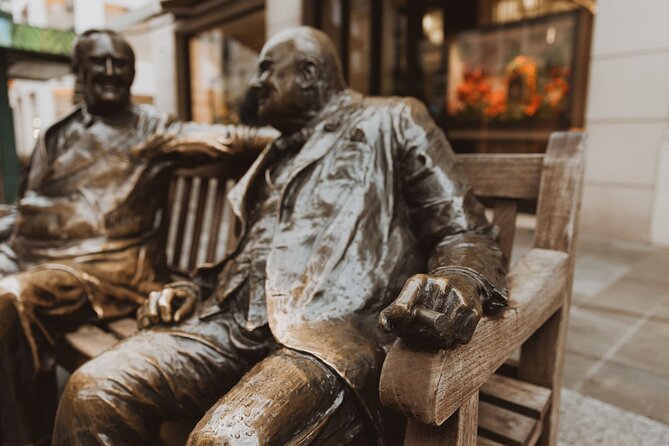
At 10 Downing Street, the group pauses for about 15 minutes. You view Churchill’s wartime residence from outside and hear about his role in leading Britain toward victory. Again, there is no interior access.
The value of this stop comes from location. Downing Street is still a working center of government, so the guide can place Churchill in the setting where a prime minister made decisions, met advisers, and addressed the national crisis. The view is restricted, and security measures shape what you can see, but the street remains an important part of the story.
Whitehall follows, with attention to memorials and statues honoring those who died in the Second World War and other conflicts. This is a quieter part of the walk in subject, if not always in sound. It broadens the tour beyond Churchill himself and brings attention back to the enormous human cost of wartime decisions.
That balance is worthwhile. Churchill’s speeches are memorable, but the memorials remind you that victory had a price paid by soldiers, air crews, sailors, and civilians.
Horse Guards Parade and the final outdoor pause
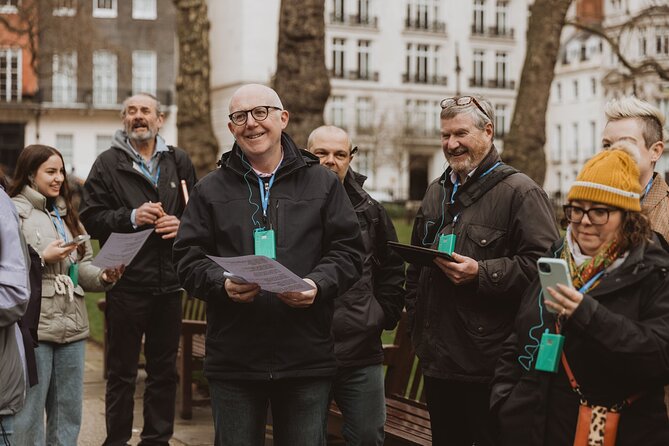
Horse Guards Parade provides another link between Churchill and the machinery of war. You hear about his wartime inspections of troops and may see mounted cavalry on the parade ground, depending on timing and conditions.
The stop lasts around 10 minutes. The horses and ceremonial setting make it a pleasant break from the more solemn memorials, though the military display is not the central purpose of the tour. Think of it as a short look at the traditions and institutions surrounding the wartime government.
The itinerary also includes a brief pause at a memorial to those who served in the Second World War and other conflicts. Details of this stop are limited, but it continues the route’s movement from Churchill’s personal story toward collective remembrance.
Entering the Churchill War Rooms
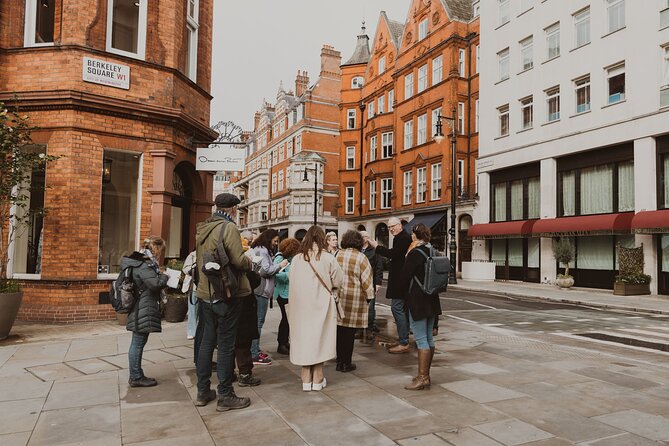
The walk ends at Clive Steps on King Charles Street, London SW1A 2AH, where you enter the Churchill War Rooms. This is the part most people book the experience to see.
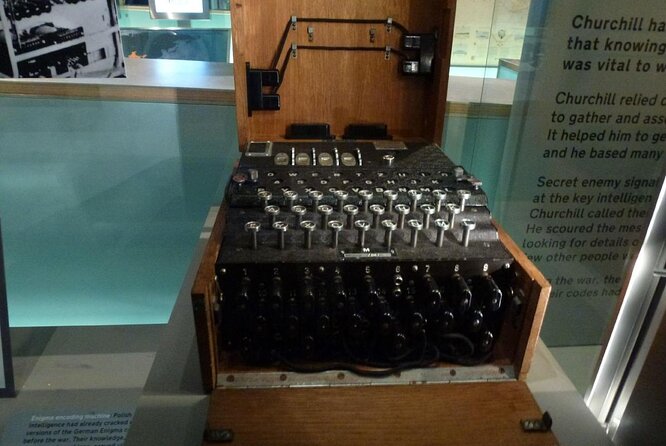
The underground complex served as a secret base of operations during World War II. Churchill and his staff worked there from 1940 through 1945, directing military operations while London faced the threat of bombing. The rooms preserved here are valuable because they show war as administration as well as drama. Decisions were made around tables, information was tracked, messages were passed, and staff worked under pressure for long hours.
Your admission is pre-reserved, and the ticket includes an audio guide. The indoor visit lasts about 90 minutes, though the experience can take longer if you listen to everything and stop at each display. The self-guided format has one clear benefit: you can move at your own pace. You are not forced to stay with the walking group, and you can spend extra time with the rooms or exhibits that interest you most.
You will see original artifacts, historic photographs, and interactive displays. The preserved corridors and rooms help you picture the conditions in which Churchill and his staff operated. For military enthusiasts, the appeal lies in the command structure and the practical work behind wartime decisions. For general visitors, the personal objects and working spaces make Churchill less like a statue and more like a demanding, complicated human being.
Several excellent experiences have centered on this museum portion. It is often the strongest element of the day, especially for people who already know the main Westminster sights. One useful point is that you may have trouble seeing everything in the allotted time. If the War Rooms are your top priority, treat the 90-minute estimate as a starting point, not a promise that you will finish every display.
How long does the experience really take?
The advertised duration is about three hours. That appears to include the outdoor walking portion and approximately 90 minutes inside the War Rooms.
Read the timing carefully. The guide leads the Westminster walk, then checks you into the underground museum. The indoor section is audio-guided, not a continuation of the fully guided walk. Some people expect to remain with the guide for all three hours, while the actual arrangement can feel closer to a guided walk followed by independent museum time.
Allow extra time if you like museums or plan to listen closely. One person found the overall visit lasted about two and a half hours, while another felt the description made the division between guided and self-guided time unclear. I would not schedule a tight appointment immediately afterward.
The route includes several short stops, rather than long lectures at each landmark. One criticism has been that the outdoor section could offer more detail, particularly around Parliament Square and the Houses of Parliament. If you want a full political tour of Westminster, this may feel light. If you want a focused introduction before entering the War Rooms, the pace is easier to manage.
Price, group size, and practical value
At $108.53 per person, this is not a cheap walk. The price includes the Churchill War Rooms ticket, audio guide, local English-speaking guide, and a group limited to 15 people. The museum admission is the key part of the value, since it is a major London attraction and the tour pairs it with an organized route through Westminster.
I think the price makes the most sense if you want help connecting the outdoor sights. A self-guided visit to the War Rooms may cost less in total, but it will not give you the same introduction to Churchill’s memorials, Parliament, Downing Street, and Whitehall.
The value is weaker if you mainly want museum entry. You spend only short periods at some outdoor stops, and the Houses of Parliament, Westminster Abbey, Big Ben, and Downing Street are all exterior views. At nearly $110, anyone expecting a three-hour, guide-led historical lecture could feel disappointed.
The group size is a real advantage. A 15-person limit should feel more personal than a standard city sightseeing group, and several guides have been praised for adjusting their pace and helping with mobility concerns. Still, you need to walk at a moderate pace without major difficulty. Wear comfortable shoes and prepare for London weather. Judd, for example, kept a rainy tour going by finding cover for stories, but rain will still make the route less pleasant.
There are limited bathrooms before the War Rooms, so plan ahead. All participants must pass through security before entering the underground museum.
The communication issue you should take seriously
Most of the available feedback is strongly positive about the guides and museum. The overall rating is 4.3 from 39 ratings, with repeated praise for guides such as Danny, Peter, Savanah, Judd, Sue, Alex, and David.
There are also serious complaints about missed meetings and confusion over the meeting point. In some cases, people waited at the listed location and struggled to reach the operator or the booking platform. This does not tell you that every departure will have a problem, but it does give you a sensible precaution: save the direct contact details for Walks UK, confirm the exact Whitehall meeting location before leaving, and arrive early.
Do not rely only on a third-party message system if you need urgent help on the morning. The meeting point is near the Royal Air Force Memorial on Whitehall, and the tour ends at Clive Steps, not at your hotel. No hotel pickup or drop-off is included.
Who will enjoy this London tour most?
I would recommend it most strongly to:
- First-time London visitors who want Westminster landmarks explained through wartime events
- Churchill enthusiasts and military-history fans
- People who want a small group instead of a large bus tour
- Visitors who prefer a guide outdoors but freedom to explore a museum alone
- Anyone with limited time who wants the War Rooms and nearby landmarks in one outing
I would be more cautious if you want to enter Big Ben, Parliament, Westminster Abbey, or Downing Street. None of those interiors is included. I would also think twice if crowds bother you, especially during weekends and school holidays, when the War Rooms can be busy.
The tour may not satisfy someone seeking a detailed account of British political history. The outdoor stops are brief, and the guide quality can vary in presentation. A well-informed storyteller can make the route memorable, while a less polished delivery can leave you wishing for more detail.
Should you book it?
Book this experience if you want a useful Churchill introduction followed by the excellent Churchill War Rooms. The strongest value comes from the combination: a small-group walk through the symbols of wartime Westminster, then 90 minutes or more in the actual underground headquarters.
Skip it if you only need museum admission, expect a guide to remain with you indoors, or want interior tours of Parliament and Westminster Abbey. At $108.53, the cost demands clear expectations.
For the best experience, confirm the meeting point, arrive early, wear walking shoes, stay close enough to hear the guide, and leave time after the official three hours if the War Rooms capture your attention. For history fans, this is a worthwhile pairing. The museum is the anchor, but the streets above give Churchill’s story a setting and a human scale.
FAQ
How long is the Churchill walking tour?
The experience lasts approximately three hours. This includes the guided outdoor walk and about 90 minutes in the Churchill War Rooms, where you explore independently with an audio guide.
Is entry to the Churchill War Rooms included?
Yes. The price includes pre-reserved admission to the Churchill War Rooms and an audio guide.
Is the entire tour led by a guide?
No. The outdoor portion is led by a local English-speaking guide. The War Rooms portion is self-guided with an audio guide.
What landmarks are seen on the walking route?
The route includes the Battle of Britain Monument, the Boudicca statue, Big Ben, Parliament Square, Westminster Abbey, 10 Downing Street, Whitehall, and Horse Guards Parade. The listed landmark visits are exterior stops.
How many people can join the tour?
The group has a maximum of 15 people.
Where does the tour begin and end?
The tour begins near the Royal Air Force Memorial on Whitehall, London SW1A 2NS. It ends at Clive Steps on King Charles Street, London SW1A 2AH.
Is the tour suitable for anyone with limited mobility?
The experience requires walking at a moderate pace without difficulty. One guide has been noted for being sensitive to mobility concerns, but the tour is still an outdoor walking activity and all participants must pass through security at the museum.
Just added in London
- Private Transfers between London & Windsor★ 5.0 · 9 reviews
- Private Transfer: Heathrow Airport to London Kings Cross or St Pancras Stations★ 5.0 · 3 reviews
- London to Southampton Transfers★ 5.0 · 7 reviews
- London to Southampton Cruise Port | Private Transfer★ 5.0 · 6 reviews
- Private 3-hour Tour of The Iconic Tower of London & Tower Bridge★ 4.5 · 6 reviews
- Private Tour to Westminster Abbey with optional Houses of Parliament in London★ 4.0 · 15 reviews
- Private Tours to Stonehenge & Oxford★ 4.0 · 4 reviews
- Private Tour to Stonehenge and Windsor Castle★ 5.0 · 11 reviews
Walking Tours, compared.

Oxford University Walking Tour With University Alumni Guide
Read our review →
Tour for Muggles The Ultimate Harry Potter Walking Tour in London
Read our review →
Cambridge University Walking Tour by Alumni™ Kings College Option
Read our review →
Blackbeard to Banksy – The Ultimate Walking Tour of Bristol
Read our review →
Air Raid Shelter + St. Nicholas Market Walking Tour
Read our review →
Walking Tour of Bath with Blue Badge Tourist Guide
Read our review →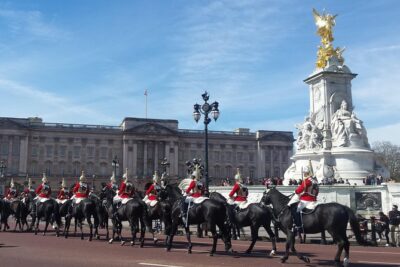
Changing of the Guard Guided Walking Tour in London
Read our review →Browse the lists this tour appears in