
Reviewed · WALKING TOURS
London Crimes And Punishment Private Walking Tour
London’s dark side has plenty of street addresses. This private walking tour links gangland pubs, Jack the Ripper sites, old prisons, execution grounds, and forgotten memorials across the East End and Southwark. I like the way it connects famous names with ordinary streets, and I like the private format, which lets your guide adjust the pace and explain details that suit your group. The main drawback is the sheer amount of ground covered in about three hours.
I also like that the route goes well beyond Jack the Ripper. You’ll hear about the Kray twins, the Great Fire of London, the Peasants’ Revolt, Dickens, the Blitz, and the grim justice system of old London. At $247.73 per person, it is a costly outing for one or two people, but the value improves for a larger group using the available group discounts.
In This Review
- Six details that shape the tour
- Whitechapel begins with crime, gangs, and Big Ben
- Following Jack the Ripper through Whitechapel
- Brick Lane explains more than a crime case
- Spitalfields links churches, markets, and poverty
- Smithfield and the old machinery of punishment
- St. Bartholomew’s Great and St. Paul’s Cathedral
- Old Bailey, the Viaduct Tavern, and condemned prisoners
- London Bridge and the river crossing
- The Millennium Bridge, Shakespeare’s Globe, and the Clink
- Borough Market, Dickens, and Marshalsea Prison
- Pace, walking conditions, and hotel pickup
- Is $247.73 per person good value?
- Who should book this London crime walk?
- Should you book it?
- FAQ
- How long is the London Crimes and Punishment Private Walking Tour?
- Where does the tour start?
- Where does the tour finish?
- Is this a private tour?
- Is hotel pickup available?
- Are attraction admission tickets included?
- Can I cancel for a full refund?
Six details that shape the tour
- Thirty stops in three hours: Expect a brisk route with most stops lasting between five and ten minutes.
- A private guide for your group: You do not share the walking tour with strangers, and the pace can be adjusted.
- Jack the Ripper and the Krays: The tour begins in Whitechapel, with gangland and Victorian crime at the center of the opening section.
- London’s punishment machinery: Old Bailey, Smithfield, the Viaduct Tavern, London Bridge, and the former Marshalsea Prison reveal how harsh justice once was.
- A route across two historic districts: The walk begins at Whitechapel Road and finishes near Borough High Street, south of the river.
- Hotel pickup is offered: Pickup and drop-off are handled on foot or by London Underground, while transport costs are not included.
Whitechapel begins with crime, gangs, and Big Ben
The tour starts at 9:30 am at 277 Whitechapel Road. That early start is useful. Whitechapel has many stories packed into a small area, and beginning before the day gets away from you gives the guide time to set the scene.
The first stop is the Whitechapel Bell Foundry, where you’ll hear about the making of Big Ben and the Liberty Bell, along with the story behind Big Ben’s name. Admission is not included, and the stop lasts about ten minutes, so expect an exterior-focused explanation rather than a long indoor visit.
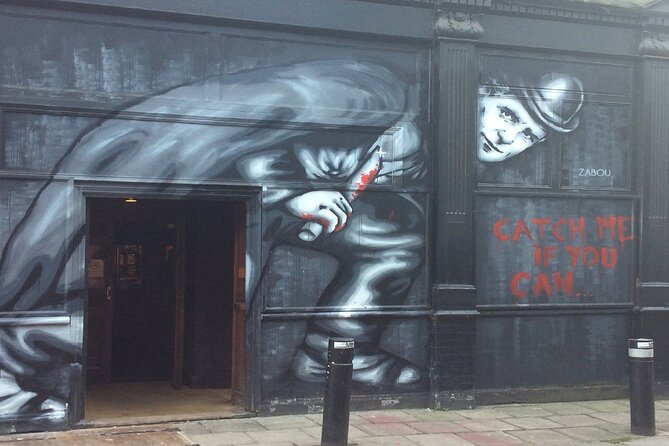
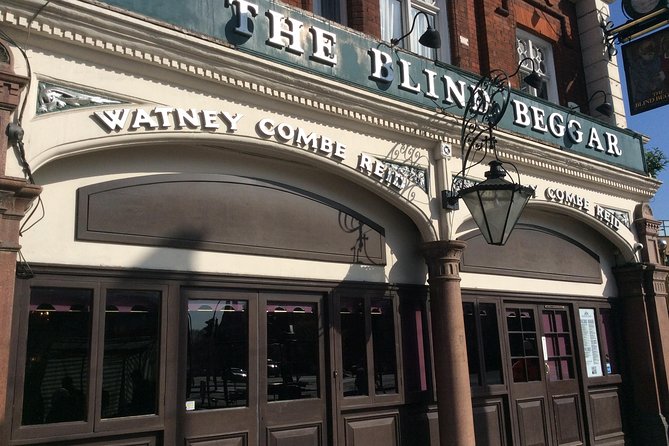
From there, the mood turns sharply darker at the Blind Beggar public house. This was the site of a notorious gangland shooting in the 1960s connected with Ronnie and Reggie Kray. The tour presents the Krays as London’s answer to Al Capone, a useful comparison for understanding their fame and fearsome reputation.
You’ll have about ten minutes here. The pub is not simply a backdrop for a crime story. It gives you a fixed point for thinking about how East London’s streets changed from Victorian poverty to postwar gang culture. Admission is not included, so plan on hearing the story outside unless your group chooses to buy something independently.
More Walking Tours in London
- Tour for Muggles The Ultimate Harry Potter Walking Tour in London
★ 5.0 · 4,684 reviews - London Jack The Ripper Guided Walking Tour
★ 5.0 · 3,131 reviews - Changing of the Guard Guided Walking Tour in London
★ 5.0 · 1,793 reviews
Following Jack the Ripper through Whitechapel
The Ten Bells is the first major Jack the Ripper stop. It is the pub most closely tied to the Ripper story and is said to be near the street where he lived. The stop is short, only about five minutes, but the location carries much of the route’s atmosphere.
Next comes the White Hart, another pub linked with the Ripper case. The tour then moves toward the possible site of one of the killings. The wording matters here. The route deals with associations and possible locations, not proven answers to every mystery.
This is a good reason to choose a private tour instead of a simple location checklist. You can ask how firm the evidence is, which stories come from later legend, and how Victorian newspapers shaped the public image of the crimes. The subject is grim, so this section suits people with a serious interest in criminal history more than anyone looking for light entertainment.
Brick Lane explains more than a crime case
Brick Lane gives the tour room to widen its view. Today, the street is known for a long stretch of curry restaurants and a fashionable market culture, but the guide explains what life was like here in Victorian times.
The five-minute stop at Brick Lane Jamme Masjid adds an especially useful layer. The building was a synagogue during the Jack the Ripper period and, earlier, a Protestant church used by French refugees. That sequence tells you more about migration, faith, and poverty in the East End than a crime story alone can do.
The tour then points out the Golden Boy of Pye Corner, a small golden statue of a plump boy connected with the Great Fire of London. It is the sort of detail you could easily walk past without noticing. I like stops like this because they turn an ordinary side street into a clue about how London remembers disaster.
Spitalfields links churches, markets, and poverty
Christ Church Spitalfields was once at the center of Victorian life. Its location near a market and brewery, and beside what was described as one of London’s most dreadful streets, helps explain the sharp contrast between grand institutions and desperate living conditions.
You’ll also see the former soup kitchen for the Jewish poor. The site represents one of the first and one of the last Jewish soup kitchens in the East End. It is a small stop, around five minutes, but it gives the tour a social focus. Crime here is not treated as an isolated subject. Poverty, overcrowding, migration, and survival all form part of the story.
Old Spitalfields Market follows. The market began as an industrial market and now has a more modern style under its Victorian roof. You’ll get about five minutes here, with admission included. Since this is an active market area, the stop may feel less solemn than the surrounding sites, but it provides a welcome change of pace.
A completely different sort of day out:
- Stonehenge, Windsor Castle, and Bath from London
★ 4.5 · 18,662 reviews - London Big Bus Hop-On Hop-Off Tour with Optional River Cruise
★ 3.5 · 10,803 reviews - London Small Group Tour of Historical Pubs
★ 5.0 · 10,422 reviews - Stonehenge, Windsor Castle and Bath with Pub Lunch in Lacock
★ 4.5 · 7,402 reviews
Smithfield and the old machinery of punishment
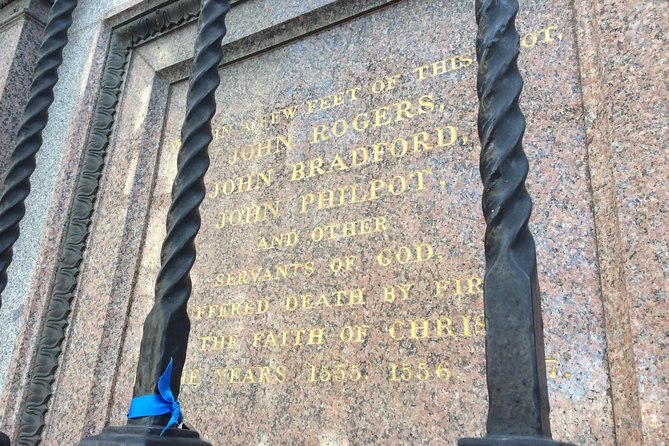
Smithfield Market has long been tied to London’s meat trade. The tour uses it to explain an earlier period when punishment and public spectacle were far less restrained than they are today. The stop lasts around ten minutes and is one of the stronger places for understanding how public violence once formed part of city life.
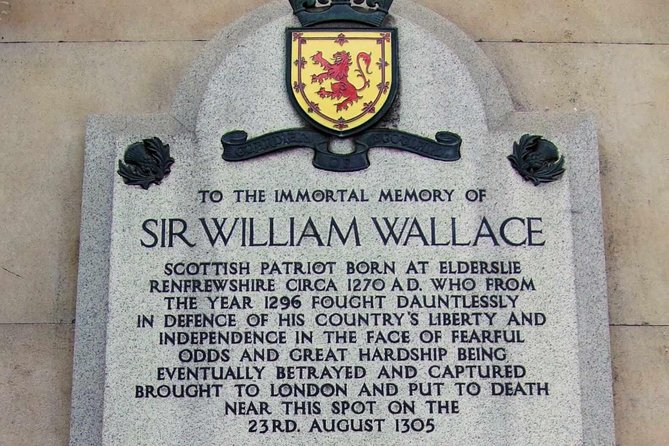
The William Wallace Memorial adds another famous name. Here you’ll learn about the site where William Wallace was hanged, drawn, and quartered, along with other nearby stories. The wording is blunt, and the subject is not softened. If you prefer history presented plainly, you’ll appreciate that approach. If you are sensitive to graphic descriptions, this is one of the sections to keep in mind.
The Peasants’ Revolt plaque shifts the focus from punishment to political change. The guide explains how the revolt helped shape later life in Western countries. It is a short stop, but it gives the walk a broader purpose. London’s darker past is not only about murderers. It is also about power, labor, rebellion, and who gets to make the rules.
St. Bartholomew’s Great and St. Paul’s Cathedral
At the Church of St. Bartholomew the Great, you’ll visit a small graveyard and hear about the secrets connected with it. The church is one of the route’s quieter spots, and its age gives the stop a different tone from the pubs and courts.
St. Paul’s Cathedral appears next, viewed from outside. You’ll hear how it avoided destruction during the Second World War. The five-minute stop does not include entry, so do not expect time inside the cathedral or access to its dome.
This is an important practical point. The tour is a walking history route, not a series of interior visits. Many stops involve exterior storytelling, and the schedule would not allow lengthy sightseeing at each location. I see that as a benefit if you want a wide sweep of London, but a limitation if you prefer to spend time inside churches, museums, or historic buildings.
Old Bailey, the Viaduct Tavern, and condemned prisoners
The Viaduct Tavern sits near a former execution site. Its cellars are also associated with holding cells where condemned men spent their final night. The stop lasts about five minutes, but it gives you a vivid sense of how closely pubs, courts, prisons, and punishment once sat together.
At Holy Sepulchre London, the guide explains the church’s often gruesome past. The route then reaches Old Bailey, one of the oldest courts in the Western world and still a place where serious criminal cases are tried.
These stops work well together. You move from the physical places where people waited, drank, worshiped, or faced death to the court that represented formal judgment. The tour does not treat old London justice as quaint. It shows a system built around public fear, harsh penalties, and visible authority.
London Bridge and the river crossing
Christchurch Greyfriars Church Garden is a small memorial garden and ruin connected with the Blitz. It offers a pause from older stories of executions and medieval punishment, reminding you that London’s suffering continued into the twentieth century.
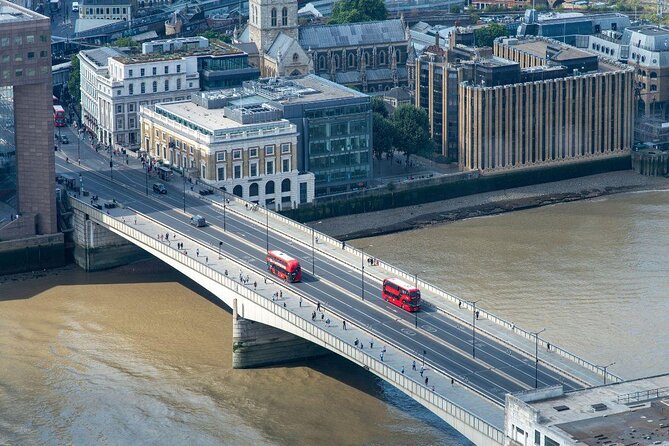
At London Bridge, the guide explains the ceremonial spike associated with displaying the heads of executed people as a warning to those entering the city. The modern bridge may look ordinary, but this story changes how you read the crossing. It was once an entrance where the authorities made a point of displaying their power.
The National Firefighters Memorial brings another shift. It honors firefighters who died protecting London and other cities during the Luftwaffe bombing raids and fires of the Second World War. This is one of the route’s more respectful and moving pauses, especially after the earlier focus on violence carried out by the state.
The Millennium Bridge, Shakespeare’s Globe, and the Clink
The Millennium Bridge is not itself connected with gore, but from here you’ll hear about a former suicide spot and the sexist way that location was treated. The detail is brief, though it shows how social attitudes shaped the public response to tragedy.
At Shakespeare’s Globe, the tour turns to the district’s Elizabethan past. Today, the Globe is a major place to see a play. In Shakespeare’s time, the area was known for disorder, entertainment, prostitution, and rough amusements. The comparison to Amsterdam’s red-light district is used to explain its reputation.
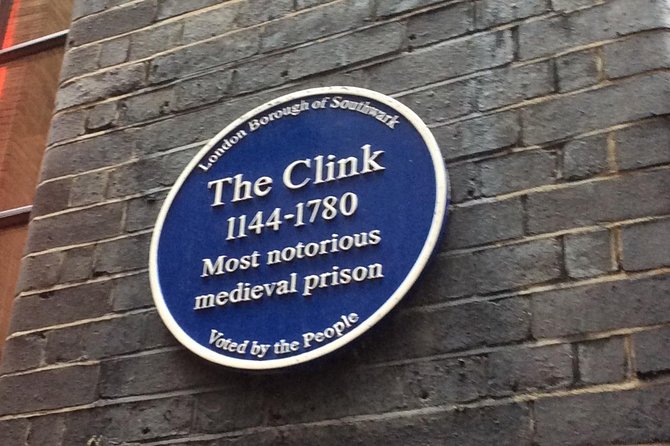
The Clink Prison Museum comes next. You do not enter the museum, but the exterior is described as authentic, and the guide explains why this part of London had such a poor reputation. Again, you are paying for interpretation rather than admission.
Winchester Palace, mostly destroyed by one of London’s major fires, adds the story of the bishop who once lived there and his terrible behavior. The ruins are a reminder that powerful people could be just as troubling as the criminals sent before the courts.
Borough Market, Dickens, and Marshalsea Prison
Borough Market marks the route’s entry into Dickensian London. The market has existed in some form since Roman times, and its surroundings connect with the world of Oliver Twist. You’ll have around ten minutes here, with no admission charge.
The tour finishes at the south wall of Marshalsea Prison, a former debtors’ prison that had a strong effect on Charles Dickens. This is a useful ending because it brings the tour back to ordinary people trapped by poverty and debt, rather than ending with another famous murderer or execution.
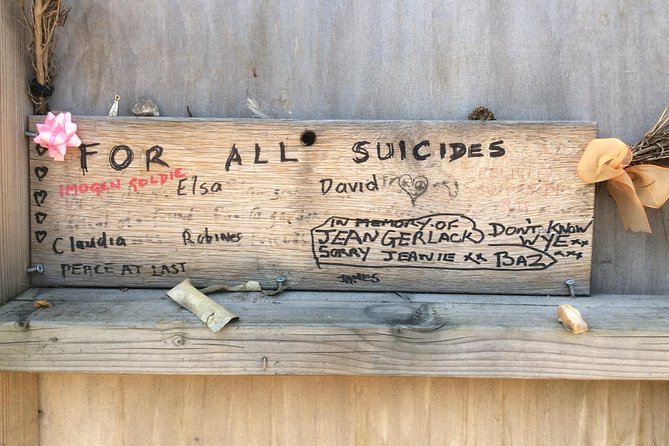
Crossbones Graveyard and Garden of Remembrance follows as a final major stop. It is associated with criminals, prostitutes, plague victims, and people who died by suicide. The guide presents it as a tragic but beautiful place, one that remains little known even among Londoners.
Red Cross Cottages and Garden completes the historical arc. Here you’ll hear about an early attempt to improve welfare for London’s poorest residents. The ending gives the tour a measure of compassion. London’s past was cruel, but people also tried to repair some of the damage.
Pace, walking conditions, and hotel pickup
The route lists thirty stops, but the total time is about three hours. That means you should expect short explanations, steady walking, and little spare time at each location. Some stops last only five minutes, while the longest listed stop is Crossbones Graveyard at fifteen minutes.
A moderate level of physical fitness is recommended. The tour operates in all weather, so wear shoes suited to city walking and bring clothing for rain, wind, or sun. The route begins in Whitechapel and ends near Borough High Street, so you should not expect to finish where you started.
Hotel pickup and drop-off are offered on foot or using the London Underground. Transportation to and from attractions is not included, so clarify what this means for your own group before setting out. Service animals are allowed, and the route is near public transport.
Is $247.73 per person good value?
At $247.73 per person, this is not a budget walking tour. For one or two people, the price may feel steep, especially since most stops are outdoors and admission is not included.
The calculation changes for a family or group that can use a discount. You are paying for a private guide, hotel pickup and drop-off arrangements, a carefully connected route, and the freedom to ask questions without a shared group dictating the pace.
The guide, Stephen Liddell, receives especially strong praise for his care, detail, and ability to make the stories memorable. One detailed account describes him as someone who does more than recite dates and facts, while another praises the care and attention given throughout the afternoon. That is important here. With thirty locations, a guide who can tell a story rather than read a list makes a major difference.
Still, ask yourself what kind of sightseeing you prefer. If you want museum entries, long visits inside historic buildings, or a relaxed pace, the cost may not suit you. If you want a focused private route through overlooked streets and you enjoy asking questions, the price is easier to justify.
Who should book this London crime walk?
I would choose this tour if you have already seen the major central sights and want a more unusual side of London. It is especially well suited to people interested in Jack the Ripper, the Krays, Dickens, old prisons, public executions, religious change, or the social history of East London.
It also suits families with older children, couples, and small private groups who want a guide to shape the day around their interests. The subject matter is often grim, so it is not a good match for young children or anyone seeking a gentle introduction to London.
Book with the weather in mind. Free cancellation is available up to 24 hours before the start time, but changes or cancellations inside that window are not refunded. Confirmation is normally provided at booking, though bookings made within two days may take up to 48 hours, subject to availability.
Should you book it?
Book it if you want London presented through its crimes, punishments, poverty, and forgotten memorials rather than through its postcard sights alone. The strongest feature is the guide-led storytelling, especially with Stephen Liddell, whose careful, personal approach gives the route more life than a standard fact sheet.
Skip it if you want lots of indoor sightseeing or dislike brisk walking in poor weather. For a private group, the broad route from Whitechapel to Southwark offers good value in time and variety. For a solo visitor, the per-person price is harder to defend.
FAQ
How long is the London Crimes and Punishment Private Walking Tour?
The tour lasts approximately three hours.
Where does the tour start?
It starts at 277 Whitechapel Road, London E1 1BY, at 9:30 am.
Where does the tour finish?
The tour finishes on Borough High Street, London SE1 1JX, near the Marshalsea Prison South Wall and Crossbones area.
Is this a private tour?
Yes. Only your group participates, and the tour is led by a local professional guide.
Is hotel pickup available?
Yes. Hotel pickup and drop-off are offered on foot or by London Underground.
Are attraction admission tickets included?
Admission is not included for most stops. The route does include the Old Spitalfields Market, while many other locations are viewed from outside or visited as public sites.
Can I cancel for a full refund?
Yes. You can cancel at least 24 hours before the local start time for a full refund. Cancellations or changes made less than 24 hours before the start time are not accepted for a refund.
Just added in London
- Private Transfers between London & Windsor★ 5.0 · 9 reviews
- Private Transfer: Heathrow Airport to London Kings Cross or St Pancras Stations★ 5.0 · 3 reviews
- London to Southampton Transfers★ 5.0 · 7 reviews
- Private 3-hour Tour of The Iconic Tower of London & Tower Bridge★ 4.5 · 6 reviews
- London to Southampton Cruise Port | Private Transfer★ 5.0 · 6 reviews
- Private Tours to Stonehenge & Oxford★ 4.0 · 4 reviews
- Private Tour to Stonehenge and Windsor Castle★ 5.0 · 11 reviews
- Private Tour to Westminster Abbey with optional Houses of Parliament in London★ 4.0 · 15 reviews
Walking Tours, compared.
Oxford University Walking Tour With University Alumni Guide
Read our review →
Tour for Muggles The Ultimate Harry Potter Walking Tour in London
Read our review →
Cambridge University Walking Tour by Alumni™ Kings College Option
Read our review →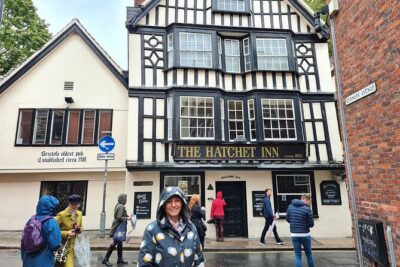
Blackbeard to Banksy – The Ultimate Walking Tour of Bristol
Read our review →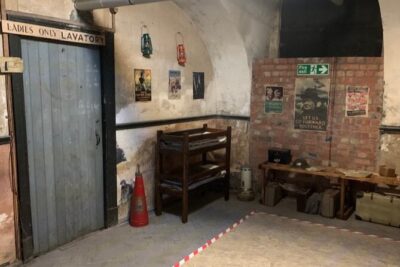
Air Raid Shelter + St. Nicholas Market Walking Tour
Read our review →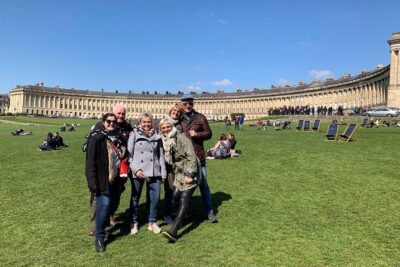
Walking Tour of Bath with Blue Badge Tourist Guide
Read our review →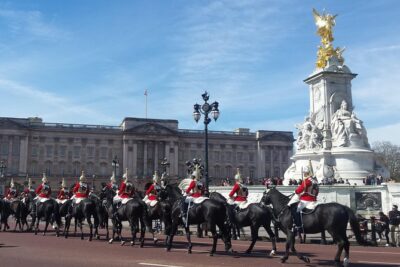
Changing of the Guard Guided Walking Tour in London
Read our review →Browse the lists this tour appears in