
Reviewed · TREASURE HUNTS
Immersive Treasure Hunt Adventure in York – Outdoor Escape Room
York turns into a puzzle box. This private, phone-led adventure mixes famous sights with lesser-known corners, sending you through the city with a Roman emperor, a Norse monster, and a Greek sea goddess. I like the freedom to pause at three optional pub or café stops, and the fact that your group sets its own pace rather than following a guide.
At $20.37 per person, it is a reasonably priced way to spend three hours in central York, especially for friends who enjoy wordplay. The main caution is difficulty: a few clues can send you in the wrong direction, and the story and finish may feel less polished than the strongest outdoor escape games.
In This Review
- Key points to know before you book
- Starting at Constantine the Great in Minster Yard
- A York story with Constantine, the Kraken, and a sea goddess
- Nineteen clues spread through central York
- Famous sights and photogenic buildings on the route
- Three pub and café breaks at useful intervals
- How the phone-based system really works
- Difficulty, families, and competitive groups
- Value at $20.37 per person
- The ending may feel less satisfying than the middle
- Who should book this York adventure?
- FAQ
- Where does the York treasure hunt start?
- Where does the activity finish?
- How long does the treasure hunt take?
- How far do you walk?
- How many clues are included?
- Is the treasure hunt guided?
- What happens if you get stuck or lost?
- Should you book it?
Key points to know before you book
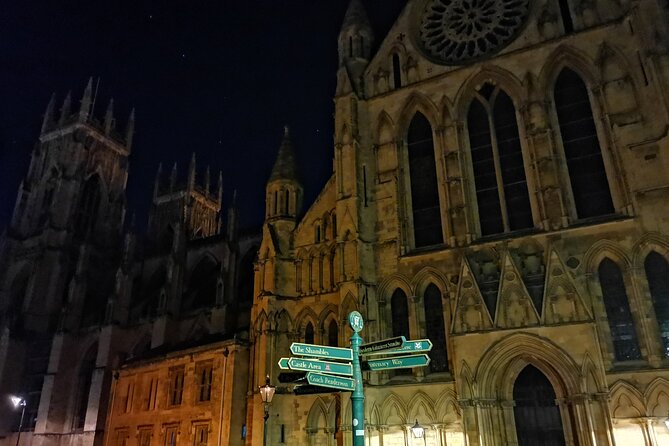
- Nineteen clues across 5 kilometres: You solve a steady chain of riddles while walking between York landmarks, statues, buildings, and taverns.
- A Roman, Norse, and Greek cast: Constantine the Great, the Kraken, and a Greek sea goddess give the route a playful mythology theme.
- Private and self-guided: Only your own group takes part, with no guide or other team setting your pace.
- Three optional breaks: A pub or café appears roughly once every third of the route, making it easy to split the walk into sections.
- Hints and lost directions are available: You can request a hint, and the provider says you can send LOST if you need help finding the route.
- A moderate challenge: The advertised difficulty is 3 out of 5, but some clues may test younger players or anyone who dislikes trial and error.
Starting at Constantine the Great in Minster Yard
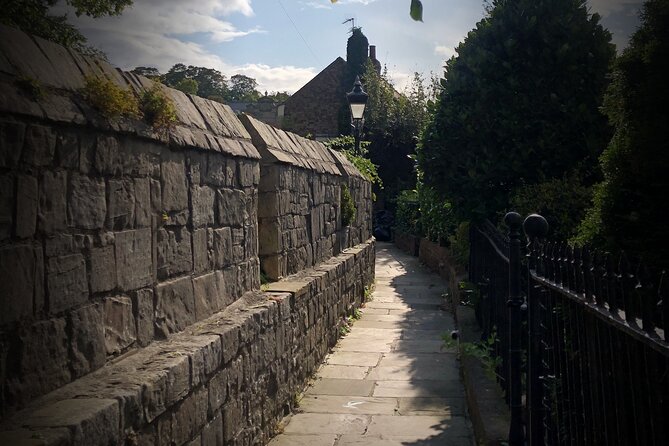
The game begins at Constantine the Great, at 4 Minster Yard, York YO1 7JB. That is a sensible starting point for a city puzzle because you are placed right in the historic centre, close to some of York’s most recognisable architecture.
Your instructions arrive on your phone when you reach the start. They are cryptic rather than a simple list of directions. You read a clue, work out the answer, send it back, and receive the next instruction. The route then unfolds one riddle at a time.
That format changes how you see the city. Instead of walking past a statue or old building with only a quick glance, you need to inspect it for a detail that might confirm your answer. A familiar street becomes part of the game board.
You do not need special local knowledge. The route is designed to provide enough information to solve the clues, and you can ask for help if you get stuck. Still, you should expect to spend time looking carefully at your surroundings. This is not a sightseeing walk with occasional trivia. The puzzles drive the sightseeing.
More Treasure Hunts in York:
- Fun, Flexible Treasure Hunt Around York with Cryptic Clues & Hidden Gems
★ 5.0 · 248 reviews - Immersive Murder Mystery in York, A City Treasure Hunt Experience
★ 4.5 · 54 reviews - The Treasures of Bloodaxe – A Fun Viking Treasure Hunt in York
★ 4.5 · 21 reviews
A York story with Constantine, the Kraken, and a sea goddess
The plot imagines York facing the threat of becoming a modern-day Atlantis. To save the city, you work through a story that brings together three very different traditions: Roman power, Norse mythology, and Greek legend.
Constantine the Great is a fitting figure for the opening. York has a strong Roman connection, and beginning beside his statue gives the game an immediate sense of place. The Kraken supplies the main danger, while the Greek sea goddess adds another layer of fantasy to the route.
I like the ambition of this idea. York already feels like a city built from different periods, and the story encourages you to connect those layers. You are not simply hunting for a number on a plaque. You are moving through a city where Roman, medieval, and later buildings can all become part of the same fictional rescue mission.
The story does have a weakness. It may not fully explain its central danger at the very beginning, so the flood threat can feel more like background decoration than a strong reason to keep solving. If you enjoy atmosphere more than plot, this will not matter much. If you want a tightly written escape-room story, you may find the narrative a little loose.
Nineteen clues spread through central York
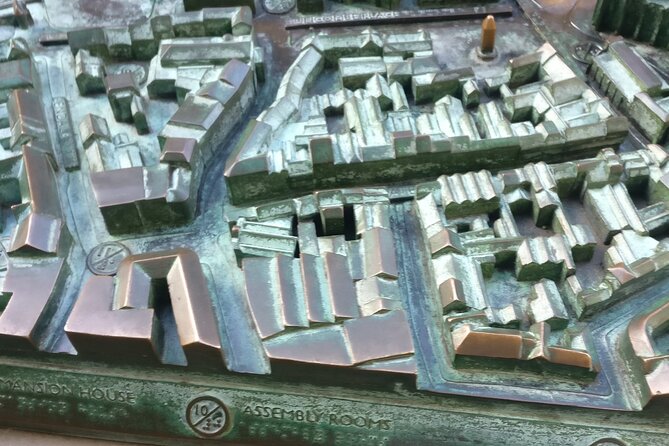
The route covers about 5 kilometres and usually takes between 2.5 and 3.5 hours. The official estimate is close to the practical reality of a walking game, since your time depends on how quickly you solve each clue, how often you stop, and how long you spend taking photographs.
The 19 clues create a clear rhythm. You receive one instruction, search the area, decide on an answer, and submit it. A correct response moves the game forward. That structure gives you a reason to keep walking even after you might normally have left one street for another.
Some clues explain the history of a place, while others tell you what to find next. Pay close attention to the difference. A historical message may provide context but not require an answer, while a cryptic instruction tells you what to do. Mixing those two types of message can make the phone trail harder to follow.
A notebook can help, though the supplied information does not require one. At the very least, keep track of possible answers and distinctive details. If several people are playing, divide the work naturally. One person can read the clue, another can inspect buildings, and another can check the proposed answer before you submit it.
The game is timed and ranked on a leaderboard. That is useful for competitive groups, but you do not have to treat York like a race. The attraction is the city itself, and the instructions explicitly allow you to take your own time. I would choose a relaxed pace unless your main goal is to beat friends.
Famous sights and photogenic buildings on the route
The trail promises a mixture of well-known landmarks, historic statues, attractive buildings, and old taverns. Since the exact sequence is revealed through the clues, part of the fun is not knowing the next stop in advance.
The route should suit you if you want a city walk with a purpose. York’s centre is compact enough for a 5-kilometre circuit to connect several points without requiring transport between clues. You get a broad look at the city rather than spending the whole session inside one attraction.
The photo opportunities are another strength. The clues direct your attention toward façades, statues, and architectural details that you could otherwise overlook. You might already know the most famous landmark in view, but the puzzle asks you to notice a smaller feature nearby.
The trade-off is that this is not a standard guided tour. You will not have a guide explaining every building in sequence, and the historical information comes in short messages tied to the game. If you want a detailed lesson in York’s past, use this as a playful introduction and arrange a separate museum visit or walking tour.
The route can also become frustrating if a clue depends on a visual description that feels too broad. One problem reported with the game involved directions toward white walls, when the relevant walls appeared cream. That led the group into areas that also seemed to fit the wording and cost about an hour.
That is an important practical warning. Read clues literally, but do not assume that every plausible match is correct. If you have spent several minutes following a possible answer and the next step does not make sense, stop and ask for help instead of continuing farther from the centre.
A few more to weigh up in York
- Mad Alice’s The Bloody Tour of York -Best Tour Award Europe
★ 5.0 · 2,749 reviews - Ghost Bus Tour of York
★ 4.5 · 2,404 reviews - Shadows of York: Ghost Walk and Horrible History.
★ 5.0 · 1,403 reviews - Private Historical Walking Tour of York
★ 5.0 · 1,324 reviews
Three pub and café breaks at useful intervals
The game includes three optional pub or café stops, positioned about one third, two thirds, and the end of the way around the route. These are not just pleasant extras. They give you natural points to pause, compare theories, and reset if a clue has become difficult.
You can use the first stop for a drink, the second for a longer break, and the last as a finish to the outing. The supplied details do not identify the venues or promise food, so plan these as optional rest points rather than fixed meal reservations.
For a group with mixed energy levels, this spacing helps. Someone can take a short break without abandoning the game, and you can use the pause to review earlier answers. Families with older children may appreciate the structure, while a group of adults can turn the route into a social afternoon.
Do not assume the breaks solve every timing issue. If a clue sends you in the wrong direction, your three-hour plan can stretch. A little flexibility is wise, especially if you want to stop for lunch or take photographs.
How the phone-based system really works
The game is delivered through text instructions. Once you reach the starting point, you receive the first cryptic clue on your phone. After you solve it, you send your answer and wait for the next clue.
This is a simple system, but it affects the feel of the experience. You are not carrying a printed map with the whole route exposed. Each answer reveals only the next stage, which keeps the sense of discovery alive.
Hints are available if a clue is proving too tough. The provider also says you can ask for directions if you are lost, and a response specifically explains that sending LOST can provide directional help. Use that option early when needed. Guessing repeatedly may eventually move you forward, but it can leave you unsure if you are solving the puzzle or simply forcing the system to accept an answer.
The phone format also means your group needs a charged device and a working connection for the messages. Those requirements are not presented as a separate equipment list, so do not treat them as an official guarantee beyond the mobile-ticket and phone-led setup. One person should keep the phone accessible, while another watches the surroundings so the group does not stare at the screen all afternoon.
Difficulty, families, and competitive groups
A difficulty rating of 3 out of 5 suggests a middle-ground challenge. That is a fair description overall, but the actual experience may swing between easy clues and sudden roadblocks.
I would recommend it most strongly for adults, older teens who enjoy puzzles, couples, and friend groups that like solving problems together. The private format is particularly useful for people who dislike being paired with strangers or pressured by a guide.
Younger teenagers may find it hard if they expect quick answers and constant action. One group had fun but did not complete the route, even after using hints. That does not make the activity unsuitable for every family, but it does mean you should explain that getting stuck is part of the afternoon.
The leaderboard adds a competitive edge. You can compare your time with other teams, or simply ignore the ranking and treat the game as a walking route. I prefer the second approach for a first attempt. Once you know the city and the clue style, you can return to the competitive side.
The private setup also protects the mood. A confident group can debate loudly and try unusual answers without worrying about strangers. A quieter group can take its time. That flexibility is worth more than a traditional group tour for some people.
Value at $20.37 per person
At $20.37 per person, the price is reasonable for a private activity lasting around three hours. You are paying for a self-guided game, a planned city route, the story, the clue system, and the ability to complete it with only your own group.
The value is strongest when you would otherwise pay for a casual attraction and a city walk separately. You get a reason to cover 5 kilometres, and the three optional stops make the outing feel like more than a short puzzle session.
It is less compelling if you want a polished escape-room finish or expert commentary at every location. There are no stated admissions to major attractions, meals, or drinks included, so budget for those separately. The cost also feels less worthwhile if your group gives up after a difficult clue.
The free cancellation policy improves the booking value. You can cancel at least 24 hours before the local start time for a full refund. Poor weather can also lead to a new date or a full refund, and the same applies if the minimum number of participants is not met. Changes made inside 24 hours are not accepted for a refund.
The ending may feel less satisfying than the middle
The advertised end point is back at the meeting point, which gives the route a useful circular shape. You should still be prepared for a fairly abrupt final moment.
The game can feel as though it simply stops once you reach the final venue. There may be no dramatic wrap-up, extended explanation, or celebratory finish. For an outdoor escape activity, that matters because the ending is where the story should confirm that you saved York.
I would plan a drink, meal, or nearby sightseeing stop after the final clue. That turns a sudden finish into a natural transition. It also gives your group a chance to compare its time and discuss which clue caused the most trouble.
This is a design issue, not a reason to reject the whole activity. The middle section can still be enjoyable, especially when a clue sends you toward an attractive street or a building you would have missed. Just keep expectations realistic about the final reveal.
Who should book this York adventure?
I would book it for a small private group that wants to walk, solve clues, and explore at its own speed. It is a good fit for friends, couples, and families with older children who are comfortable with a 5-kilometre route.
You should choose something else if you want a fully guided history tour, a short accessible stroll, or a tightly controlled escape-room experience with staff on hand. The game depends on reading carefully, checking your surroundings, and asking for help when the wording is unclear.
Service animals are allowed, the route is near public transportation, and most people can participate if they are comfortable walking around 5 kilometres. The activity is weather-dependent, so a dry day will make the phone instructions, sightseeing, and pub breaks easier to manage.
FAQ
Where does the York treasure hunt start?
It starts at Constantine the Great, 4 Minster Yard, York YO1 7JB, United Kingdom.
Where does the activity finish?
The activity is scheduled to finish back at the meeting point.
How long does the treasure hunt take?
The average duration is about 2.5 to 3.5 hours, with an advertised duration of approximately 3 hours and 30 minutes.
How far do you walk?
The route covers about 5.0 kilometres.
How many clues are included?
There are 19 clues to solve.
Is the treasure hunt guided?
No. It is a private, self-guided activity. Only your own group takes part, and the instructions are sent to your phone.
What happens if you get stuck or lost?
Hints are available. You can also ask for directions, and the provider says you can send LOST for help with directions.
Should you book it?
Book this York treasure hunt if you like city walks with puzzles, mythology, and a little friendly competition. The price is fair, the private format is flexible, and the clues should lead you to more of York than you might notice on an unplanned stroll.
Go in with patience. Some wording may send you toward a convincing but incorrect location, and the finale may feel abrupt. If your group can laugh at a wrong turn, use the hints, and treat the game as a playful way to explore York rather than a flawless escape-room production, it offers a good afternoon for the money.
Just added in York
- The Yorkshire Dales of All Creatures Great & Small★ 5.0 · 109 reviews
- The Treasures of Bloodaxe – A Fun Viking Treasure Hunt in York★ 4.5 · 21 reviews
- Welcome to York – The River Route★ 5.0 · 7 reviews
- York’s Famous Ghosts Smartphone App walking tour★ 5.0 · 2 reviews
- York City Pass: Access 35+ Attractions for One Great Price★ 4.5 · 122 reviews
- Welcome to York – The Royal Route★ 5.0 · 6 reviews
- York Private Walking Tour with a Professional Guide★ 5.0 · 3 reviews
- York Tour App, Hidden Gems Game and Big Britain Quiz (1 Day Pass) UK★ 4.0 · 4 reviews
Treasure Hunts, compared.

Fun, Flexible Treasure Hunt Around Manchester with Cryptic Clues & Hidden Gems
Read our review →
Fun, Flexible Treasure Hunt Around York with Cryptic Clues & Hidden Gems
Read our review →
Fun, Flexible Treasure Hunt Around Bath with Cryptic Clues & Hidden Gems
Read our review →
Fun, Flexible Treasure Hunt Around Oxford with Cryptic Clues & Hidden Gems
Read our review →
Fun, Flexible Treasure Hunt Around Birmingham with Cryptic Clues & Hidden Gems
Read our review →
Fun, Flexible Treasure Hunt Around Chester with Cryptic Clues & Hidden Gems
Read our review →
Fun, Flexible Treasure Hunt Around Brighton with Cryptic Clues & Hidden Gems
Read our review →
Fun, Flexible Treasure Hunt Around Cambridge with Cryptic Clues & Hidden Gems
Read our review →Browse the lists this tour appears in