
Reviewed · WALKING TOURS
Fascinating Walking Tours Of Roman Chester With An Authentic Roman Soldier
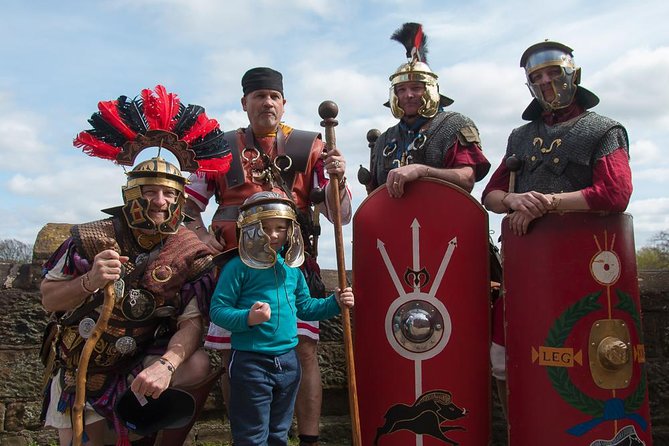
Chester keeps Rome underfoot. This 90-minute walking tour brings that past into view with a costumed Roman soldier-guide, taking you from the amphitheater to old fortress walls, Roman gardens, and archaeological remains tucked into modern Chester. I especially like the mix of major sights and small discoveries, including Roman columns beneath a café.
I also like the friendly, question-led style. Guides such as Marcus, Julius, Gaius, Tiberius, Faustus, and Hippolyta have been praised for humor, clear explanations, and enthusiasm. The main consideration is that this is a walking tour in changing English weather, and one short section may involve stairs or a cellar that is not suitable for every wheelchair user.
In This Review
- Key points to know before you book
- Why Roman Chester makes a good walking tour
- Meeting a Roman soldier at Chester Town Hall
- The Roman Amphitheatre: Chester’s great public arena
- The fortress walls and Chester’s Roman footprint
- Roman Gardens and the military bath system
- The small discoveries make the tour worthwhile
- What the guides do especially well
- Is $16.64 good value for 90 minutes?
- Who should take this walk?
- Practical details that affect your choice
- Should you book the Roman soldier tour?
- FAQ
- Where does the tour begin?
- Where does the tour finish?
- How long does the tour last?
- How much does the tour cost?
- Is admission to the Roman Amphitheatre included?
- Is admission to the Roman Gardens included?
- What language is the tour offered in?
- How large is the group?
- Is the tour suitable for wheelchair users?
- Can I cancel for a refund?
- What happens if bad weather cancels the tour?
Key points to know before you book

- Britain’s largest Roman amphitheater anchors the walk, with time to consider the people who fought and died there.
- A Roman soldier leads the tour in costume, making military life, pay, rank, equipment, and daily routines easier to picture.
- The city walls reveal the scale of the fortress, including original Roman masonry rising more than 5 meters in places.
- Roman Gardens displays a reconstructed hypocaust, using original pila stones and reconstructed elements from military bath excavations.
- Small archaeological finds add surprise, including Roman remains beneath a modern café and Principia columns under the café floor.
- The tour costs $16.64 per person, lasts about 90 minutes, and is capped at 15 people, a useful balance between price and personal attention.
Why Roman Chester makes a good walking tour
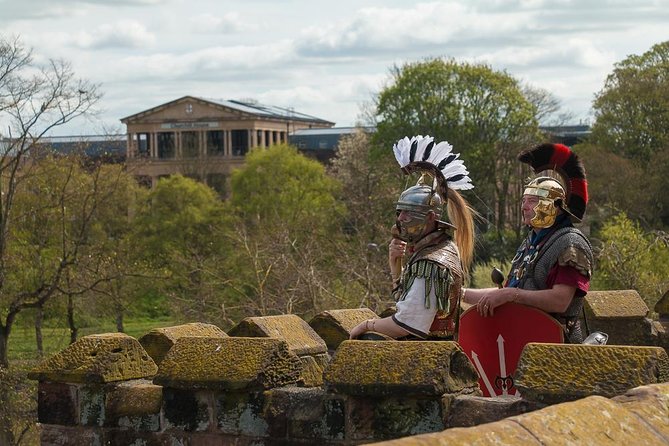
Chester was not simply a Roman settlement with a few scattered ruins. The city grew around a major Roman fortress, and later streets, buildings, and businesses were placed over parts of it. That makes the experience less like walking through a single preserved archaeological park and more like reading an old map through the modern city.
I like this approach because you are not asked to admire stones without context. A guide in Roman military dress can point out where the fortress once shaped the city, then explain what those walls meant for soldiers, local people, trade, and everyday life.
The strongest part of the experience is the human detail. You hear about military ranks, wages, training, living quarters, personal hygiene, clothing, and the risks faced by legionaries. One especially memorable detail shared on the tour is that some Roman soldiers came from areas now associated with Ukraine and Russia. The discussion also covers the role of women in Roman Chester, including the rule that women had to sleep outside the fortress walls.
That sort of information gives the stones a purpose. You begin to see Chester not as a distant Roman outpost, but as a working military town filled with people from across the empire.
More Walking Tours in Chester:
- Medieval Walking Tour of Chester
★ 5.0 · 155 reviews - The Heart of Chester Walking Tour – Guided Walk
★ 5.0 · 83 reviews - Haunted Chester and its Ghosts: A Self-Guided Walking Tour
★ 5.0 · 19 reviews
Meeting a Roman soldier at Chester Town Hall
The walk begins outside Chester Town Hall on Northgate Street. This is a central meeting point, and a practical place to start if you are already exploring the city on foot.
Your guide appears in Roman soldier costume, with names used on different departures including Marcus, Julius, Gaius, Tiberius, Faustus, and Hippolyta. The exact guide varies, but the general format remains the same: a costumed presenter leads you through the city and explains the archaeological evidence along the way.
The costume is more than a photo opportunity. Guides have used their custom-made legionary equipment to explain what a Roman soldier carried and how the kit worked. On some tours, you may also be able to handle reproduction items and genuine ancient artifacts. That hands-on element is particularly helpful for children, who may connect with a physical object faster than with a long explanation.
Group size is limited to 15 people. That matters on a city walk. You can hear the guide more easily, and there is a better chance of asking about something that catches your attention. The only downside is that a lively group can still affect the pace. One less enthusiastic experience involved participants talking over the guide, so a quieter group will make the most of the tour.
The Roman Amphitheatre: Chester’s great public arena
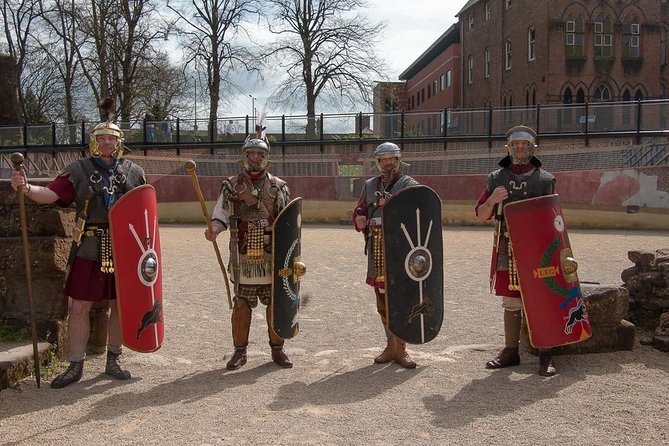
The first main stop is Chester Roman Amphitheatre, described as Britain’s largest Roman amphitheater. The visit lasts about 15 minutes and admission is included.
The remains help you consider the scale and social role of Roman entertainment. This was a place where people gathered to watch combat and spectacle, while the fighters faced serious danger. The guide uses the visible remains and archaeological evidence to discuss the lives of those who fought and died there.
A short stop here works well. You get the essential setting without spending the whole tour standing in one place. The tradeoff is that you will not have an extended archaeological visit with time to study every section at length. This is a guided overview, not a full museum tour.
The amphitheater also gives the tour an immediate sense of place. Instead of starting with an abstract account of Roman Chester, you begin with a building designed for crowds, drama, and violence. It is a strong opening because the site is easy to understand even if you know little about Roman Britain.
Listen for the difference between what can be seen and what has been reconstructed from evidence. A good guide will help you separate surviving stonework from interpretation, and that is one reason the tour’s archaeological focus is useful.
The fortress walls and Chester’s Roman footprint
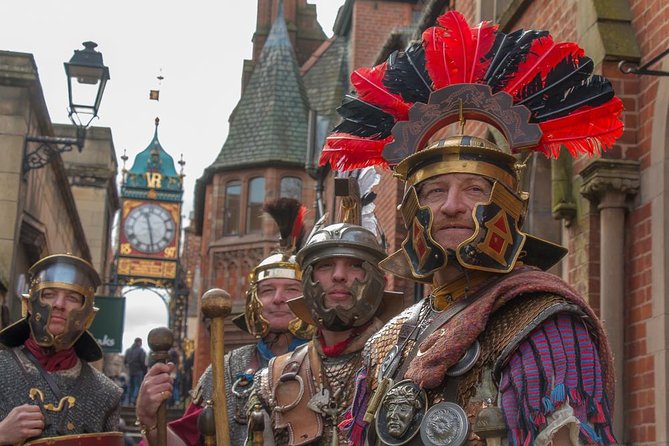
The walk continues along sections built on the foundations of the walls of Britain’s largest Roman fortress. Some original Roman wall sections survive to more than 5 meters high.
This is where the scale of Roman Chester becomes clearer. A few isolated stones might seem modest, but a long defensive line shows how much space the fortress once occupied. The guide helps connect the remaining masonry with the larger military complex that once controlled this part of the region.
I find this part valuable for another reason: the remains are not always obvious when you walk through Chester alone. Modern streets and buildings have absorbed much of the old fortress, so a casual stroll can pass close to Roman evidence without revealing what it is.
The walk may also lead you to archaeological details you would not otherwise notice. A particularly enjoyable stop has been the Principia columns located beneath a modern café. Seeing ancient military remains in the basement of a working business gives the city an unusual character. Rome is not separated from present-day Chester here. It is literally beneath your coffee break.
The tour is at its best when the guide explains how archaeologists know what stood in each location. Look for references to excavated foundations, reused stones, and the relationship between the old fortress plan and present streets. Those details turn orientation into investigation.
A few more to weigh up in Chester
- Admission Ticket to Sick To Death in Chester
★ 4.5 · 384 reviews - Fun, Flexible Treasure Hunt Around Chester with Cryptic Clues & Hidden Gems
★ 5.0 · 162 reviews - Chester Food Tour: Unique Food With Drinks & Sightseeing
★ 5.0 · 152 reviews - City Sightseeing Chester Hop-On Hop-Off Bus Tour
★ 4.5 · 147 reviews
Roman Gardens and the military bath system
The Roman Gardens provide another 15-minute stop. Here you see a reconstructed example of a Roman hypocaust system, using original pila stones and reconstructed elements linked to the military baths.
A hypocaust was a heating system that sent hot air beneath a raised floor. The pila stones supported that floor, leaving a space for heat to travel. The display also includes a reconstructed mosaic floor or related material found during excavations of the Roman military baths.
The guide explains how the system worked and why the original pieces were moved to the gardens. That explanation is important. Without it, rows of stones can look like an arrangement with no clear purpose. Once you understand the engineering, you can picture heated rooms and the practical demands of a large military base.
This stop also corrects a common image of Roman soldiers as people living only in rough camps. Military life included baths, heating systems, hygiene routines, and complex buildings. The tour uses the remains to discuss personal cleanliness and daily habits, details that make the Roman presence feel more ordinary and real.
There is also a sobering lesson about preservation. Ancient Roman baths in Chester were reportedly larger and grander than the famous baths at Bath, yet much of the site was lost to a shopping development after only a short period of archaeological examination. The story gives you a sharper sense of what survives by luck, public pressure, and modern choices.
The small discoveries make the tour worthwhile
The headline sights are useful, but I suspect the smaller stops will stay with you longer. The Roman columns beneath the café are a good example. You are seeing ancient material in a place that still serves an everyday purpose, rather than in a neatly separated monument.
The walk also brings out details about military organization. You may hear how ranks worked, what soldiers were paid, which trades they learned, and how they lived. A guide such as Optio Marcus has used his own equipment and objects to explain these points, giving the presentation a practical feel.
The Roman soldier format supports this storytelling. It creates a character without requiring the guide to turn the whole tour into theater. The best guides keep the balance: enough costume and humor to hold attention, but enough evidence and explanation to satisfy adults with a serious interest in ancient history.
That balance has worked for families. Gaius and Tiberius have been praised for keeping children involved, while other guides have handled babies and mixed-age groups with care. The tour is not just for specialists, either. Someone with a PhD in ancient history reportedly still found new information in the presentation, which suggests that the content can work at several levels.
What the guides do especially well
The guides receive the strongest praise for three things: enthusiasm, humor, and the ability to answer questions. Marcus is described as courteous and open to every question, while Julius is praised for combining historical detail with a lively presentation. Faustus, Gaius, Tiberius, and Hippolyta have also been singled out for bringing Roman Chester to life.
That matters because the tour covers archaeological remains that can be visually subtle. A confident guide can point to a wall line, explain its function, and show you why it matters. Without that interpretation, you may simply see fragments among later buildings.
Humor helps too. Puns and jokes appear alongside serious material, which keeps the 90 minutes moving. The tone is friendly rather than academic, but the information goes beyond a simple costume performance.
The experience is not entirely dependent on the guide’s personality. The route has solid material behind it, including the amphitheater, fortress walls, hypocaust remains, bath evidence, and Roman artifacts. Still, the presentation style can vary. If your guide is especially energetic, expect a more theatrical outing. If the group is talkative, you may need to stay near the guide to catch every detail.
Is $16.64 good value for 90 minutes?
At $16.64 per person, this is a reasonably priced introduction to Chester’s Roman past. You are paying for about 90 minutes with a specialist-style guide, access to several archaeological points, and interpretation that would be difficult to assemble from a normal city walk.
The value is strongest if you are new to Chester or have already walked past Roman remains without understanding them. The guide gives you a framework for exploring the city afterward. You may notice wall foundations, reused stone, and Roman references that would otherwise pass unnoticed.
It is also good value for families because the costume, objects, and stories offer more variety than a standard lecture. Children who would switch off during a long historical talk may stay interested when the guide is explaining armor, wages, or daily hygiene.
The price is less compelling if you want extended time at each site or a formal museum-style archaeological lecture. The amphitheater and Roman Gardens each receive about 15 minutes, so the experience favors range and interpretation over detailed examination. You are buying a lively introduction, not a full-day Roman archaeology program.
Who should take this walk?
I would recommend it to first-time visitors who want a quick way to understand Chester. It works especially well near the start of a visit, since the route can give meaning to other Roman remains you encounter later.
Families should also consider it. The cost is manageable, the length is reasonable, and the guides have engaged children successfully. The ability to ask questions makes the experience more flexible than a fixed audio guide.
It suits history fans, too. The focus on archaeological evidence, military organization, bath engineering, artifacts, and the fortress plan gives the walk more substance than a sightseeing loop based only on stories.
People with limited mobility should contact the provider before booking if access is a major concern. An electric wheelchair user completed nearly all of the tour but missed one cellar section. Service animals are allowed, most people can participate, and the route is near public transport. Since the tour requires good weather, rain can affect comfort, even if the guide continues with enthusiasm.
Practical details that affect your choice
The tour is offered in English and uses a mobile ticket. Confirmation is provided at booking. It begins at Chester Town Hall, Northgate Street, and the listed end point is 23 Little St John Street, although the tour information also says the walking portion terminates at the Roman Amphitheater, with the guide directing you to your next destination.
Plan to arrive ready to walk and stand outdoors. Comfortable shoes and weather protection are sensible, especially because Chester rain can arrive at the least dramatic point in the Roman story.
The experience is often booked about 14 days ahead. That does not guarantee every departure will sell out, but it is a useful planning signal. If your Chester visit is fixed, booking early is sensible, particularly for a preferred time.
Free cancellation is available until 24 hours before the start time for a full refund. Changes or cancellations inside that window are not accepted for a refund. If poor weather causes the provider to cancel, you are offered another date or a full refund.
Should you book the Roman soldier tour?
Yes, if you want a lively, affordable introduction to Chester’s Roman remains. The strongest reasons are the small group size, the costumed guide, the mix of major ruins and easy-to-miss evidence, and the attention given to ordinary military life.
I would skip it only if you prefer to explore silently at your own speed or want long, detailed visits at individual archaeological sites. For most people, the 90-minute format is a smart use of time. Book it early if your schedule is tight, stay close to the guide, and ask questions. Roman Chester is easiest to appreciate when someone shows you where to look.
FAQ
Where does the tour begin?
The tour begins at Town Hall on Northgate Street, Chester, CH1 2HJ, UK.
Where does the tour finish?
The listed end point is 23 Little St John Street, Chester, CH1 1RF, UK. The tour information also states that the walking tour terminates at the Roman Amphitheater and that the guide will direct you to your next destination.
How long does the tour last?
The tour lasts approximately 1 hour and 30 minutes.
How much does the tour cost?
The listed price is $16.64 per person.
Is admission to the Roman Amphitheatre included?
Yes. The Roman Amphitheatre stop has no separate admission charge.
Is admission to the Roman Gardens included?
Yes. The Roman Gardens stop has no separate admission charge.
What language is the tour offered in?
The tour is offered in English.
How large is the group?
The activity has a maximum group size of 15 people.
Is the tour suitable for wheelchair users?
Most people can participate, and an electric wheelchair user completed nearly all of the tour but missed one cellar section. If full access is essential, contact the provider before booking.
Can I cancel for a refund?
You can cancel at least 24 hours before the local start time for a full refund. Cancellations or changes made less than 24 hours before the start time are not accepted for a refund.
What happens if bad weather cancels the tour?
If the provider cancels because of poor weather, you will be offered another date or a full refund.
Just added in Chester
- Hello Chester! Private Walking Tour★ 5.0 · 3 reviews
- Food Walking Tour in Chester City★ 5.0 · 2 reviews
- CHESTER: North Wales Adventure – Sightseeing Day Trip Tour★ 4.5 · 137 reviews
- Private Chester Self-Guided Tour★ 4.0 · 23 reviews
- Haunted Chester and its Ghosts: A Self-Guided Walking Tour★ 5.0 · 19 reviews
- The Heart of Chester Walking Tour – Guided Walk★ 5.0 · 83 reviews
- North Wales and Caernarfon Castle day tour from Chester★ 5.0 · 11 reviews
- Chester Food Tour: Unique Food With Drinks & Sightseeing★ 5.0 · 152 reviews
Walking Tours, compared.

Oxford University Walking Tour With University Alumni Guide
Read our review →
Tour for Muggles The Ultimate Harry Potter Walking Tour in London
Read our review →

Cambridge University Walking Tour by Alumni™ Kings College Option
Read our review →
Blackbeard to Banksy – The Ultimate Walking Tour of Bristol
Read our review →
Air Raid Shelter + St. Nicholas Market Walking Tour
Read our review →
Walking Tour of Bath with Blue Badge Tourist Guide
Read our review →
Changing of the Guard Guided Walking Tour in London
Read our review →Browse the lists this tour appears in