
Reviewed · BATH TOURS
Exceptional Bath tour guide making your visit splendidly memorable.
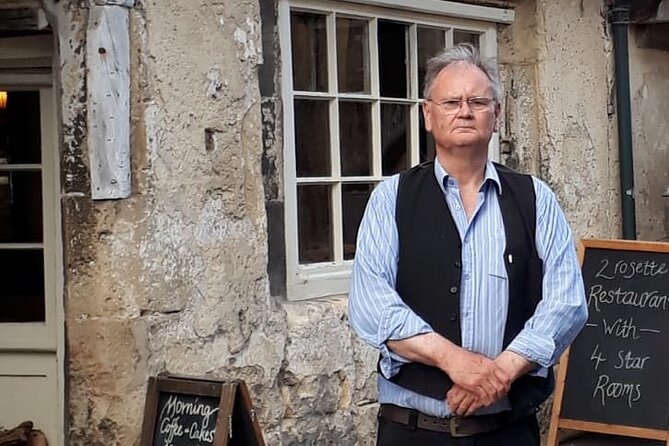
Bath rewards slow walking. This 90-minute to two-hour tour makes the city’s Roman past and Georgian architecture easy to understand, with Paul Elliott leading the way through famous streets, old lanes, and grand squares. His local knowledge, dry humor, and personal affection for Bath give the tour more character than a basic run through dates and buildings.
I especially like the way the route links major sights with lesser-known medieval alleys, and I like that it ends with the Royal Crescent and a downhill stroll past the Jane Austen Centre and Thermae Bath Spa. Admissions are not included, so you will need to budget separately if you want to enter the Roman Baths, Bath Abbey, No. 1 Royal Crescent, or the spa.
The main consideration is walking pace. The route covers a little over a mile and more than 15 stops, but the tour can run beyond two hours when questions, photographs, and a slower group stretch the schedule. Paul’s humor is part of the appeal, though his sarcasm and direct manner may not suit everyone.
In This Review
- Five things to know before you book
- Starting beside Bath Abbey and the old city wall
- The Roman Baths without the admission ticket
- Bath Abbey, Sally Lunn’s, and the city’s oldest core
- Pulteney Bridge and the River Avon
- Queen Square and the beginning of Georgian Bath
- The Circus: Bath’s architectural high point
- The Royal Crescent and No. 1 Royal Crescent
- Downhill past Jane Austen and Thermae Bath Spa
- What Paul Elliott adds to the walk
- Walking time, group size, and the real schedule
- Is the $30.53 price good value?
- Who will enjoy this Bath walk?
- Should you book Paul Elliott’s Bath tour?
- FAQ
- Where does the tour start?
- Where does the tour end?
- How long does the tour last?
- Are admission tickets included?
- Does the tour enter the Roman Baths?
- Is Bath Abbey included inside the tour?
- How large can the group be?
- Is the tour offered in English?
- Can I cancel for a full refund?
Five things to know before you book
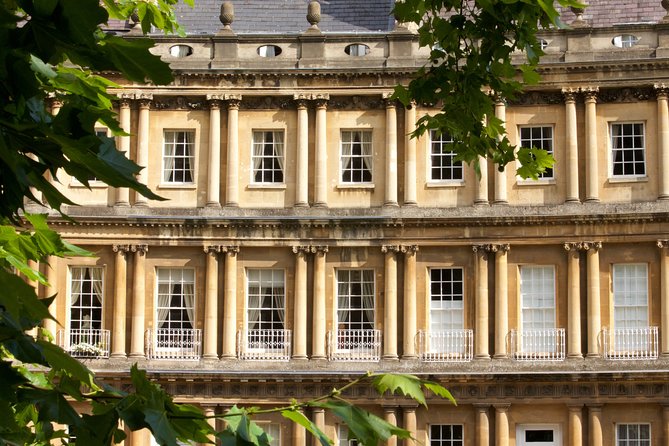
- Roman and Georgian Bath in one walk: You move from the Roman Baths and Bath Abbey to Queen Square, The Circus, and the Royal Crescent.
- Paul Elliott is the personality: Expect detailed local stories, British wit, amusing side comments, and a guide who clearly knows Bath well.
- Good first-day orientation: The route shows you where the main sights are before you decide which ones deserve an indoor visit.
- The Royal Crescent is the grand finish: John Wood’s circular Circus and the sweeping Royal Crescent provide some of the best photographs on the route.
- Plan for extra time and entry fees: The advertised duration is about 1.5 to 2 hours, but some tours last 2.5 hours. Tickets to indoor attractions are separate.
- Small enough to feel personal: The maximum group size is 20, and the tour may feel especially tailored when numbers are low.
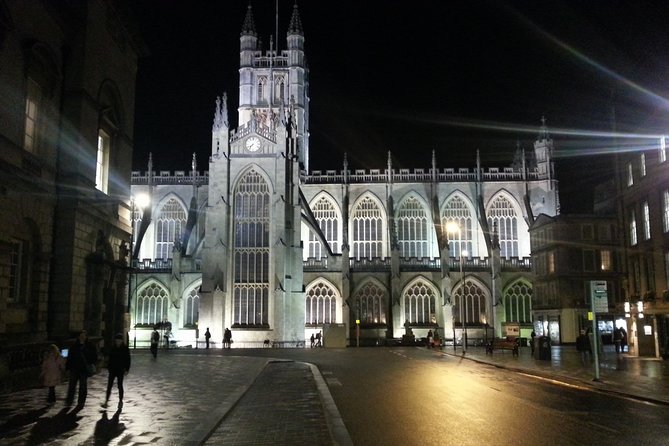
Starting beside Bath Abbey and the old city wall
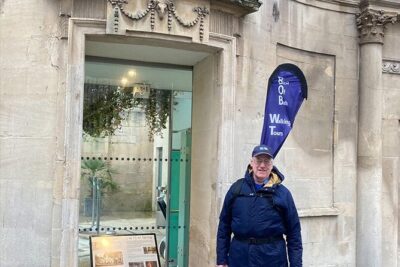
The meeting point is outside The Abbey Hotel on North Parade, near Bath’s old city wall. This is a sensible place to begin because the city’s central sights sit close together, and you can reach the start by public transportation.
Paul begins with the core story of Bath. You get an introduction to the city’s long timeline, from its Saxon and Norman chapters through the Tudor period and into the Georgian age. That broad opening matters because Bath can otherwise feel like a collection of attractive buildings without a clear order.
The tour is less about entering monuments and more about learning how to read them from the street. You will hear the story of Bath Abbey, the Roman Baths, and the Pump Rooms without going inside. This is useful if you have limited time, though you should not mistake an exterior explanation for a replacement visit.
A few more to weigh up in Bath
- Walking Tour of Bath with Blue Badge Tourist Guide
★ 5.0 · 1,877 reviews - Stonehenge, Avebury & the Cotswolds from Bath (Small group)
★ 5.0 · 798 reviews - Roman Baths and Bath City Walking Tour
★ 4.5 · 762 reviews
The Roman Baths without the admission ticket
The Roman Baths receive about 10 minutes of explanation. Paul points out the site and explains its place in Bath’s ancient story, but entry is not part of the tour.
That arrangement can work well. You can hear the background first, then decide if you want to spend extra time inside later. The Roman Baths are one of Bath’s central paid attractions, so separating the walking tour from admission keeps the basic price lower.
It also means you should manage expectations. If you want to see the preserved bathing complex, museum displays, and archaeological remains from inside, you need a separate ticket and another block of time. This tour gives you context, not access.
Bath Abbey, Sally Lunn’s, and the city’s oldest core
Bath Abbey receives a shorter stop, about five minutes, but Paul covers a large span of its story. He explains the site from its Saxon beginnings through the Norman period and the Tudor Abbey that shaped the building you see today.
The route then passes Sally Lunn’s, described as Bath’s oldest house and tea shop. Even if you do not stop for food, the building helps you picture the older, tighter city that existed before Bath’s wide Georgian streets were laid out.
This change in scale is one of the best parts of the walk. Medieval Bath is found in alleys and irregular passages, while Georgian Bath is built around clean lines, symmetry, and planned space. Paul uses that contrast to explain how the city changed, rather than treating every period as one continuous story.
Pulteney Bridge and the River Avon
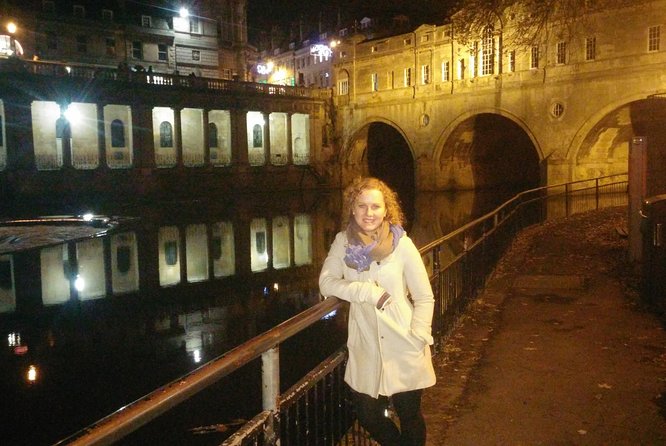
At Pulteney Bridge, Paul explains the River Avon, nearby boat trip locations, and film connections. The bridge is one of Bath’s most recognizable views, with shops built into both sides and the river running below.
You get around five minutes here, enough for an introduction and photographs rather than a long riverside pause. If you are hoping for a boat ride, this stop helps you identify where those activities operate, but no boat trip is included.
Pulteney Bridge also gives the tour a useful change of mood. After the Roman and medieval material, you are looking at a later urban project tied to Bath’s growth and wealth. The river view is one of the route’s easy photographic moments, especially when the group is not pressed for time.
A completely different sort of day out:
- Fully Guided Bath Ghost Tours
★ 5.0 · 539 reviews - Best of Bath Walking Tours – Georgian Tour
★ 5.0 · 449 reviews - Bad of Bath fun Walking Tour of Bath
★ 5.0 · 402 reviews - The Cotswolds Tour From Bath (Small group)
★ 5.0 · 349 reviews
Queen Square and the beginning of Georgian Bath
Queen Square marks the transition into Bath’s Georgian sector. Paul explains how this planned part of the city developed and sets up the architectural story that continues through The Circus and the Royal Crescent.
The square is a good teaching point because Georgian Bath is not simply about grand façades. It is about planning, proportion, social ambition, and the creation of spaces designed to impress. You begin to see why Bath feels so different from an ordinary English city center.
The tour also brings in famous people connected with 18th-century Bath. Paul links the city’s social and cultural life with wider stories involving America, Canada, and Australia. These references give the history a broader reach, though the amount of detail can depend on the group’s interests and the questions asked.
The Circus: Bath’s architectural high point
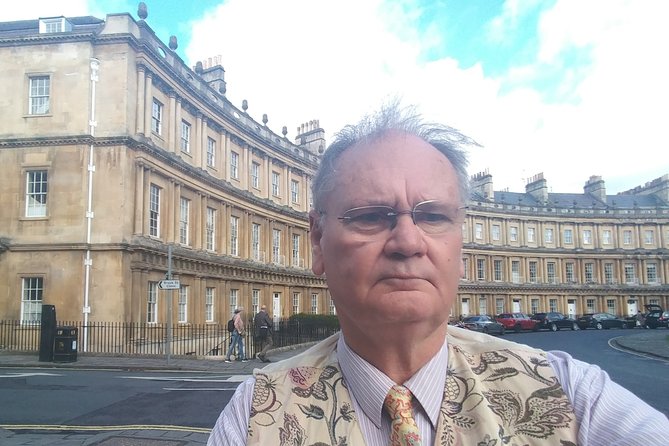
The Circus is one of the tour’s main highlights. Paul presents it as John Wood’s masterpiece, and the stop lasts about 10 minutes.
This is where an informed guide adds real value. At first glance, The Circus is a round arrangement of elegant stone buildings. With an explanation of the design and its place in Georgian Bath, you can pay closer attention to the repeated details, the curve of the façades, and the way the buildings create a unified view.
I would give this stop your full attention. It is easy to walk through The Circus, take one photograph, and move on. Paul’s architectural focus encourages you to look longer and notice why the space feels so carefully composed.
The tour’s humor also tends to work well here. Paul is known for mixing serious information with wit, mild cynicism, and occasional sarcasm. Many people will enjoy that change from a formal lecture, but if you prefer a strictly neutral presentation, his opinions may feel a little strong.
The Royal Crescent and No. 1 Royal Crescent

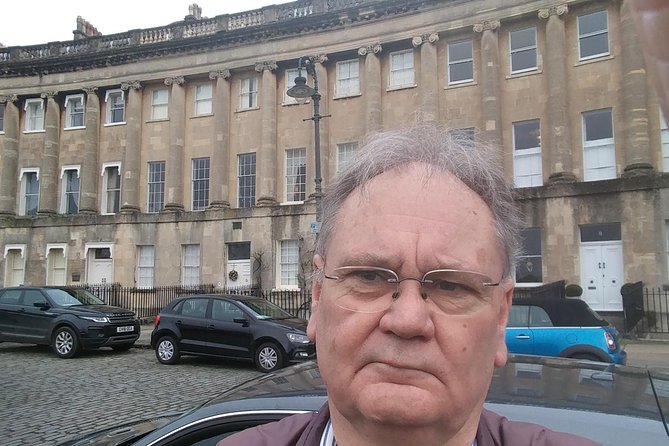
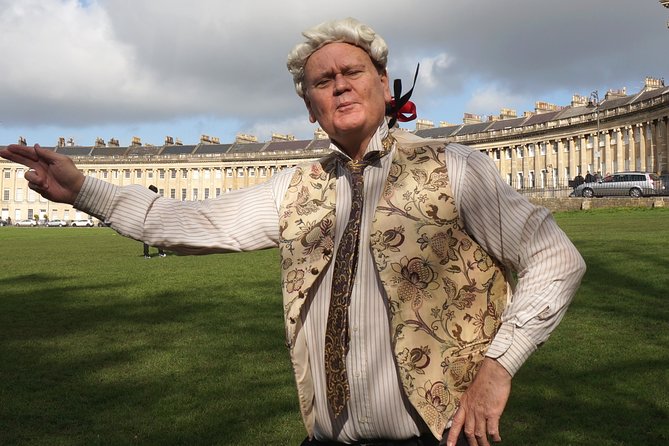
The route continues to No. 1 Royal Crescent, described as Bath’s top address. The stop lasts about 10 minutes, and photographs are a major part of the appeal.
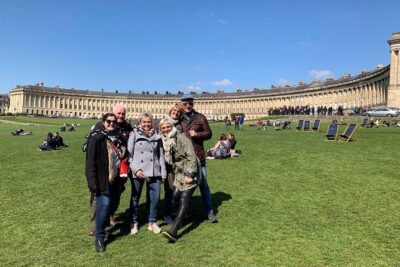
The Royal Crescent is an ideal late-tour destination because it gathers so many themes in one view: Georgian taste, social rank, architecture, and Bath’s role as a fashionable resort. The great curve of the buildings is best understood from outside, where you can see the full sweep of the stone front.
Entry to No. 1 Royal Crescent is not included. If you want to see how the interior of a Georgian townhouse was arranged, you will need a separate ticket. The walking tour gives you the setting and the story, then leaves you free to decide if the indoor visit fits your plans.
Several people have found the Royal Crescent an especially strong way to finish the architectural section. If the weather is clear, plan to pause for photographs rather than rushing away. The route is designed to leave room for pictures, but the exact amount of time depends on the group.
Downhill past Jane Austen and Thermae Bath Spa
After the Royal Crescent, the route heads downhill. You pass the Jane Austen Centre and Bath Thermae before returning toward the Abbey area.
The Jane Austen connection makes sense in Bath, especially when Paul is discussing the city’s 18th-century society and fashionable visitors. The tour does not include admission to the centre, so treat this as an exterior orientation and a prompt for a separate visit if Austen is central to your plans.
Thermae Bath Spa is the final named stop. Paul explains Bath’s modern bathing attraction and points out the Cross Bath next door. Admission is not included, and the tour is not a spa session, but the stop shows how Bath’s ancient bathing identity continues in a modern form.
The route description places the end near Thermae Bath Spa, while the meeting information says the activity ends back at the starting point. In practical terms, expect a circuit that returns you toward the Abbey area. Confirm the exact end point with Paul if you have a tight restaurant, train, or admission booking afterward.
What Paul Elliott adds to the walk
Paul’s strongest quality is his command of Bath’s history and architecture. He has lived in the area for many years and brings personal stories along with the standard material. That local connection helps the walk feel less like a memorized script.
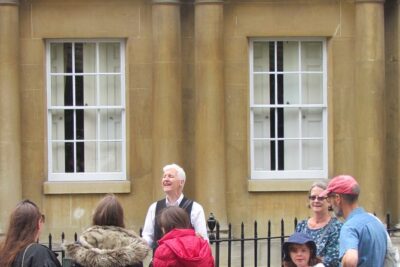
His style is lively. He uses jokes, dry British wit, and what some people describe as a quirky or slightly cynical edge. He aims to entertain as well as inform, which helps the two hours pass quickly when the group enjoys his rhythm.
He also appears willing to continue with very small groups. One account describes a tour where the other bookings cancelled, yet Paul still ran the experience. That matters if you value personal attention or dislike large sightseeing groups.
There is a tradeoff. Paul’s direct manner can occasionally land awkwardly, particularly when someone asks a question he considers obvious. If you like a guide with a strong personality and a bit of sarcasm, this may be part of the fun. If you want a gentle, highly polished presentation, you may find the tone less comfortable.
Walking time, group size, and the real schedule
The stated duration is approximately one hour and 30 minutes to two hours. In practice, allow up to 2.5 hours. Paul has explained that the pace depends on the slowest person in the group, and the route includes more than 15 stops.
The distance is a little over one mile, but the total time is shaped by standing, listening, stopping for photographs, and moving through city streets. Most people who can manage an ordinary urban walk should find the route reasonable, yet you should wear comfortable shoes and avoid scheduling the next activity too closely.
The maximum group size is 20. That is large enough to create a proper tour atmosphere but smaller than many coach-based city excursions. A very small group can feel more like a private conversation, while a full group may make it harder to hear at busy points.
The tour is offered in English and uses a mobile ticket. Confirmation is provided at booking, and the starting point is near public transportation.
Is the $30.53 price good value?
At $30.53 per person, the tour is reasonably priced for a guided introduction to Bath, especially because it covers both the ancient center and the Georgian quarter. You are paying for interpretation, route planning, local stories, and a useful first look at the city, not for entry to attractions.
The value is strongest if you are new to Bath or have only a short stay. In one walk, you get the Roman Baths, Bath Abbey, Pulteney Bridge, Queen Square, The Circus, the Royal Crescent, the Jane Austen Centre area, and Thermae Bath Spa.
The value is weaker if you expect a ticketed sightseeing package. Entry to the Roman Baths, Abbey, No. 1 Royal Crescent, and Thermae Bath Spa costs extra, and the tour does not take you inside those sites.
I would book this early if your dates are fixed. It is often reserved well ahead of time, with an average booking lead time of about 47 days. That does not mean you must reserve nearly seven weeks ahead, but it does suggest that last-minute availability may be limited during busy periods.
Who will enjoy this Bath walk?
I would choose this tour if you enjoy history, buildings, and a guide who adds personality to the facts. It suits couples, families, and first-time visitors who want a clear sense of Bath before choosing which indoor attractions to visit.
It is also a good fit for anyone interested in Georgian architecture. The Circus and Royal Crescent receive proper attention, rather than being quick photo stops squeezed between unrelated sights.
You may want another option if you dislike walking, need a strictly timed itinerary, or prefer a quiet guide without sarcasm. The route is not difficult in distance, but the tour can run long, and Paul’s approach is opinionated.
For the best experience, book it near the beginning of your stay. Use the walk to mark places for later, then return to the Roman Baths, Abbey, No. 1 Royal Crescent, or the spa with a better sense of what you are seeing.
Should you book Paul Elliott’s Bath tour?
Book it if you want Bath explained by a local guide with strong knowledge, humor, and plenty of architectural detail. The route gives you a solid first look at the city’s Roman roots, medieval lanes, Georgian planning, and modern bathing culture for a fair guiding fee.
Skip it if you need every minute controlled or if sharp humor bothers you. For most people who enjoy an engaging guide and can allow extra time, this is a memorable and useful introduction to Bath, with The Circus and Royal Crescent providing the visual rewards.
FAQ
Where does the tour start?
The tour starts outside The Abbey Hotel, a Tribute Portfolio Hotel, on North Parade in Bath, near the old city wall.
Where does the tour end?
The activity information says it ends back at the meeting point. The route description includes a return to the Abbey area after passing Thermae Bath Spa, so confirm the exact final position with the guide if timing matters.
How long does the tour last?
The stated duration is approximately one hour and 30 minutes to two hours. It can sometimes run to about 2.5 hours, depending on walking speed, questions, and photographs.
Are admission tickets included?
No. Admission is not included for the Roman Baths, Bath Abbey, No. 1 Royal Crescent, Thermae Bath Spa, or the Cross Bath.
Does the tour enter the Roman Baths?
No. Paul explains the Roman Baths from outside. You need a separate ticket to enter.
Is Bath Abbey included inside the tour?
No. The guide explains Bath Abbey from outside, including its Saxon, Norman, and Tudor history, but admission is separate.
How large can the group be?
The maximum group size is 20 people.
Is the tour offered in English?
Yes. The tour is offered in English and uses a mobile ticket.
Can I cancel for a full refund?
Yes, if you cancel at least 24 hours before the experience starts. Cancellations or changes made less than 24 hours before the start time are not refunded.
Just added in Bath
- Highlights from Bath’s Canal Walk: A Self-Guided Audio Tour★ 5.0 · 1 review
- The Splendour of Georgian and Victorian Era Bath: A Self-Guided Audio Tour★ 4.0 · 3 reviews
- Wells, Cheddar Cheese and Cheddar Gorge – Private Day Trip from Bath★ 5.0 · 10 reviews
- ‘Stonehenge & Secret England’ from Bath for 2-8 curious adventurers★ 5.0 · 54 reviews
- Stonehenge and Bath City Tour – Private tour from Bath★ 5.0 · 33 reviews
- Stonehenge & the Cotswolds Including Admission from Bath★ 5.0 · 145 reviews
- Stonehenge Private Tour – Half-Day Tour from Bath★ 5.0 · 145 reviews
- Interactive Treasure Hunt Experience of Bath’s Secrets★ 5.0 · 1 review
Bath Tours, compared.
Walking Tour of Bath with Blue Badge Tourist Guide
Read our review →
Stonehenge, Avebury & the Cotswolds from Bath (Small group)
Read our review →
Bath Tootbus Hop-on Hop-off Sightseeing Bus Tour
Read our review →Browse the lists this tour appears in