Reviewed · TICKETS
Day Entry Ticket
Computing history gets wonderfully hands-on here. The National Museum of Computing in Milton Keynes traces the story from wartime codebreaking to mobile technology, with working machines rather than silent cases of old hardware. I especially like the rebuilt Bombe and Colossus demonstrations, plus the chance to handle retro computer games and see how fast computing changed within a single lifetime. The main point to watch is simple but important: this is not Bletchley Park, even though both museums share the same historic site.
The ticket costs about $20.83 per person and usually takes two to six hours, depending on how closely you stop at each exhibit. I also like the friendly staff, who explain complicated subjects patiently. The museum can be easy to miss if you are focused only on Bletchley Park, and confusion between the two attractions has caused some visitors to pay for the wrong admission.
In This Review
- Key points to know before you go
- Why this museum matters beyond old computers
- Finding the museum at the Bletchley Park site
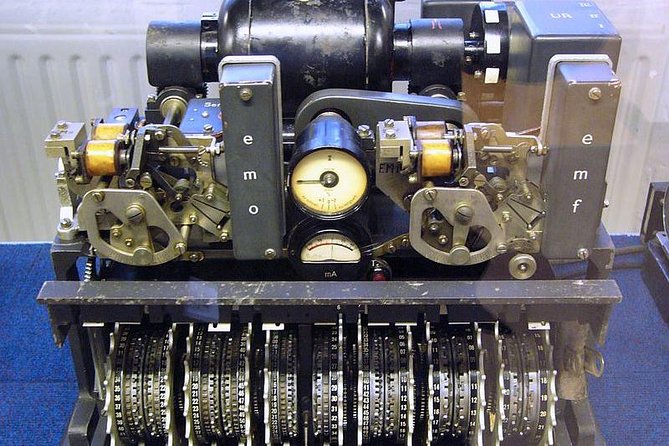
- The wartime machines: Bombe, Enigma, Lorenz, and Colossus
- From room-sized systems to mainframes
- Personal computers, retro games, and early internet culture
- How long should you allow?
- Staff, demonstrations, and the value of explanation
- Is $20.83 good value?
- Who will enjoy this visit most?
- Practical details for a smoother visit
- Should you book the National Museum of Computing?
- FAQ
- Where is the National Museum of Computing?
- Does this ticket include Bletchley Park admission?
- How long does a visit take?
- What can I see at the museum?
- Is the ticket available on a mobile phone?
- When is the museum open?
- Can I cancel for a refund?
Key points to know before you go
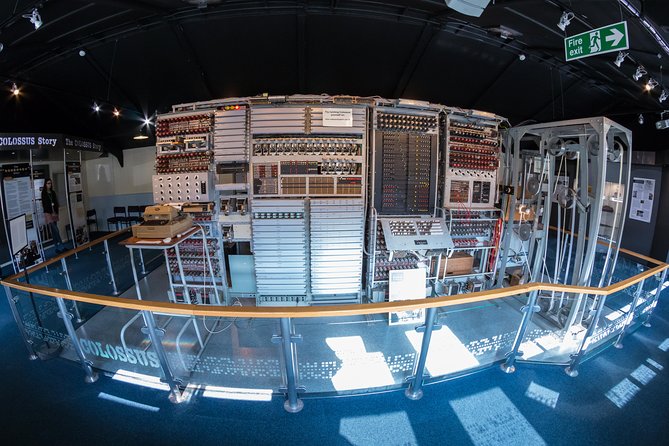
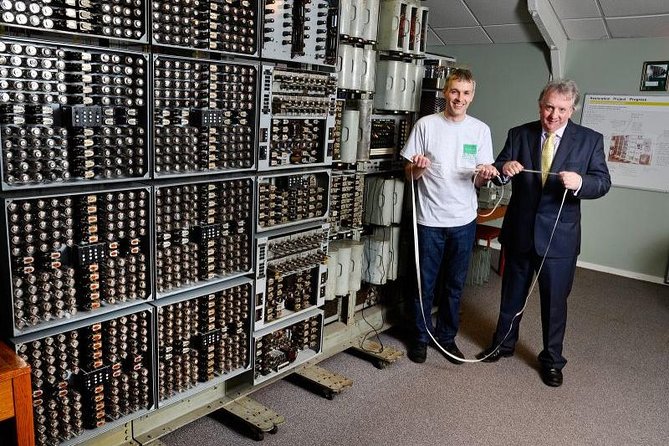
- The Bombe and Colossus are working reconstructions: Demonstrations help you grasp the size, noise, and practical skill behind wartime codebreaking.
- This is a separate museum from Bletchley Park: Your ticket covers the National Museum of Computing, not admission to Bletchley Park.
- The collection spans nearly every era of computing: You move from Enigma, Lorenz, and Colossus to mainframes, home computers, games, mobile devices, and the internet.
- Plan on two to six hours: A quick visit is possible, but talks, demonstrations, and hands-on areas reward extra time.
- The museum suits curious beginners as well as serious computer fans: Staff help explain the machinery, so you do not need a technical background.
- Practical comforts are available: You can use a mobile ticket, find light refreshments at the cafe, sit outside, and request sensory maps.
Why this museum matters beyond old computers
The National Museum of Computing is not simply a room full of dated machines. It shows how computing grew from urgent wartime work into the technology woven through daily life.
The story begins with codebreaking equipment from the 1940s. It then moves through large systems and mainframes of the 1950s, 1960s, and 1970s, before reaching personal computers, retro games, mobile computing, and the internet. That sequence gives your visit a clear shape. You are not just looking at unrelated objects. You are watching one tool become smaller, faster, more common, and more central to modern life.
I find the working collection especially valuable. A computer behind glass can look like a box of wires. A running machine, paired with a good explanation, shows what the designers were trying to solve and how people actually used it.
The museum has also been recognised as one of England’s 100 irreplaceable places. That distinction makes sense once you understand the scope of the collection. Its focus is not one famous machine or one narrow period. It preserves a broad working record of computing, with particular strength in the machines connected to wartime codebreaking.
A few more to weigh up in England
- Tower of London and Crown Jewels Exhibition Ticket
★ 4.5 · 6,677 reviews - Thorpe Park Admission Ticket
★ 4.0 · 5,915 reviews - Alton Towers Resort 1 Day Admission Ticket
★ 3.5 · 5,501 reviews
Finding the museum at the Bletchley Park site
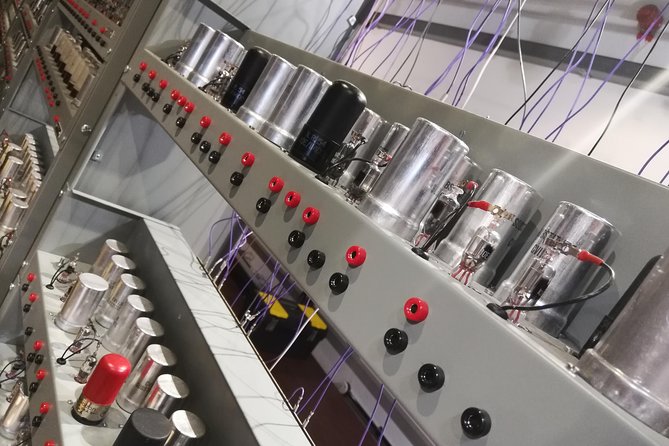
The most important planning detail is the difference between the two institutions. The National Museum of Computing and Bletchley Park are separate museums, despite being located on the same historic site.
Your day-entry ticket is for the National Museum of Computing. It does not provide admission to Bletchley Park. If you arrive expecting the larger Bletchley Park experience, you may find yourself at the wrong entrance or needing to buy another ticket.
This distinction is worth taking seriously because the subjects overlap. Both places relate to wartime codebreaking and the people who worked at Bletchley Park. The National Museum of Computing focuses on the machines and the development of computing. Bletchley Park is a separate attraction with its own admission.
Before paying, read the product name and confirmation carefully. If you want both museums, plan and budget for both separately. This one warning may save you the most expensive mistake of the day.
The museum is near public transportation, and the mobile ticket makes arrival straightforward. The published opening information lists Tuesday hours from 10:30 a.m. to 5 p.m. for the stated booking period, which runs from November 1, 2023, through February 3, 2027. Check the opening details for your chosen date before setting out, especially if you are building a full day around both museums.
The wartime machines: Bombe, Enigma, Lorenz, and Colossus
The wartime section is likely to be the emotional center of your visit. This is where Alan Turing and other computing pioneers enter the story, along with the machines that helped British codebreakers process encrypted messages.
The rebuilt Bombe is one of the strongest parts of the museum. Demonstrations make it easier to understand the machine as a working device rather than a name from a history book. You can see how much physical equipment was involved in the search for solutions and why this work demanded both engineering skill and careful human judgment.
The Colossus display carries a different weight. It represents a major step in electronic computing and connects directly with wartime codebreaking. Seeing a reconstruction in operation gives you a better sense of the machine’s scale and purpose than a photograph can provide.
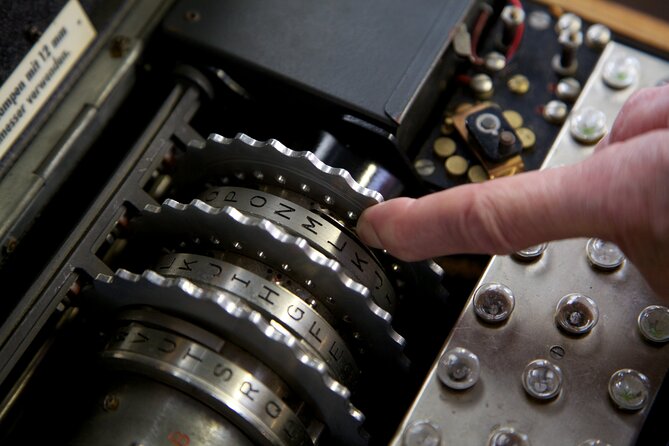
You may also encounter the Enigma and Lorenz story as part of this section. These names can blur together in a general account of the war. The museum’s wider presentation helps place them in the development of codebreaking technology and early computing.
If a talk or demonstration is offered during your visit, make time for it. The machines are impressive, but the explanation is what turns them into history. Several positive comments about the museum focus on the demonstrations and the staff’s patient explanations. That is useful guidance: do not rush through the wartime displays just to reach the newer computers.
From room-sized systems to mainframes
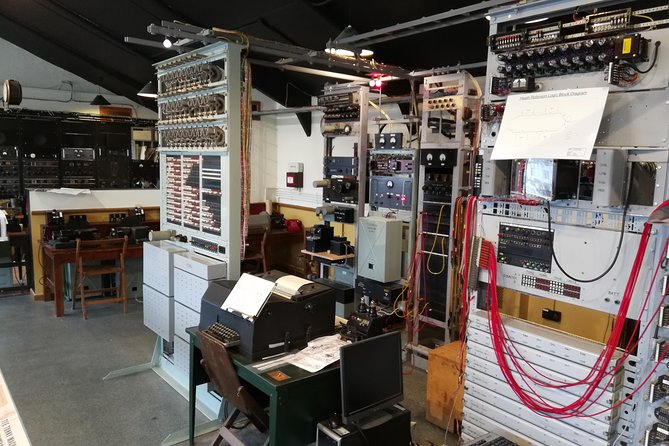
After the wartime machines, the museum follows computing through the 1950s, 1960s, and 1970s. This is the section that can reset your sense of scale.
Modern computers are small enough to carry in a pocket. Earlier systems could occupy large areas and demand very different working conditions. The museum lets you consider that physical change alongside the changes in speed, storage, access, and purpose.
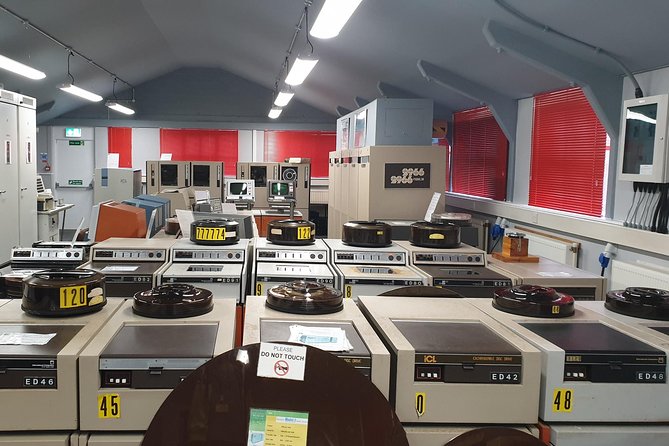
The large systems and mainframes also show that computing did not jump straight from wartime machines to home laptops. There was a long middle period in which computing became useful for institutions and specialist work before it became a household product.
You do not need to understand every technical detail to get something from this section. Look for the practical question behind each exhibit: what job did this machine perform, who could use it, and how much space or support did it require?
That approach makes the displays easier to follow. You can also compare the machines with the devices you use now. The contrast is part of the fun, especially when you realise how quickly expectations changed.
A completely different sort of day out:
- Stonehenge, Windsor Castle, and Bath from London
★ 4.5 · 18,662 reviews - London Big Bus Hop-On Hop-Off Tour with Optional River Cruise
★ 3.5 · 10,803 reviews - London Small Group Tour of Historical Pubs
★ 5.0 · 10,422 reviews - Beatles Magical Mystery Tour
★ 5.0 · 9,266 reviews
Personal computers, retro games, and early internet culture
The personal computing section should appeal to anyone who remembers early home computers, and it gives younger visitors a lively way into the subject. The museum includes retro games, which makes the visit less formal and more participatory.
I like this part because it connects technology with memory. A computer is not only a machine. It can also be the place where someone first learned to program, played an early game, or discovered that a screen could do far more than display text.
The game area is a good reason not to treat the museum as a purely academic stop. You might find yourself spending longer than expected with the older games, particularly if you want to show a child or younger companion how different early computer entertainment was.
The exhibits then continue toward mobile computing and the internet. This brings the story close to your own daily life. The point is not that older machines were quaint. It is that each stage created habits and possibilities that shaped the next one.
For a general audience, this later section may be the easiest place to connect with the subject. For computer enthusiasts, it adds useful context to the better-known wartime displays.
How long should you allow?
The stated visit length is approximately two to six hours. That is a wide range, but it reflects the museum’s different levels of appeal.
Allow around two hours if you want a focused visit, see the main wartime machines, sample the historical sequence, and spend a little time with the personal computers. This should work for a visitor who is also seeing other attractions nearby.
Give yourself closer to four to six hours if you enjoy demonstrations, ask questions, read exhibit details, and want time with the retro games. A technology enthusiast could easily make this a major part of the day.
The museum’s working displays reward patience. You may not want to stop at every machine, but a short explanation can change how you see an exhibit. Build in enough time to pause rather than treating the museum as a quick photo stop.
There is a cafe for light refreshments and outside seating. Those details matter during a longer visit, particularly if you are planning to spend much of the day at the Bletchley Park site. The available information does not describe a full restaurant service, so think of the cafe as a useful break rather than the basis for all-day dining.
Staff, demonstrations, and the value of explanation
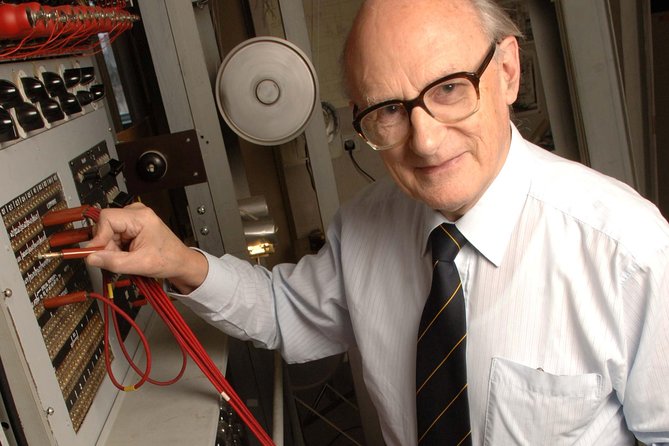
The staff are one of the museum’s strongest features. They are described as friendly and well informed about both the exhibits and their history, with a patient approach to explaining difficult subjects.
That matters here more than it would in a simple display museum. The machines can be intimidating. Terms such as Bombe, Lorenz, mainframe, and Colossus carry a lot of technical and historical meaning. A clear explanation helps you understand why each machine was built and what problem it addressed.
I would ask questions when staff are available. You do not need to arrive with a background in computing. The museum is suitable for history fans, technology enthusiasts, families curious about old games, and people who simply want to understand how modern devices developed.
The talks and demonstrations also provide a useful rhythm. Instead of walking through a long series of machines at the same pace, you can stop for a live explanation, then continue with a better sense of what to look for.
Is $20.83 good value?
At about $20.83 per person, the ticket is reasonably priced if you use the museum as a serious two-hour visit or longer. The value comes from the working collection, the historical range, and the chance to see machines connected to major wartime achievements.
It is less convincing if you expect admission to cover all of Bletchley Park. It does not. The separate admission issue is the key price consideration, so decide in advance whether you want one museum or both.
The ticket includes admission to the National Museum of Computing and is delivered as a mobile ticket. Skip-the-line entry is advertised as part of the booking, which may help you start your visit without a lengthy ticket queue.
The museum’s strongest value is educational rather than purely visual. You are paying to see a large working collection and to make sense of it with help from staff. If you only want a few famous wartime photographs, the visit may feel longer than necessary. If you enjoy understanding how things work, the cost is easier to justify.
Who will enjoy this visit most?
You should consider this museum if you like wartime history, engineering, programming, old technology, or the story behind everyday devices. It also works well for anyone who enjoyed hearing about Alan Turing and wants to see the machinery connected with that era.
Families can use the retro games and hands-on elements as an entry point. Children who are not interested in wartime codebreaking may respond better to the personal computer and game sections, while adults can follow the larger historical story.
It is also a good choice for repeat visitors to the Bletchley Park area. The two institutions offer different perspectives. The National Museum of Computing gives machines and technical development center stage, so it can add something substantial to a wider visit.
You may want to skip it if you have only a few minutes, dislike technical subjects, or expect a conventional house museum with rooms furnished in a period style. This is a museum of machines, demonstrations, explanations, and changing technology.
Practical details for a smoother visit
The ticket is mobile, and confirmation is sent when you book. Service animals are allowed, sensory maps are available, and most people can participate.
The museum is near public transportation. The supplied opening schedule lists Tuesday from 10:30 a.m. to 5 p.m., so check your date before travelling. If you are arranging a visit around another attraction, allow time for the museum’s separate entrance and admission arrangements.
Free cancellation is available if you cancel at least 24 hours before the experience start time. Changes or cancellations made inside that 24-hour window are not accepted for a refund, and the cut-off follows local time.
A good plan is to begin with the wartime machines, attend any available explanation of the Bombe or Colossus, then follow the collection chronologically. Finish with the personal computers and retro games. That order lets you see the technology develop without losing the main historical thread.
Should you book the National Museum of Computing?
Book it if you want working machines, clear explanations, and a practical story of how computing changed. The rebuilt Bombe and Colossus are the main draws, while the personal computers and games keep the visit from feeling too solemn or technical.
The one caution is crucial: this ticket is not for Bletchley Park. Treat the National Museum of Computing as its own attraction, even though the location and wartime subject matter overlap.
For a focused visit, two hours may be enough. If you enjoy demonstrations and old computers, plan for much longer. At around $20.83, it offers solid value for history fans and technology enthusiasts who want more than static displays.
FAQ
Where is the National Museum of Computing?
The museum is in Milton Keynes, England, on the Bletchley Park site. It is a separate museum from Bletchley Park.
Does this ticket include Bletchley Park admission?
No. The ticket includes admission to the National Museum of Computing only. Bletchley Park has separate admission.
How long does a visit take?
The approximate visit duration is two to six hours. Your time will depend on how closely you study the exhibits and how long you spend at talks, demonstrations, and the retro games.
What can I see at the museum?
The collection covers the Bombe, Enigma, Lorenz, and Colossus from the 1940s, followed by large systems and mainframes from the 1950s, 1960s, and 1970s. It also covers personal computers, retro games, mobile computing, and the internet.
Is the ticket available on a mobile phone?
Yes. The experience offers a mobile ticket, and booking confirmation is received at the time of booking.
When is the museum open?
The supplied opening schedule lists Tuesday hours from 10:30 a.m. to 5 p.m. for the period from November 1, 2023, through February 3, 2027. Check the details for your selected date before you go.
Can I cancel for a refund?
Yes. You can cancel at least 24 hours before the experience start time for a full refund. Cancellations or changes made less than 24 hours before the start time are not accepted for a refund.
Just added in England
- The Yorkshire Dales of All Creatures Great & Small★ 5.0 · 109 reviews
- Horse drawn carriage ride york★ 5.0 · 75 reviews
- Stand Up Paddleboarding Taster Session★ 5.0 · 16 reviews
- Yorkshire Dales Tour App, Hidden Gems Game and Big Britain Quiz (7 Day Pass) UK★ 3.5 · 3 reviews
- The Treasures of Bloodaxe – A Fun Viking Treasure Hunt in York★ 4.5 · 21 reviews
- Welcome to York – The River Route★ 5.0 · 7 reviews
- York’s Famous Ghosts Smartphone App walking tour★ 5.0 · 2 reviews
- York City Pass: Access 35+ Attractions for One Great Price★ 4.5 · 122 reviews
Tickets, compared.

Tower of London and Crown Jewels Exhibition Ticket
Read our review →


Liverpool City Sights Hop On Hop Off City Tour – 24hr Ticket
Read our review →