
Reviewed · WALKING TOURS
Cambridge: University Walking Tour
Cambridge rewards slow looking. This two-hour walk brings the university city into focus through big ideas and memorable characters, rather than a parade of dates and stone façades. I like the way the tour connects Isaac Newton, William Wilberforce, John Milton, science, religious freedom, and the abolition of the slave trade. I also like the small-group limit of 15, which should make it easier to hear the guide and ask questions. The main consideration is that college entry is never guaranteed, and the moderate-to-fast pace may not suit anyone with limited mobility.
The walk begins inside the Round Church, where your admission includes an exhibition and a 23-minute film, subject to opening times. Guides such as Dave, Ian Cooper, Jon, John, Julia, and Martin have earned repeated praise for their clear delivery, humor, and ability to answer questions. Plan for up to two hours, wear warm, comfortable clothing, and leave enough time afterward if you have a train to catch.
In This Review
- Key points at a glance
- Why Cambridge works best on foot
- Starting inside the Round Church
- From monasteries to a world university
- Meeting Newton, Wilberforce, and Milton
- Senate House, the Corpus Clock, and Cavendish Laboratory
- College entry is useful, but never promised
- What the guides do particularly well
- Pace, weather, and practical comfort
- Is $22 good value?
- Who should book this Cambridge walk?
- Should you book the Round Church Guided Walk?
- FAQ
- Where does the Cambridge University Walking Tour begin?
- What time does the walking tour meet?
- How long does the tour last?
- What language is the tour conducted in?
- What is included in the ticket?
- Can the tour enter Cambridge colleges?
- Is the tour suitable for wheelchair users?
- Can children join the tour?
- Can I bring a dog?
- What should I bring?
Key points at a glance
- The Round Church sets the tone: Begin inside one of Cambridge’s most distinctive buildings, with an exhibition and film included when open.
- Ideas matter as much as buildings: The walk links Cambridge to Christianity, the Reformation, modern science, law, religious freedom, and abolition.
- Expect famous names: Isaac Newton, William Wilberforce, and John Milton help explain Cambridge’s influence far beyond England.
- You see major city sights: The route includes the Senate House, Corpus Clock, Cavendish Laboratory, and other central university sites.
- College entry depends on the day: One or two colleges may be included, but exam term from late April through June closes that option.
- Small groups improve the experience: With no more than 15 people, the walk feels more personal than a large city tour.
Why Cambridge works best on foot
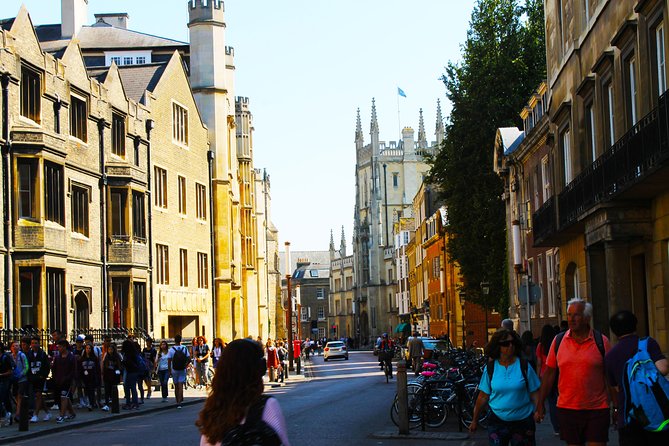
Cambridge can look deceptively simple on a map. The centre is compact, but its meaning is layered. A college gate, a church, a laboratory, and a public square can each open a different chapter in the city’s story.
That is why a guided walk earns its $22 price. You are not paying only to be shown buildings. You are paying for the links between them. The guide helps you see how a university that grew from Christian monasteries became a centre for science, politics, education, and social change.
The format is also sensible for a first visit. You get a two-hour orientation, learn which places deserve a closer look, and can spend the rest of your day exploring at your own speed. One person who had tried visiting Cambridge alone found that photographs were easy enough, but the context was missing. That is the practical value of this walk: it gives the city a story before you go wandering through it.
The tour usually lasts 90 to 120 minutes. That variation matters. The route may be brisk, but the guide may also pause for questions, explain an unusual detail, or adjust the route around college access and local conditions.
More Walking Tours in Cambridge
- Cambridge University Walking Tour by Alumni™ Kings College Option
★ 5.0 · 2,336 reviews - Cambridge: Alumni-Led Walking Tour w/ King’s College Option
★ 4.8 · 1,177 reviews - Cambridge Walking & Punting Tour by Alumni™ King’s College Option
★ 4.5 · 698 reviews
Starting inside the Round Church
Your meeting point is the Round Church Visitor Centre. Go inside the church and check in at the welcome desk before the scheduled 2:15pm start. Walks operate on Wednesdays, Thursdays, Fridays, and Saturdays.
The Round Church is more than a meeting place. Admission to the church, its exhibition, and its 23-minute film is included when opening times allow. That gives you useful background before the walk begins, especially if you want to understand Cambridge’s religious beginnings.
Arrive early enough to look around without rushing. The tour itself meets inside, so do not wait outside and wonder if you are in the right place. It is a small but important practical detail.
The Christian focus is central to the tour. You do not need to be religious to find the subject useful. One guest who described themselves as nonreligious still found the discussion of religion’s influence on England and the wider world very engaging. The guide presents Christianity as a force in Cambridge’s development, then follows its effect on education, politics, science, and public life.
From monasteries to a world university
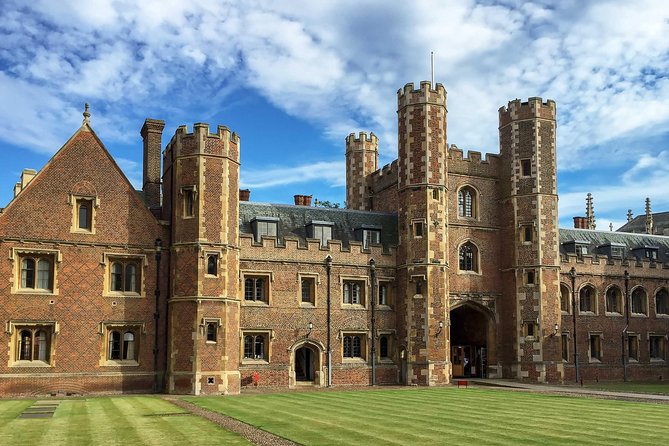
The walk’s main thread is the growth of the university over eight centuries. Rather than trying to cover every college and every famous graduate, the guides use a smaller set of ideas to explain how Cambridge changed.
You may hear about the university’s beginnings in connection with Christian monasteries. That starting point helps explain why chapels, religious foundations, and debates over belief remain so important in Cambridge’s buildings and traditions.
The Protestant Reformation provides another major turning point. It was not simply a religious dispute held far away in a textbook. It affected English institutions, education, politics, and the people who studied and taught at Cambridge.
The route also considers movements for the rule of law and religious freedom. These themes give the buildings a human edge. You begin to see the university not only as a collection of old colleges, but as a place where arguments about authority, conscience, and public duty were worked out over generations.
The Christian Heritage approach will appeal most to you if you enjoy history with a clear theme. If you prefer a quick architectural tour with little discussion of religion or ideas, this may feel more serious than expected.
Meeting Newton, Wilberforce, and Milton
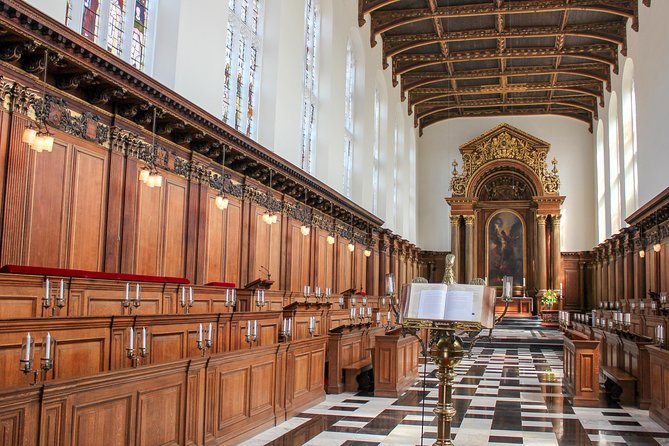
The famous names are not included merely as decoration. Isaac Newton helps the guide explain Cambridge’s role in the rise of modern science. His presence connects university study with a much larger change in how people understood nature and the physical world.
John Milton gives the tour another angle. His connection with Cambridge opens discussion of literature, education, and the intellectual life that grew around the university. William Wilberforce brings public action and moral reform into the story, especially the campaign to abolish the British slave trade.
That range is one of the walk’s strengths. You move from laboratories to literature, from religion to law, and from university life to national politics. The experience asks you to consider how ideas formed in classrooms and colleges can affect the wider world.
The guides appear to be especially good at making this material approachable. Dave is repeatedly praised for explaining Cambridge’s buildings and people in a clear, entertaining way. Ian Cooper is described as someone who could hold attention for hours. Jon is praised for asking questions and creating a comfortable atmosphere. These details matter because a theme-heavy walk depends on delivery. Good information is of little use if it becomes a lecture.
A completely different sort of day out:
- Cambridge University With Alumni: Optional Kings College Entrance
★ 5.0 · 1,987 reviews - Punting Tour in Cambridge
★ 4.5 · 1,690 reviews - Cambridge: Guided River Cam Punting Tour
★ 4.7 · 1,469 reviews - Cambridge: University Alumni Tour with Kings College Option
★ 4.7 · 1,282 reviews
Senate House, the Corpus Clock, and Cavendish Laboratory
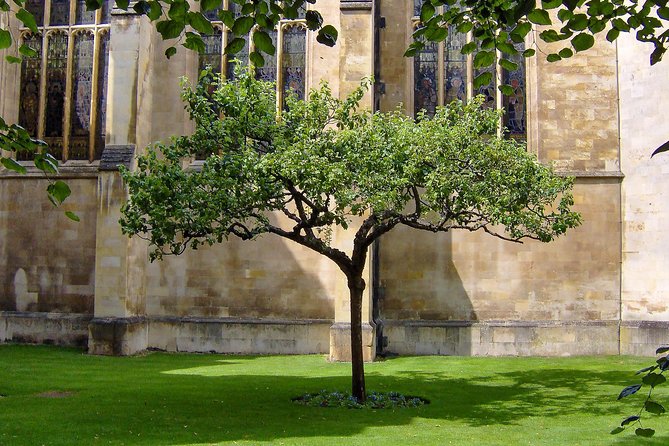
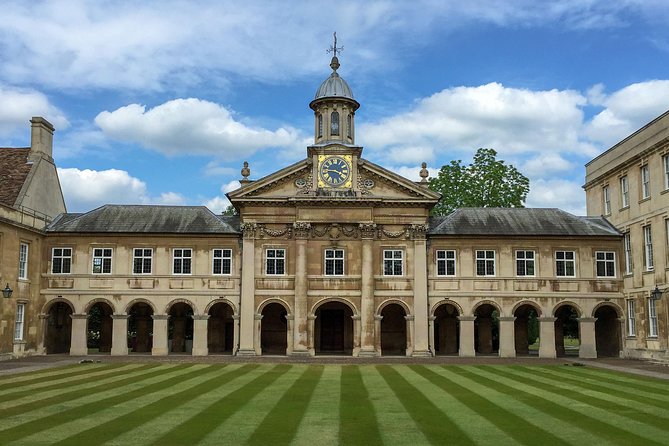
The central sights provide the visual structure of the walk. The Senate House is one of the essential university landmarks, and it gives you a sense of Cambridge’s formal academic identity. Your guide can help you read the building as part of the university’s institutions, not just as a handsome photo stop.
The Corpus Clock offers a very different mood. Its unusual design and public position make it one of Cambridge’s memorable curiosities. It is the kind of place you might photograph in seconds, but a guide adds the story and explains why it matters within the city’s modern identity.
The Cavendish Laboratory shifts the emphasis toward science. Its inclusion reinforces the point that Cambridge’s influence is not limited to medieval foundations, grand ceremonies, or literary figures. The university has also helped shape modern scientific thought.
The route may include other significant sites in the centre, and the exact order can vary. That flexibility is sensible in a working university town. College access, public activity, and opening times can affect where the group goes, so you should see the itinerary as a strong outline rather than a fixed script.
College entry is useful, but never promised
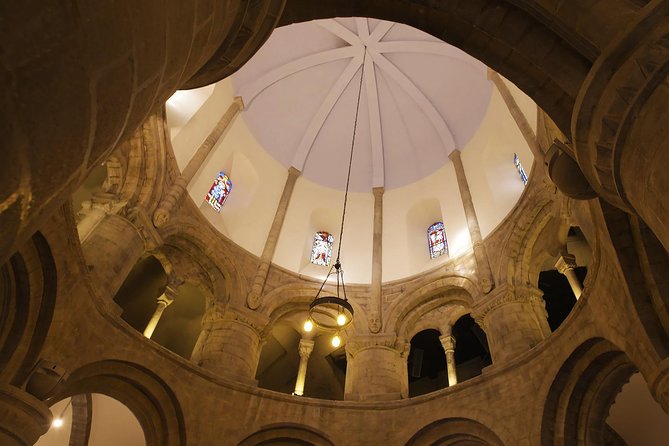
The experience may include entry to approximately one or two colleges, subject to opening availability. This can be a major bonus because college grounds provide a closer look at the enclosed spaces that define Cambridge.
Still, do not book this walk solely for interior access. The organisers cannot guarantee entry, and colleges are closed to this tour during university exam term, from late April through the end of June. Even outside that period, access can change.
If a college is included, listen for the contrast between public Cambridge and the quieter academic world behind the gates. If no college opens, the walk still visits key university sites and explains the city from the streets.
Dogs are allowed on the walk, but anyone bringing a dog must remain outside colleges visited because of college restrictions. Assistance dogs are permitted. Pets are otherwise not allowed inside the church or relevant sites.
What the guides do particularly well
The strongest feature of this experience is the guide. Again and again, the walk earns praise for clear explanations, friendliness, humor, and a strong command of Cambridge’s past.
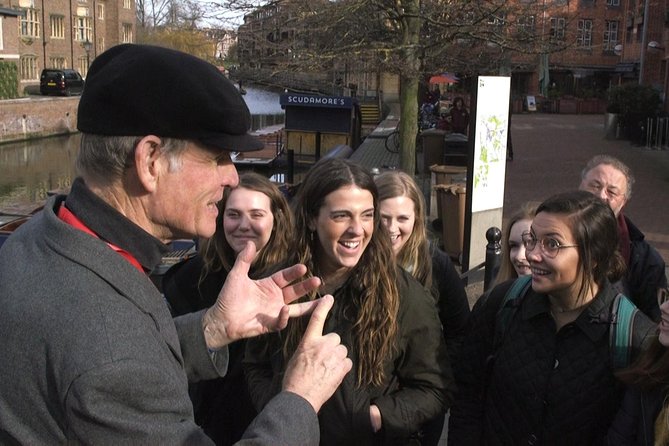
Dave appears often in the feedback and is praised for his easy voice, detailed answers, and friendly manner. He also adapted to cold weather by allowing the group to stop for a hot drink along the way. Ian Cooper is singled out for his engaging delivery and wide understanding of Cambridge. Jon is praised for keeping the group involved rather than simply talking at them.
That personal quality is important in a small group. With a maximum of 15 people, you can usually hear the guide more easily than on a large coach or crowded group walk. You also have a better chance to ask about a building, a person, or a point that has caught your attention.
The group sizes can be smaller than the maximum. One walk had 11 people, which is a comfortable number for standing around a historic site without blocking the pavement or losing contact with the guide.
The tour may be led by different local guides, so the tone will vary slightly. The consistent strength is the subject knowledge and the ability to tell stories in a relaxed way.
Pace, weather, and practical comfort
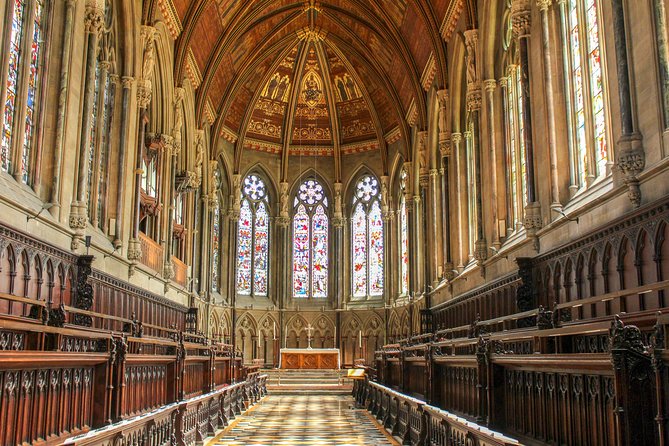
This is a proper walking tour, not a gentle sightseeing stroll. The route moves at a moderate to fast pace, with standing time while the guide explains buildings and events.
Wear shoes that can handle two hours of city walking. Bring water, a camera, and clothing suited to the forecast. Cold weather deserves special attention. A late autumn walk can involve standing still in exposed spots, and one otherwise delighted guest wished they had wrapped up more warmly.
Rain may make the experience less comfortable, but weather-appropriate clothing should help. The walk is pushchair accessible, though it is not wheelchair accessible. It is not suitable for people with mobility impairments or wheelchair users.
Children under 16 must travel with a responsible adult. Unaccompanied minors are not allowed. Smoking and audio recording are prohibited.
Allow more time than the advertised minimum if you need to make a train or another timed booking. The tour can run close to two hours, and one guest had to leave near the end to catch a train. I would schedule at least a modest buffer after the walk.
Is $22 good value?
At $22 per person, this is a fair price for Cambridge. The fee includes a live English-speaking guide, a small group, the Round Church, its exhibition and film when available, visits to important central sites, and possible entry to one or two colleges.
The value is strongest if you care about context. You could walk past the Senate House, Corpus Clock, or Cavendish Laboratory and take good photographs without spending anything. The guide gives you the connections, names, and arguments that make those places worth remembering.
It is also good value for a day trip. A two-hour walk leaves room for lunch, a museum, independent college visits if available, or time beside the river. You get a useful introduction without committing an entire day to a formal tour.
The price is less compelling if your only aim is guaranteed college entry. Since college access can change and is closed during exam term, check the conditions before booking. Think of the colleges as a possible extra, not the main product.
Free cancellation up to 24 hours before the start and the option to reserve now and pay later add useful flexibility. A walk may be cancelled if fewer than two people sign up, so keep that possibility in mind when planning a tightly timed day.
Who should book this Cambridge walk?
I would recommend it to first-time visitors who want more than a set of photographs. It suits people interested in university life, architecture, Christianity, science, politics, literature, and the way ideas shape public life.
It also works well for mixed-age groups. The reported ages ranged from people in their late twenties to their mid-seventies, with everyone finding something to enjoy. The guide’s storytelling gives the walk enough variety to hold attention across generations.
History-minded visitors will get the most from it, especially if you like connecting famous people to wider social changes. It is also a good choice for a day trip from London or another English city because it gives you an efficient first look at central Cambridge.
I would hesitate to recommend it if you want a slow photographic walk, guaranteed access to several college interiors, or a tour without a Christian theme. The pace, standing time, and subject matter are clear parts of the experience.
Should you book the Round Church Guided Walk?
Book it if you want Cambridge explained rather than simply displayed. The combination of the Round Church, major university sights, famous Cambridge figures, and a strong focus on Christianity and public ideas gives this walk more substance than a basic city orientation.
Plan carefully around exam term, dress for the weather, and leave time after the finish. If you accept that college entry is uncertain, the $22 fee buys a lively, useful introduction to one of England’s great university cities.
FAQ
Where does the Cambridge University Walking Tour begin?
The tour begins inside the Round Church Visitor Centre. Enter the church and check in at the welcome desk before the scheduled start.
What time does the walking tour meet?
Tours meet at 2:15pm on Wednesdays, Thursdays, Fridays, and Saturdays.
How long does the tour last?
The walk lasts between 90 and 120 minutes, so plan for up to two hours.
What language is the tour conducted in?
The live tour guide speaks English.
What is included in the ticket?
The ticket includes the guided walk, admission to the Round Church, its exhibition and 23-minute film when open, visits to key historical sites, and possible entry to approximately one or two colleges.
Can the tour enter Cambridge colleges?
College entry is sometimes possible, but it is not guaranteed. The tour cannot enter colleges during university exam term, from late April through the end of June.
Is the tour suitable for wheelchair users?
No. The route is pushchair accessible but is not wheelchair accessible and is not suitable for people with mobility impairments.
Can children join the tour?
Children under 16 may join only when accompanied by a responsible adult. Unaccompanied minors are not allowed.
Can I bring a dog?
Dogs are allowed, but people with dogs must remain outside any colleges visited. Assistance dogs are allowed.
What should I bring?
Bring comfortable shoes, water, a camera, and clothing suitable for the weather. Warm layers are particularly useful in cold conditions because parts of the tour involve standing outside.
Just added in Cambridge
- Explore Cambridge Student Life & Top Colleges Walking Tour★ 3.5 · 18 reviews
- Tangential Cambridge: Group Walking Tour of Sights and Highlights★ 5.0 · 79 reviews
- Town Food Tour in Saffron Walden★ 5.0 · 32 reviews
- Cambridge University Ghost Tour by Alumni™★ 5.0 · 117 reviews
- Private Custom Tour With a Local Guide In Cambridge★ 5.0 · 2 reviews
- Fun, Flexible Treasure Hunt Around Cambridge with Cryptic Clues & Hidden Gems★ 5.0 · 142 reviews
- Welcome to Cambridge: Private Tour including King’s College Chapel★ 5.0 · 1 review
- Private | Cambridge University Colleges Guided Punting Tour★ 4.5 · 13 reviews
Walking Tours, compared.
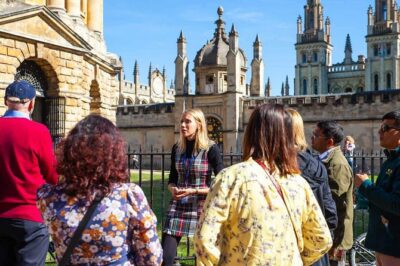
Oxford University Walking Tour With University Alumni Guide
Read our review →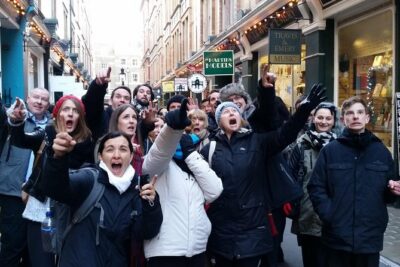
Tour for Muggles The Ultimate Harry Potter Walking Tour in London
Read our review →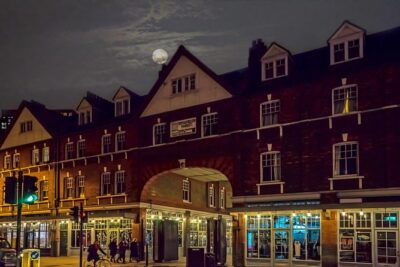
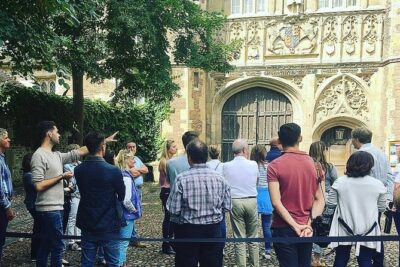
Cambridge University Walking Tour by Alumni™ Kings College Option
Read our review →
Blackbeard to Banksy – The Ultimate Walking Tour of Bristol
Read our review →
Air Raid Shelter + St. Nicholas Market Walking Tour
Read our review →
Walking Tour of Bath with Blue Badge Tourist Guide
Read our review →
Changing of the Guard Guided Walking Tour in London
Read our review →Browse the lists this tour appears in