
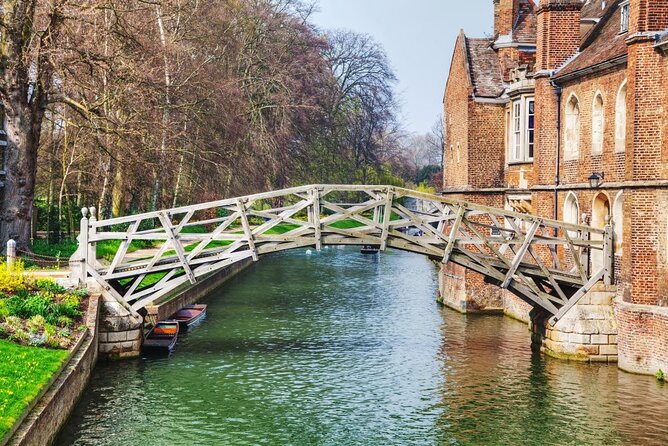
Reviewed · CAMBRIDGE TOURS
The Original Uncomfortable Cambridge™ Tour
Cambridge has more stories than postcard views. I like the student-led commentary and the way this 90-minute walk tackles women’s rights, slavery, race, LGBTQIA+ history, and city-university tensions. I also like the small group limit of 15, which should make the discussion easier to follow. The main drawback is that college interiors are not included, so you are paying for the guide and ideas rather than grand rooms.
This is a thoughtful alternative to a standard Cambridge stroll. Guides such as Shubham and Malak have been praised for making the material interactive, clear, and fun, with information delivered in short bursts. You should come ready to walk, listen, and consider uncomfortable questions, not simply collect pretty photographs.
In This Review
- Key points to know before you book
- What makes the Uncomfortable Cambridge tour different
- Meeting the guide near King’s College
- Great St Mary’s and the old city-university quarrel
- Trinity Hall and the question of university money
- The Backs, Oliver Cromwell, and civil war memory
- Darwin College and the long road for women
- Queens’ College and black student history
- St Catharine’s, enslavement, and disputed objects
- Returning to King’s College for LGBTQIA+ memory
- Is $27.56 good value for 90 minutes?
- Who should book this Cambridge walk?
- Final verdict: book it for the questions, not the interiors
- FAQ
- Where does the tour start?
- Where does the tour finish?
- How long does the tour last?
- What language is the tour offered in?
- How many people can join the group?
- Is admission to the colleges included?
- Is admission to Great St Mary’s Church included?
- Is the tour suitable for someone who has difficulty walking?
- Can I cancel for a full refund?
- What happens if bad weather cancels the tour?
Key points to know before you book
- The tour begins at King’s College and ends nearby, making it easy to fit into a day of sightseeing in central Cambridge.
- Great St Mary’s introduces the old city-university quarrel, a useful reminder that Cambridge has long been divided by more than college walls.
- The Backs connects scenery with the English Civil War, including Oliver Cromwell’s lasting place in the story.
- Darwin College and New Hall College mark the fight for women’s full membership at the university.
- Queens’ College and St Catharine’s College address race, enslavement, and repatriation, subjects often skipped on traditional walks.
- The group is capped at 15 people, and the price is about $27.56 per person for roughly an hour and a half.
What makes the Uncomfortable Cambridge tour different
Most Cambridge walks lean heavily on architecture, famous alumni, college traditions, and the standard punting views. This one uses familiar places to ask harder questions. You still see some of the city’s best-known university settings, but the focus shifts from what looks impressive to who benefited, who was excluded, and whose stories were left out.
That change in focus gives the tour its value. You are not simply told that a college is old or beautiful. You are asked to think about how its money was raised, who could study there, how the university treated women and black students, and how institutions handle difficult objects and memories.
I especially like the short discussion format. The tour moves every 10 to 20 minutes, so the subject changes before it becomes too heavy. Shubham has been praised for making the information thought-provoking while keeping it in manageable bursts. Malak has also been praised for offering background stories without falling into a rehearsed tourist script.
You should still know what this tour does not provide. It is not a full interior tour of Cambridge colleges. Admission to Trinity Hall, Newnham College, Queens’ College, St Catharine’s College, and King’s College is not included. Some stops take place outside the colleges, and the discussion matters more than access to grand halls or chapels.
A few more to weigh up in Cambridge
- Cambridge University Walking Tour by Alumni™ Kings College Option
★ 5.0 · 2,336 reviews - Cambridge University With Alumni: Optional Kings College Entrance
★ 5.0 · 1,987 reviews - Punting Tour in Cambridge
★ 4.5 · 1,690 reviews
Meeting the guide near King’s College
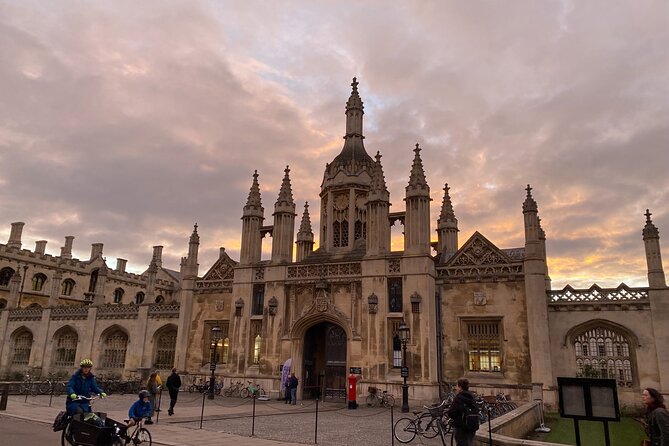
The practical meeting point is the Cambridge Tourist Information Centre at The Guildhall, 11 Peas Hill. The walking tour then begins at the front of King’s College, where you meet the Cambridge University student guide.
That arrangement is useful. The Guildhall is a clear central starting point, while King’s College gives the walk an instantly recognizable setting. You should allow enough time to reach the front of the college after arriving at the meeting point and avoid treating the first stop as a chance to wander inside.
The opening 10 minutes at King’s College set the tone. You will not receive an extended visit to the college interior, since admission is not included. Instead, the guide uses this famous frontage as a place to begin discussing LGBTQIA+ histories and memory.
Ending with this subject gives the walk a circular shape. You start and finish at King’s College, but the meaning of the site changes after you have heard about class, gender, race, war, enslavement, and contested memory across Cambridge.
Great St Mary’s and the old city-university quarrel
The first major stop is Great St Mary’s Church, where the guide spends about 15 minutes discussing medieval tensions between Cambridge town and university.
This is an important foundation. Cambridge is often presented as one unified academic setting, yet the university and the city have not always shared power comfortably. A church beside the colleges is a fitting place to consider that relationship, since it sits within the same central zone where academic authority and everyday civic life have long met.
Admission to this stop is free. The discussion should also help you read the rest of the walk more clearly. When the guide later talks about donations, women’s membership, or black students, you already have a sense that the university’s story is tied to local power and public life.
The possible limitation is time. Fifteen minutes cannot cover every medieval conflict in detail. You will get a focused introduction rather than a complete account, so listen for the main idea and save the finer points for further reading.
Trinity Hall and the question of university money
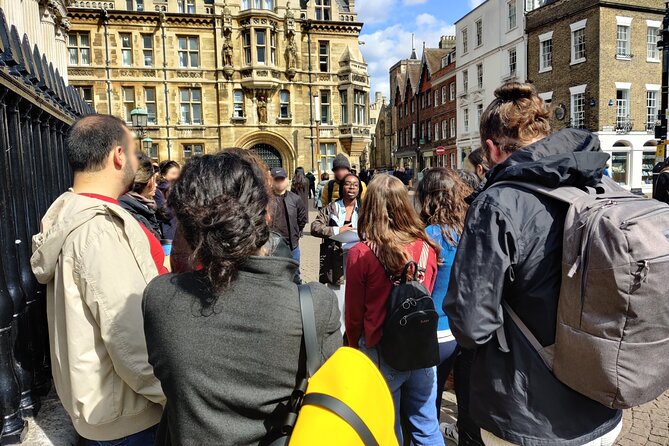
In front of the Old Schools building, the group spends about 10 minutes discussing problematic donations to the university. The stop is connected with Trinity Hall, though entry is not included.
This may be one of the most useful moments for anyone who wants to understand how a university grows. Buildings, scholarships, collections, and academic posts do not appear by magic. They often depend on money from people and institutions whose actions may now raise serious moral questions.
The subject is brief but pointed. Instead of treating a donor’s name as a harmless label on a stone wall, the guide asks you to consider the source of that money and the obligations that follow. That approach makes the architecture feel less neutral.
You should not expect to enter Trinity Hall or inspect a collection of documents. The value here is the explanation, not access. If you prefer a traditional tour built around interiors and architectural details, this stop may feel limited. If you want a more honest account of how institutions are funded, it earns its place.
A completely different sort of day out:
- Cambridge: Guided River Cam Punting Tour
★ 4.7 · 1,469 reviews - Cambridge: University Alumni Tour with Kings College Option
★ 4.7 · 1,282 reviews - Cambridge: Alumni-Led Walking Tour w/ King’s College Option
★ 4.8 · 1,177 reviews - Shared Guided Punting Tour of Cambridge
★ 5.0 · 787 reviews
The Backs, Oliver Cromwell, and civil war memory
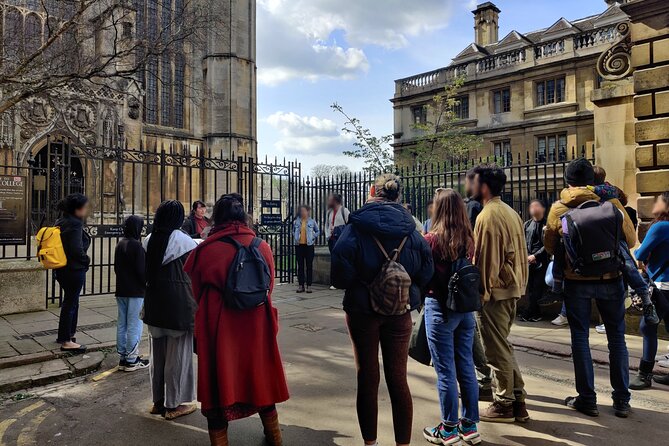
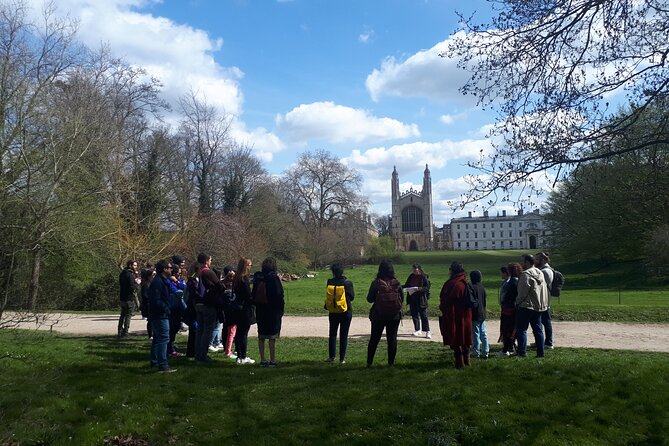
The Backs receives the longest single stop, about 20 minutes. Admission is free, and the guide uses this famous stretch of Cambridge scenery to discuss the English Civil War and Oliver Cromwell’s legacy.
The setting matters. The Backs is one of the places most associated with Cambridge’s beauty, so it can be easy to treat it as a pleasant view and move on. This discussion ties the scenery to conflict and political change, reminding you that even the most peaceful-looking college grounds sit inside a national story of power and division.
Oliver Cromwell gives the topic a recognizable figure, but the point is broader than one person. You will consider how a major conflict affected Cambridge and how public memory decides which political figures are honored, criticized, or simplified.
Twenty minutes allows the guide to give the subject some breathing room. It is also the part of the walk where you may pause most often for views, so bring a phone or camera if you want pictures. Just remember that the tour’s goal is not only sightseeing. The view is part of the argument.
Darwin College and the long road for women
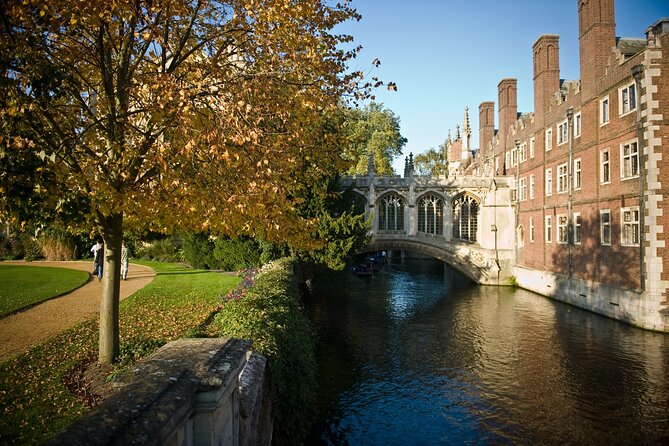
At a map of the colleges, opposite the site of the former New Hall College, the guide discusses the journey women took to become full members of Cambridge University. The stop lasts around 10 minutes and centers on Darwin College.
This is one of the clearest examples of how Cambridge’s physical layout reflects an unequal past. New Hall became Darwin College, but the important point is not simply the change of name. The discussion looks at women’s place within the university and the barriers they faced before full membership became possible.
A map is helpful here because you can see the colleges as a system rather than as isolated landmarks. The guide can use the location to explain how the university developed and how women’s colleges fit into that structure.
Admission to Darwin College is not included. You should also note the supplied stop information refers to the former New Hall site, while the list of excluded admissions mentions Newham College. That means you should treat this as an outdoor discussion rather than expect a college entry.
Queens’ College and black student history
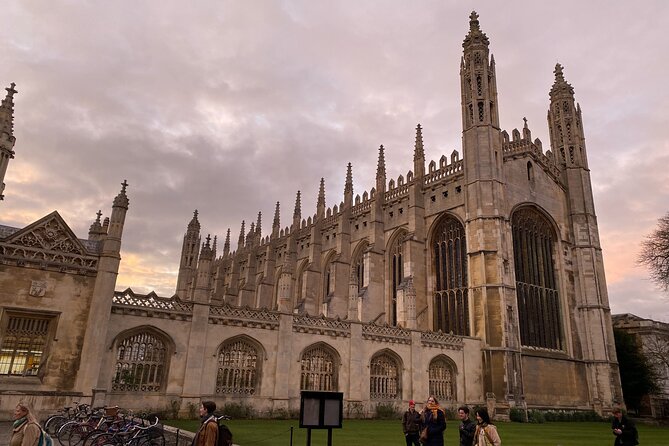
The group spends about 15 minutes at Queens’ College discussing the history of black students at Cambridge University. Admission is not included.
This subject broadens the tour beyond famous white male figures and institutional donors. It asks you to consider who was able to study at Cambridge, how black students experienced the university, and why those stories have often received less attention than the achievements of well-known graduates.
The stop is valuable because it links an individual experience to the wider structure of the university. A black student’s story is not just an isolated biography. It can reveal rules, customs, assumptions, and social barriers that shaped academic life.
As with several stops, the guide’s delivery is important. The strongest feedback highlights questioning, interactive explanations rather than a long lecture. That matters here, since the subject calls for care and context. You may find the 15 minutes leaves you wanting more, but that is a fair trade for a walk that keeps moving.
St Catharine’s, enslavement, and disputed objects
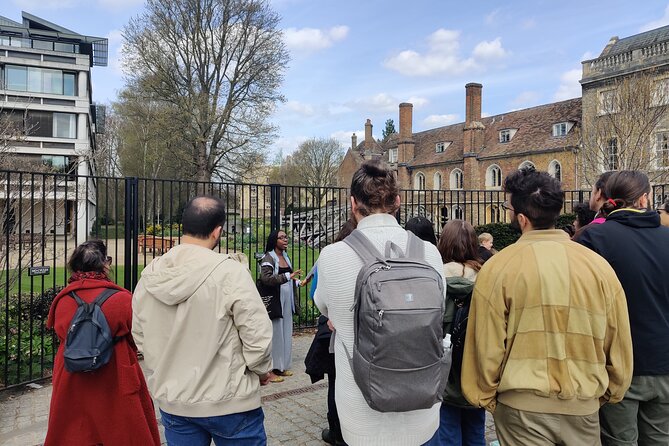
At St Catharine’s College, the guide spends another 15 minutes on controversies involving histories of enslavement and the repatriation of objects.
This is the kind of stop that separates the walk from a standard sightseeing route. It moves beyond the question of who studied at Cambridge and asks how institutions built collections, how they acknowledge links to enslavement, and what should happen when objects are claimed by their places or communities of origin.
The subject can feel uncomfortable by design. That is not a flaw, but you should know the tone before booking. The tour is intended to question familiar institutions, not protect you from difficult material.
You will not enter St Catharine’s as part of the price. The exterior works as a prompt for the conversation, while the guide supplies the context. I would value this stop most if I had already seen the postcard Cambridge and wanted to think about what those polished images leave out.
Returning to King’s College for LGBTQIA+ memory
The walk finishes at King’s College, with about 15 minutes devoted to LGBTQIA+ histories and memory. Admission is not included.
Ending here is a smart choice. King’s College is among Cambridge’s most recognizable places, and the final discussion asks you to think about how LGBTQIA+ people are remembered, represented, or overlooked within the university’s story.
The subject of memory links back to earlier stops. The tour has already asked you to question donor plaques, college traditions, women’s exclusion, black student history, and the legacy of war. The final stop widens that question: who gets remembered by an institution, and in what way?
You finish on King’s Parade, Cambridge CB2. That makes the end point convenient for continuing into central Cambridge, although the tour itself does not include entry to King’s College.
Is $27.56 good value for 90 minutes?
At about $27.56 per person, the tour costs more than a free self-guided walk but less than many long guided excursions. Its value rests almost entirely on the guide’s interpretation. You are not paying for college admission, transport, food, or an extended sightseeing package.
For me, the price makes sense if you want a concentrated introduction to difficult parts of Cambridge’s past. A student guide can connect the places in front of you with current questions about memory, access, and institutional responsibility. The small group limit of 15 is another benefit, since it should make it easier to hear the guide and take part in the conversation.
The value is weaker if your main aim is to see grand interiors. You will need to arrange and pay for college admissions separately if you want that experience. This walk works best alongside traditional sightseeing, not as a replacement for it.
The tour is also usually booked about 13 days ahead. That suggests you should reserve before arriving if your dates are fixed, especially since the small group may fill. Free cancellation is available until 24 hours before the start time. Poor weather or failure to reach the minimum number can lead to a new date or a full refund.
Who should book this Cambridge walk?
I would recommend it to you if you:
- Want a student perspective rather than a standard script
- Enjoy history that includes disagreement and moral questions
- Have already seen Cambridge’s famous views and want more context
- Prefer a small, social group
- Can walk for 90 minutes and stay engaged outdoors
- Are comfortable discussing race, gender, enslavement, war, and LGBTQIA+ history
You may want another tour if you need step-free certainty, extensive indoor access, or a gentle overview focused only on buildings and famous names. The experience is not recommended for people who have difficulty walking, and most of the value comes from moving between several central sites.
Service animals are allowed, and the route is near public transportation. Most people can participate, but you should still plan for a continuous walking tour rather than a seated presentation.
Final verdict: book it for the questions, not the interiors
The Original Uncomfortable Cambridge Tour is a strong pick for an hour and a half of thoughtful sightseeing. Its best features are the student guides, small group size, short interactive discussions, and willingness to discuss parts of Cambridge that standard tours often skip.
Book it if you want the colleges to feel more complicated and more human. Skip it if your priority is entering as many buildings as possible. For the right reader, the tour gives familiar Cambridge sights a sharper edge, and that makes the $27.56 worthwhile.
FAQ
Where does the tour start?
Meet at the Cambridge Tourist Information Centre, The Guildhall, 11 Peas Hill, Cambridge CB2 3PP, UK. The walking tour begins at the front of King’s College.
Where does the tour finish?
The tour finishes at King’s Parade, Cambridge CB2, near King’s College.
How long does the tour last?
The experience lasts approximately 1 hour and 30 minutes.
What language is the tour offered in?
The tour is offered in English.
How many people can join the group?
The group has a maximum of 15 travelers.
Is admission to the colleges included?
No. Admission to Trinity Hall, Newham College, Queens’ College, St Catharine’s College, and King’s College is not included.
Is admission to Great St Mary’s Church included?
Yes. The stop at Great St Mary’s Church is listed as free admission.
Is the tour suitable for someone who has difficulty walking?
The experience is not recommended for people who have difficulty walking. Most travelers can participate, and service animals are allowed.
Can I cancel for a full refund?
Yes. You can cancel up to 24 hours before the experience starts for a full refund. Cancellations or changes made less than 24 hours in advance are not accepted for a refund.
What happens if bad weather cancels the tour?
If poor weather causes cancellation, you will be offered a different date or a full refund. If the minimum number of participants is not reached, you will also be offered another date or experience, or a full refund.
Just added in Cambridge
- Explore Cambridge Student Life & Top Colleges Walking Tour★ 3.5 · 18 reviews
- Tangential Cambridge: Group Walking Tour of Sights and Highlights★ 5.0 · 79 reviews
- Town Food Tour in Saffron Walden★ 5.0 · 32 reviews
- Private Custom Tour With a Local Guide In Cambridge★ 5.0 · 2 reviews
- Fun, Flexible Treasure Hunt Around Cambridge with Cryptic Clues & Hidden Gems★ 5.0 · 142 reviews
- Cambridge University Ghost Tour by Alumni™★ 5.0 · 117 reviews
- Welcome to Cambridge: Private Tour including King’s College Chapel★ 5.0 · 1 review
- Private | Cambridge University Colleges Guided Punting Tour★ 4.5 · 13 reviews
Cambridge Tours, compared.
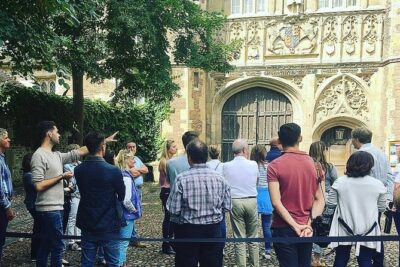
Cambridge University Walking Tour by Alumni™ Kings College Option
Read our review →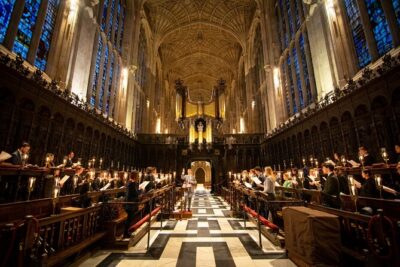
Cambridge University With Alumni: Optional Kings College Entrance
Read our review →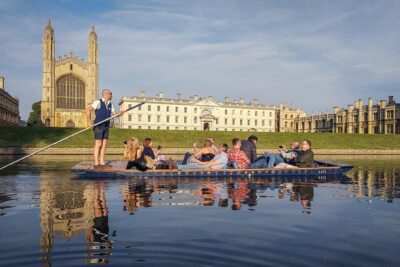
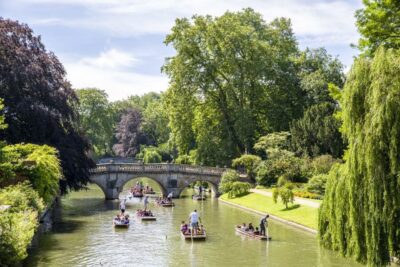
University Alumni Tour with Kings College Option
Read our review →
Alumni-Led Walking Tour w/ King’s College Option
Read our review →
Cambridge Walking & Punting Tour by Alumni™ King’s College Option
Read our review →Browse the lists this tour appears in