
Reviewed · CITY TOURS
Slave Trade Money Trail Tour in the City of London
London’s grandest buildings have difficult stories. This three-hour walking tour connects the City’s banks, insurers, shipping firms, and markets to the wealth created through the transatlantic slave trade and colonialism. Led by Darrel Blake, it offers a direct look at how slavery helped shape modern London.
I like the way the tour uses familiar landmarks rather than distant museums, and I value the tour booklet and physical artifacts that help turn a talk into something concrete. I also appreciate the guide’s clear, personal delivery. The main consideration is that this is a serious, emotionally demanding subject, not a light sightseeing walk, and the experience requires good weather.
In This Review
- Key points to know before booking
- Why this London walk changes familiar sights
- Starting at the Royal Exchange
- Bank and the financial machinery behind slavery
- Fenchurch Street and the shipping connection
- Lloyd’s of London and the cost of risk
- Borough Market and goods made through forced labor
- What Darrel Blake does particularly well
- Price, group size, and practical value
- Who should book this experience?
- Should you book the Slave Trade Money Trail Tour?
- FAQ
- Where does the tour start?
- What time does the tour begin?
- Where does the tour end?
- How long does the tour last?
- How much does the tour cost?
- Is the tour offered in English?
- Is lunch included?
- Is bottled water included?
- Can I cancel for a full refund?
Key points to know before booking
- Three hours from the Royal Exchange to Borough Market: The route links major financial and trading sites across the City and Southwark.
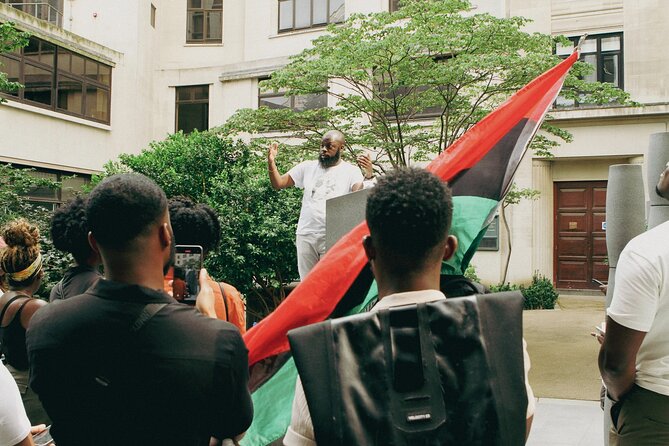
- Darrel Blake leads with passion and evidence: His style includes questions, memory checks, personal experiences, and artifacts.
- The Royal Exchange becomes a history lesson: You’ll look beyond its grand architecture to the commercial systems that supported the slave trade.
- Lloyd’s of London explains the role of insurance: The tour shows how ships, cargo, and human lives were financially protected and priced.
- Suitable for older children and history-minded families: One family attended with children aged 13 and 15, who took part in the discussion.
- Bring water and plan for weather: Lunch and bottled water are not included, and the tour can be canceled in poor weather.
Why this London walk changes familiar sights
The City of London is easy to admire at surface level. You see polished office towers, old churches, imposing stone facades, and narrow streets with names that hint at vanished trades. This tour asks you to stop and consider how money moved through those places.
Its central idea is simple but powerful: the transatlantic slave trade was not only a story of ships crossing the Atlantic. It depended on banks, insurers, merchants, investors, ports, manufacturers, and markets. London’s financial growth was tied to those systems from the 17th through the 19th centuries.
That approach gives you a more useful way to read the City. Instead of treating slavery as a remote subject connected only to plantations, you see how British institutions helped fund, insure, trade, and profit from goods produced by enslaved labor.
Darrel Blake’s teaching style is a major part of the experience. He presents information clearly, invites questions, and checks that you have understood what you just heard. The experience is not simply a speech delivered while you walk. It has a conversational quality, with moments that ask you to remember details and test the familiar version of British history.
That makes the tour especially valuable if you have visited London before. The buildings may be familiar, but the meaning changes when you learn who benefited from the money flowing through them.
A few more to weigh up in London
- Stonehenge, Windsor Castle, and Bath from London
★ 4.5 · 18,662 reviews - London Big Bus Hop-On Hop-Off Tour with Optional River Cruise
★ 3.5 · 10,803 reviews - London Small Group Tour of Historical Pubs
★ 5.0 · 10,422 reviews
Starting at the Royal Exchange
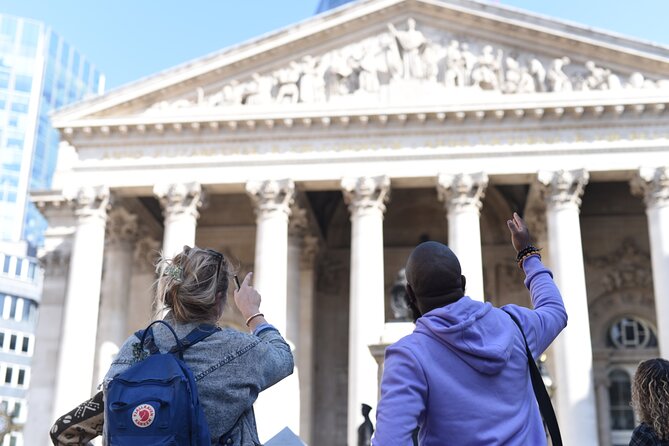
The meeting point is outside the Royal Exchange in the City of London, with a 12:00 pm start. It is a practical place to begin because the building immediately gives the tour a visual anchor. Its grand exterior reflects London’s commercial ambition, but the walk asks you to think about what powered that ambition.
The Royal Exchange was once a centre of London’s commercial life. Here, merchants and financiers helped connect trade, investment, and overseas enterprise. The tour explains how those networks supported the transatlantic slave trade and helped direct its profits into the British economy.
This stop takes about 20 minutes, enough time to establish the main themes without keeping you in one place too long. You’ll learn to separate the attractive architecture from the uncomfortable activity carried out through the commercial world it represents.
That contrast is one of the walk’s strengths. London often presents its historic buildings as symbols of progress and national success. The tour adds the missing question: progress for whom, and at whose expense?
If you arrive early, use the time to locate the exact Royal Exchange meeting point and prepare for an outdoor walk. The route begins in the City, where streets can feel crowded with office workers during the week. The subject matter rewards attention, so avoid treating this as background entertainment while checking your phone.
Bank and the financial machinery behind slavery
The first part of the route examines the Bank area of the City of London. In about 15 minutes, you’ll hear how financial institutions became connected to the transatlantic slave trade.
The important lesson here is that slavery required more than labor and ships. It also needed credit, investment, payment systems, and commercial relationships. Financial institutions helped make overseas trade possible and helped channel profits back into British businesses and estates.
For you, this section provides the framework for the rest of the tour. Without it, later stops could feel like a list of old companies and impressive buildings. With it, the walk becomes a story about a system, showing how separate institutions worked together.
The subject may be new even if you know London’s financial district well. One of the strongest points raised by the experience is that many people walk through the City without knowing which banks, firms, and streets were linked to slavery. The tour makes those connections visible.
This is also where the route begins to address social power. Money made through slavery did not simply disappear. It helped strengthen established wealth, influence, and class structures in Britain. The guide connects those economic gains to the growth of London and to inequalities that remain relevant today.
Fenchurch Street and the shipping connection
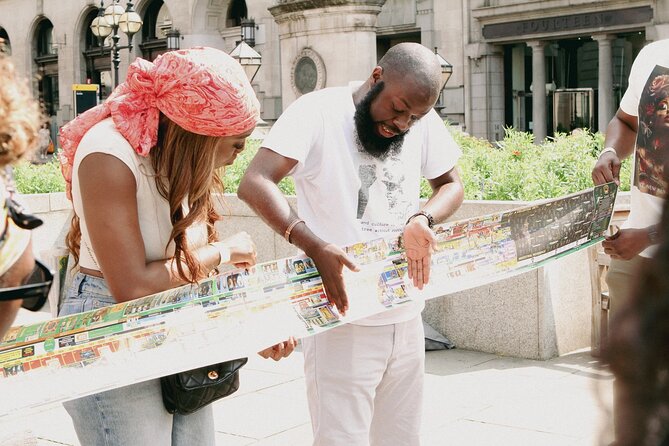
The longest stop is at 20 Fenchurch Street, where you spend about 50 minutes examining the area’s ties to shipping and the British economy.
This is likely the most detailed part of the walk. The subject expands from finance to the companies and commercial networks that helped move goods and people across the Atlantic. The area was once home to major firms that profited from this trade, placing the physical business of slavery close to the financial institutions discussed earlier.
The stop helps you understand that the trade was organized through ordinary-looking offices and respectable commercial names. That can be unsettling. It is easy to imagine slavery as something carried out by a small group of distant villains, but the tour shows how widely the profits and responsibilities were spread.
Darrel Blake uses proof, stories, and objects to make these links easier to grasp. His personal artifacts are an unusual part of the experience, giving the discussion a human dimension without turning the walk into a museum visit.
I also like the way the guide connects historical names with the actual record behind them. British history is often taught through celebrated figures and national achievements. This part of the tour asks you to place those achievements beside the money that financed them and the people who suffered to create that wealth.
Because this stop lasts nearly an hour, you should expect a substantial talk rather than a quick photo stop. If you prefer short commentary and constant movement, the pace may feel slow. For anyone who wants detail and discussion, it is likely the core of the experience.
A completely different sort of day out:
- Stonehenge, Windsor Castle and Bath with Pub Lunch in Lacock
★ 4.5 · 7,402 reviews - Tower of London and Crown Jewels Exhibition Ticket
★ 4.5 · 6,677 reviews - Thorpe Park Admission Ticket
★ 4.0 · 5,915 reviews - Stonehenge, Windsor Castle and Bath Full Day Guided Tour
★ 4.5 · 5,346 reviews
Lloyd’s of London and the cost of risk

At Lloyd’s of London, the walk focuses on insurance and the financial protection surrounding the transatlantic slave trade. The stop lasts around 20 minutes.
Insurance can sound dry, but here it reveals something important. Slave ships, cargo, and commercial ventures represented financial risks to the people who owned and financed them. Underwriting helped protect those investments, making the trade more manageable for people far from the violence itself.
The moral weight of this section comes from the cold language of finance. Human beings were treated as property within a system that assigned monetary value to their lives. Insurance helped turn that system into something that could be calculated, protected, and repeated.
You may find this stop especially useful if your understanding of slavery has focused mainly on plantations or abolition. It shows how institutions in London were connected to the trade without being physically near the people who endured it.
The building itself is another reminder that elegant architecture can carry grim associations. The tour does not ask you to ignore London’s beauty. Instead, it asks you to look at the city with both admiration and honesty.
Borough Market and goods made through forced labor
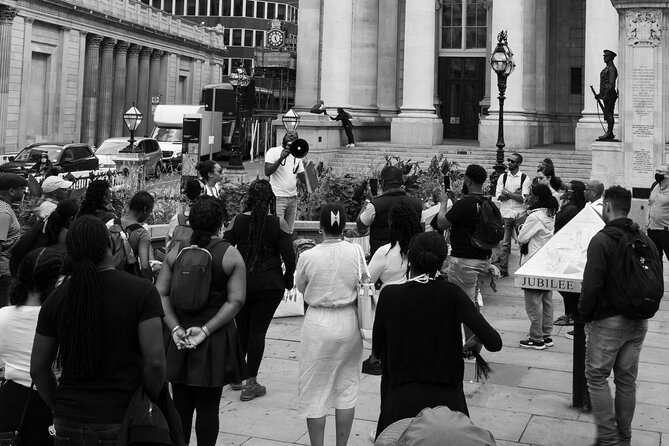
The route ends at Borough Market in Southwark. This final stop takes about 20 minutes and connects the historic market to goods such as sugar and tobacco, which were produced through enslaved labor.
Borough Market remains a popular food destination, so the setting creates a sharp contrast. You may be thinking about lunch, pastries, and produce while hearing how consumer goods helped link ordinary British life to exploitation overseas.
That contrast is deliberate and useful. The trade was not supported only by powerful merchants. Demand for sugar, tobacco, and other goods helped sustain the system. The market gives the story a daily-life angle, asking you to consider how consumption and profit were connected.
The tour ends here, rather than returning to the City. That makes planning simple if you want to continue exploring Southwark, but it also means you should think about your onward route. The end point is Borough Market, London SE1 9AL.
Admission to Borough Market is not included, though the tour itself takes place along public streets and landmarks. Lunch is also not included. You may want to eat before the tour or plan a meal afterward, but keep in mind that the market can be a difficult place to process the final subject matter while surrounded by food and shoppers.
What Darrel Blake does particularly well

The guide’s delivery receives the strongest praise for good reason. Darrel Blake combines clear explanations with personal energy, and he does not soften the subject simply to make it more comfortable.
His approach is direct but not careless. He encourages participation, asks questions, and checks that the group has followed the points being made. That helps keep a serious three-hour walk active, especially when the material becomes dense.
The use of artifacts adds another layer. A document or object can make an abstract financial connection feel real. Instead of hearing only about institutions, you get physical evidence to consider.
The guide also connects the past to modern London. The final message is not that slavery ended and the story stopped. The tour considers how historic wealth, social divisions, cultural identity, and present-day justice remain linked.
Personal connection matters here, too. One participant with Caribbean family roots described discovering how many City institutions were connected to the history of their ancestors. You do not need that background to benefit from the walk, but you may find the material particularly meaningful if you are exploring African or Caribbean heritage.
Price, group size, and practical value
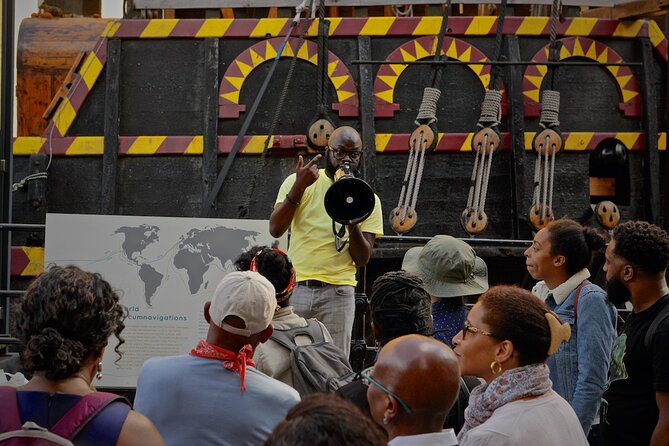
At $48.01 per person, this is not the cheapest way to spend three hours in London. You are not paying for entry to a famous attraction, transport, food, or bottled water. The price mainly covers the guide’s time, research, interpretation, and the booklet provided during the experience.
I think the value depends on what you want from a tour. If you want quick facts and postcard views, a free walk or self-guided route may suit you better. If you want a focused account of London’s economic links to slavery, with a guide who encourages questions and brings artifacts, the cost is easier to justify.
The group can contain up to 30 people. That is large enough to create energy and discussion, but it may limit personal attention if the maximum number books. The guide’s question-based format should help, though you may need to speak clearly and stay close enough to hear.
The tour is offered in English and uses a mobile ticket. It is near public transportation, and most people can participate. Service animals are allowed.
Wear sensible shoes and check the forecast. The experience takes place outdoors and requires good weather. If poor weather causes cancellation, you can choose another date or receive a full refund.
Free cancellation is available up to 24 hours before the 12:00 pm start. Canceling or changing the booking less than 24 hours ahead does not qualify for a refund.
Who should book this experience?
I would recommend this tour to history buffs, teachers, students, and anyone interested in social justice or human rights. It also suits people who want to understand London through its financial institutions rather than through royal palaces and famous paintings.
Families can consider bringing teenagers. The format has worked for children aged 13 and 15, particularly because the guide explains difficult ideas in an accessible way and gives the group chances to participate.
You should be ready for emotional material. The tour deals with exploitation, inherited wealth, racism, and the lasting effects of slavery. It is not designed to offer easy answers or a polished version of British history.
I would not choose it as a casual first-day London introduction if you want light sightseeing. The route has free admission at most stops, but the experience demands concentration and reflection. Plan something gentler afterward if you know the subject may affect you strongly.
Should you book the Slave Trade Money Trail Tour?
Book it if you want to understand how London’s wealth was built, not simply admire the buildings that remain. The strongest reason to go is Darrel Blake’s combination of evidence, personal experience, artifacts, and active discussion.
The route is practical, the price is fair for a specialist three-hour tour, and the subject fills a real gap in standard London sightseeing. Just arrive prepared for an outdoor walk, bring your own water, and give yourself time to think about what you have heard.
If your idea of a good tour is a cheerful overview of famous sights, choose something else. If you want a serious, eye-opening account of the financial networks behind the transatlantic slave trade, this is a worthwhile addition to your London plans.
FAQ
Where does the tour start?
The tour starts at the Royal Exchange, London EC3V 3LL, UK.
What time does the tour begin?
The scheduled start time is 12:00 pm.
Where does the tour end?
The tour ends at Borough Market, London SE1 9AL, UK.
How long does the tour last?
The experience lasts approximately three hours.
How much does the tour cost?
The listed price is $48.01 per person.
Is the tour offered in English?
Yes. The tour is offered in English.
Is lunch included?
No. Lunch is not included.
Is bottled water included?
No. You should bring your own water.
Can I cancel for a full refund?
Yes. You can cancel at least 24 hours before the start time for a full refund. Changes or cancellations made less than 24 hours before the start time are not accepted for a refund.
Just added in London
- Private Transfers between London & Windsor★ 5.0 · 9 reviews
- Private Transfer: Heathrow Airport to London Kings Cross or St Pancras Stations★ 5.0 · 3 reviews
- London to Southampton Transfers★ 5.0 · 7 reviews
- Private 3-hour Tour of The Iconic Tower of London & Tower Bridge★ 4.5 · 6 reviews
- London to Southampton Cruise Port | Private Transfer★ 5.0 · 6 reviews
- Private Tour to Westminster Abbey with optional Houses of Parliament in London★ 4.0 · 15 reviews
- Private Tours to Stonehenge & Oxford★ 4.0 · 4 reviews
- Private Tour to Stonehenge and Windsor Castle★ 5.0 · 11 reviews
City Tours, compared.


Liverpool City Sights Hop On Hop Off City Tour – 24hr Ticket
Read our review →
1.5-hour Oxford City and University Walking Tour
Read our review →
City Sightseeing London Hop-On Hop-Off Bus Tour & Bookable Extras
Read our review →
City Sightseeing Oxford Hop-On Hop-Off Bus Tour
Read our review →
Browse the lists this tour appears in