
Reviewed · SELF-GUIDED TOURS IN CAMBRIDGE
Scholars & Secrets of Cambridge: Self-Guided Puzzle Adventure
Cambridge rewards curious walkers. Scholars & Secrets of Cambridge turns a familiar city route into a private puzzle game, using riddles, GPS, and a secret-society story to guide you between famous colleges and old streets. I like the freedom to begin when you wish, pause for lunch, and continue without keeping up with a guide. I also like the low price, $8.68 per person, which makes this an easy add-on to a day in Cambridge.
The main catch is that the game depends on clear instructions and working clues. Some players found parts dull or confusing, and a few clues appeared outdated, including directions near Trinity College and references to objects that were no longer there. The route also focuses on a small central section of the city, so it works best as a light introduction rather than a full Cambridge tour.
In This Review
- Key points at a glance
- How the Cambridge puzzle adventure works
- Starting beneath the Corpus Clock
- King’s College and the limits of an outdoor game
- Gonville and Caius College: details reward careful looking
- Clare College and the occasional confusing clue
- Trinity College and the importance of checking directions
- St. John’s College and a shorter puzzle stop
- The Round Church adds a different shape to the route
- Christ’s College and the return to the center
- What the $8.68 price really buys you
- Who will enjoy this format most
- Timing, access, and practical advice
- Should you book Scholars & Secrets of Cambridge?
- FAQ
- Where does the Cambridge puzzle adventure start?
- Where does the activity finish?
- How long does the experience take?
- What time can I start?
- Do I need an internet connection?
- Is a tour guide included?
- Is this a private activity?
- Can I cancel for a full refund?
Key points at a glance
- A private Cambridge quest: Only your group takes part, with no guide and no strangers joining you.
- Eight central stops: The route links the Corpus Clock, King’s College, Gonville and Caius, Clare, Trinity, St. John’s, the Round Church, and Christ’s College.
- Flexible timing: You can start any time during the operating hours, stop when you like, and resume later.
- Offline smartphone play: You do not need an internet connection once the game is ready to play.
- Best for families and independent walkers: The riddles give younger visitors a reason to look closely at buildings and streets.
- A low-cost introduction: At $8.68 per person, the game costs far less than a traditional private walking tour, though it offers less explanation and no human guide.
How the Cambridge puzzle adventure works
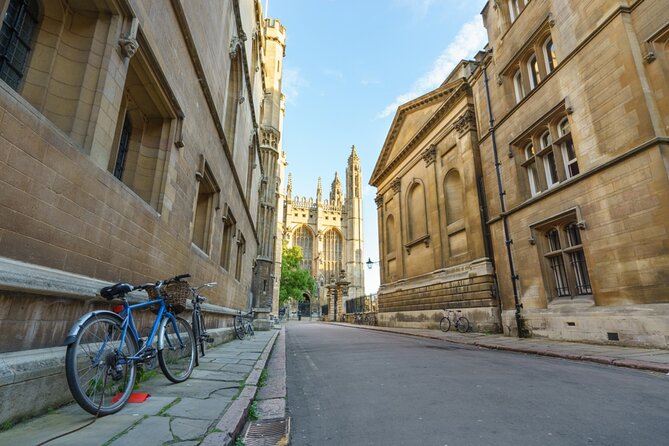
This is not a guided walk in the usual sense. You meet at the Corpus Clock on Trumpington Street, open the game on your smartphone, and follow a sequence of clues. Each answer points you toward the next location, where another puzzle or instruction continues the story.
The basic idea is simple: look around, solve a riddle, walk to the next spot, and learn a little about what you have found. GPS helps keep the activity tied to the city streets, but you still need to pay attention to signs, gates, statues, buildings, and other visible details.
I like this format for people who dislike rigid tours. You are not waiting for a group to gather or listening to a long lecture in one spot. You can take photographs, stop for coffee, or pause the game when Cambridge gets busy.
The tradeoff is just as clear. A guide can adjust an explanation, clarify a clue, or find another way around a closed entrance. An app cannot always do that. If your group gets stuck, the fun can fade quickly, especially when a clue seems vague or a landmark has changed.
The stated playing time is about one to two hours. Allow extra time if you stop to admire the colleges, take photographs, or pause for food. The listed stops add up to roughly an hour of suggested time, but the walking between them and the puzzle solving create the rest of the experience.
More Self-Guided Tours in Cambridge
- Private Self-Guided Dinky Door Hunt in Cambridge
★ 4.5 · 103 reviews - Former Student’s Cambridge Colleges: An Outdoor Audio Tour
★ 4.0 · 54 reviews - Cambridge’s History & Secrets with Self-Guided Walking Tours
★ 4.5 · 9 reviews
Starting beneath the Corpus Clock
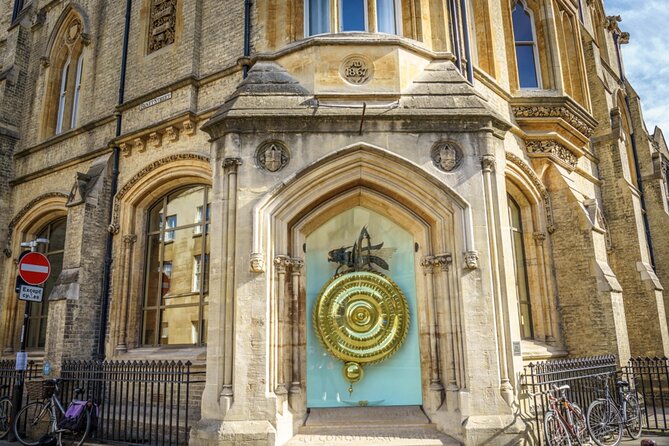
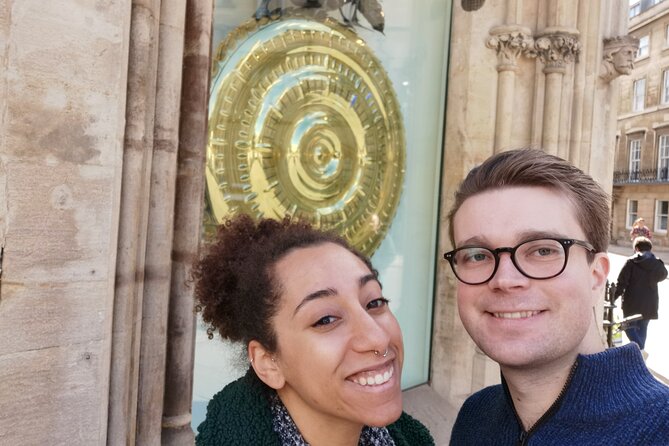
The Corpus Clock is an excellent starting point because it is unusual, visible, and free to view from the street. This large sculptural clock sits outside the Taylor Library at Corpus Christi College, at street level. You do not need to enter the college to begin.
The clock gives the game a strong opening image. It feels suitably mysterious for a story about a secret society, and its detailed design encourages you to stop and inspect it rather than simply walk past.
Plan on about 10 minutes here. You will need to read the opening instructions, study the surroundings, and solve the first clue. Because this is the meeting point and the final return point, take a moment to make sure you know where you are before starting.
The location is at 58 Trumpington Street, Cambridge CB2 1RH. It is near public transportation, which makes the start fairly practical if you are arriving from elsewhere in the city.
King’s College and the limits of an outdoor game
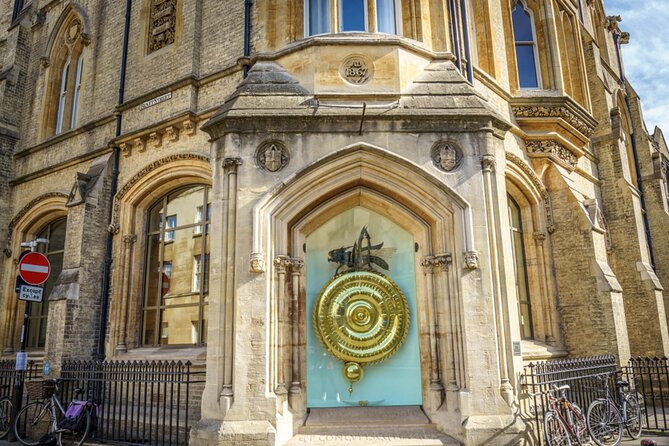
King’s College is one of Cambridge’s best-known sights, positioned beside the River Cam and facing King’s Parade. The exterior alone gives you plenty to look at, from the grand frontage to the relationship between the college and the central street.
The game allows about 10 minutes here. That is enough for a clue and a quick look, but not enough for an extended visit. You should expect to view the college as part of the public street route, not as a full college tour.
This distinction matters. The experience is designed for outdoor play, and admission to the listed stops is shown as free. That does not mean every interior or college area will be open to you. Access can depend on college rules, opening times, and current conditions.
One earlier experience of the game was affected by closed college grounds, with King’s College and other sites visible only from outside. That is not a flaw unique to this activity, but it is worth keeping in mind. If entering King’s College is a main goal, you should make a separate plan rather than rely on this puzzle walk.
Gonville and Caius College: details reward careful looking
Gonville and Caius College is the fourth-oldest college at Cambridge. The game gives you about 10 minutes to find the relevant detail, solve the clue, and continue.
This is where the format can work well. Instead of receiving a quick statement about the college from a guide, you are asked to notice something for yourself. Families and groups with teenagers may find that more engaging than simply following a flag through the city.
You should also expect the clues to vary in difficulty. Some can be solved by inspecting the location, while others may be guessed from the wording before you arrive. That can keep the pace moving, but it can also reduce the satisfaction of reaching a site if the answer is too obvious.
For the best experience, resist the urge to rush. Read every instruction twice, look around the full area, and only then enter your answer. The game is more enjoyable when you treat the route as a close-looking exercise rather than a race.
A completely different sort of day out:
- Cambridge University Walking Tour by Alumni™ Kings College Option
★ 5.0 · 2,336 reviews - Cambridge University With Alumni: Optional Kings College Entrance
★ 5.0 · 1,987 reviews - Punting Tour in Cambridge
★ 4.5 · 1,690 reviews - Cambridge: Guided River Cam Punting Tour
★ 4.7 · 1,469 reviews
Clare College and the occasional confusing clue
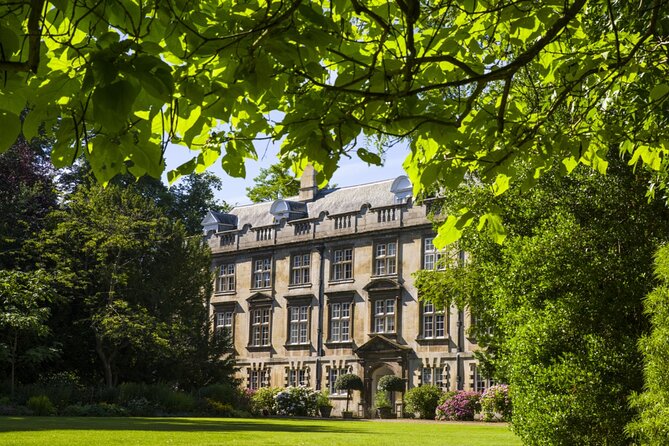
Clare College was founded in 1326 as University Hall and is the second-oldest surviving Cambridge college after Peterhouse. The stop is planned for about 10 minutes.
Clare is a good place for the game’s central idea because the college architecture, gates, and outdoor details give the puzzles something solid to work with. You get a short lesson about the place while also searching for the next step.
Still, one specific complaint about this section involved colored arrows at Clare that seemed to point upward without making their purpose clear. That kind of clue can be funny if the group is in the mood for trial and error. It can be irritating if you are already unsure what the app wants.
If your group includes a 15-year-old or another reluctant sightseer, the puzzle structure may help hold attention. The activity gives you a reason to examine college buildings rather than simply walk past them. Adults should be ready to offer hints and keep the mood relaxed if a clue does not land.
Trinity College and the importance of checking directions

Trinity College is the largest Cambridge college by undergraduate numbers, with about 600 undergraduates, 300 graduates, and more than 180 fellows. The game allows approximately five minutes here, so this is a brief puzzle stop rather than a long visit.
Because Trinity is such a major landmark, the stop carries extra weight. You may expect a clear route and a rewarding clue. Yet one past problem involved incorrect directions at the college gates, causing a group to abandon the game.
The lesson is practical: check the exact gate and read the instructions carefully before walking on. If the directions do not match what you see, do not keep wandering in frustration. Recheck the clue, confirm your GPS position, and look for the next instruction within the game.
This is also one of the places where access may differ from what you expect. The activity can take you to the college exterior without providing entry to the grounds. Treat Trinity as a sightseeing point on the route, not a guaranteed interior visit.
St. John’s College and a shorter puzzle stop
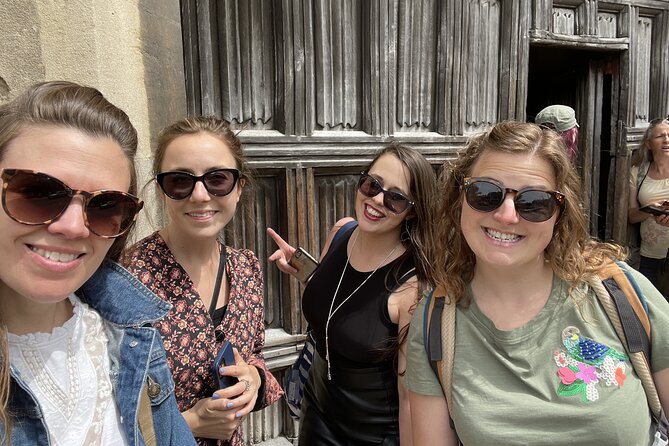
St. John’s College was founded by Lady Margaret Beaufort. The game gives this stop about five minutes, suggesting a quick observation and answer rather than a lengthy pause.
Short stops help the activity fit into a compact one to two-hour outing. They also keep the route from becoming a formal history lesson. You get a fact, a visual target, and a reason to keep walking.
The downside is that five minutes may feel rushed if you want to study the college properly. You will need to separate the puzzle’s goal from your wider sightseeing. Solve the clue, then decide if you want to linger before continuing.
I would treat the game as a framework for seeing Cambridge, not as your only source of information. Use the short stops to get oriented, then return to the places that catch your interest later.
The Round Church adds a different shape to the route
The Church of the Holy Sepulchre, better known as the Round Church, is an Anglican church in Cambridge. Its unusual circular form gives the puzzle route a welcome change from the repeated college gates and stone façades.
The stop is planned for about 10 minutes. You can expect another clue, a short explanation, and a chance to notice how this building differs from the university sites around it.
The Round Church also helps the route feel like a city walk rather than a college checklist. Cambridge is more than its university, and this stop broadens the focus slightly. You still do not receive a full church visit as part of the activity, so check conditions separately if seeing the interior matters to you.
Christ’s College and the return to the center
Christ’s College is the final named stop and receives about five minutes. As with St. John’s and Trinity, the short timing points to a compact clue rather than an extended tour.
By this stage, the story should have given your group a rhythm: reach a place, inspect the surroundings, solve the puzzle, and follow the next instruction. The final stages can feel satisfying if your group has stayed involved. If the earlier clues have seemed too easy or unclear, the ending may feel more like a route-finding task than a dramatic finish.
The activity ends back at the Corpus Clock meeting point. That is convenient because you do not need to arrange transport from a distant finish. It also makes the game easy to fit around other plans in central Cambridge.
What the $8.68 price really buys you
At $8.68 per person, this is inexpensive by the standards of private sightseeing. A group of several people can explore together without paying for a guide, and group discounts may reduce the cost further.
The value comes from structure. Cambridge is easy to walk around, but a puzzle gives your group a shared purpose. You are paying for the story, the route design, the clues, and the app rather than for admission or expert commentary.
That makes the price attractive for families, couples, and friends who want a little entertainment between other activities. It is also a sensible choice if you have already seen the main sights and want a different way to pass an hour or two.
The value is weaker if you want detailed history, flexible route changes, or guaranteed access inside the colleges. A traditional walking tour will usually offer more context and the ability to answer questions. This game gives you independence, but you supply the patience and problem-solving.
Who will enjoy this format most
I would recommend it most strongly to:
- Families who want to turn sightseeing into a game
- Couples or friends who enjoy riddles and light mystery
- Independent visitors who prefer not to join a scheduled group
- People with a short free window in central Cambridge
- Visitors who want an outdoor activity with no physical guide
- Groups looking for a low-cost introduction to the college quarter
You may want another option if your main interest is university history, interior access, or detailed architectural explanation. The route offers a taste of Cambridge, but it does not replace a full guided walk or college visit.
The game is also less suitable for anyone who dislikes using a phone while walking. One person may hold the phone while another reads the instructions, and unclear wording can make that arrangement awkward. Decide in advance who will manage the device and who will look for the visual clues.
Timing, access, and practical advice
The experience is listed as available daily from 8:00 a.m. to 9:00 p.m. You can start at any hour during that window, take a break, and resume later. That flexibility is one of its best features, especially if you are fitting Cambridge around meals, museum visits, or college opening times.
The game can be played offline, so you do not need a live internet connection during the activity. You should still make sure the game is ready on your phone before you set off, since the experience depends on the device.
No physical guide is included. The activity is private, and only your own group participates. Service animals are allowed, the start is near public transportation, and most people can take part.
The route is on foot and includes public streets around central Cambridge. Wear comfortable shoes and allow time for normal city walking. The listed stop times are estimates, not strict appointments.
Free cancellation is available if you cancel at least 24 hours before the local start time. Cancellations within 24 hours are not refunded, and late changes are not accepted.
Should you book Scholars & Secrets of Cambridge?
Book it if you want a cheap, flexible, private city game and your group enjoys solving clues. The secret-society theme, central college route, offline play, and freedom to pause make it a practical choice for families and independent visitors.
Be cautious if you expect polished directions at every stage or a full account of Cambridge’s history. The game has had problems with unclear instructions, overly easy clues, missing objects, and outdated directions. Those issues can spoil the mood if your group is not patient.
My advice is to choose this as a playful introduction, not the main event. It works best when you are happy to laugh at a stubborn clue, check the surroundings carefully, and accept that the colleges may be viewed from outside. At $8.68, the risk is small, and the format could make a familiar Cambridge walk more engaging.
FAQ
Where does the Cambridge puzzle adventure start?
It starts at the Corpus Clock, located at 58 Trumpington Street, Cambridge CB2 1RH, UK.
Where does the activity finish?
The activity ends back at the Corpus Clock meeting point.
How long does the experience take?
The estimated duration is one to two hours, depending on your walking pace, puzzle-solving speed, and breaks.
What time can I start?
The experience is listed as available every day from 8:00 a.m. to 9:00 p.m.
Do I need an internet connection?
No. The game can be played offline, so you do not need an internet connection during the activity.
Is a tour guide included?
No physical tour guide is included. The experience is played through a smartphone.
Is this a private activity?
Yes. Only your group participates, with no other groups added to your game.
Can I cancel for a full refund?
Yes, if you cancel at least 24 hours before the experience start time. Cancellations within 24 hours are not refunded.
Just added in Cambridge
- Explore Cambridge Student Life & Top Colleges Walking Tour★ 3.5 · 18 reviews
- Tangential Cambridge: Group Walking Tour of Sights and Highlights★ 5.0 · 79 reviews
- Town Food Tour in Saffron Walden★ 5.0 · 32 reviews
- Private Custom Tour With a Local Guide In Cambridge★ 5.0 · 2 reviews
- Fun, Flexible Treasure Hunt Around Cambridge with Cryptic Clues & Hidden Gems★ 5.0 · 142 reviews
- Cambridge University Ghost Tour by Alumni™★ 5.0 · 117 reviews
- Welcome to Cambridge: Private Tour including King’s College Chapel★ 5.0 · 1 review
- Private | Cambridge University Colleges Guided Punting Tour★ 4.5 · 13 reviews
Self-Guided Tours in Cambridge, compared.
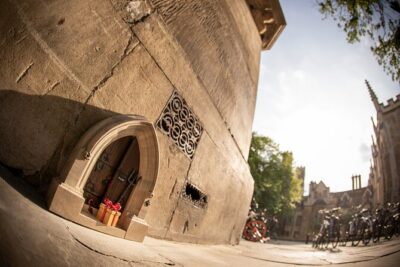
Private Self-Guided Dinky Door Hunt in Cambridge
Read our review →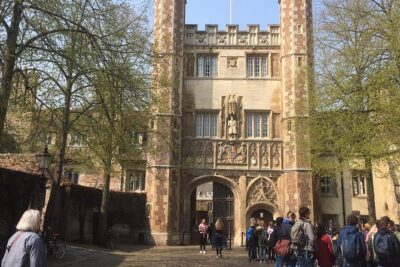
Former Student’s Cambridge Colleges: An Outdoor Audio Tour
Read our review →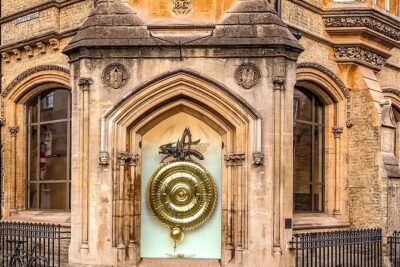
Cambridge’s History & Secrets with Self-Guided Walking Tours
Read our review →
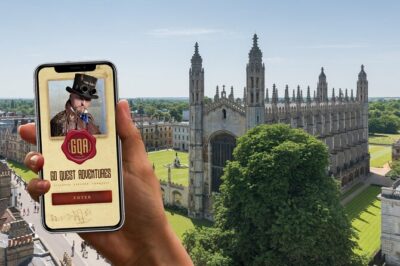
Cambridge Quest: Self Guided City Walk & Immersive Treasure Hunt
Read our review →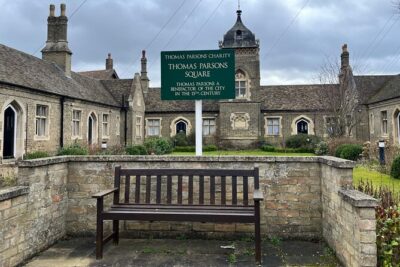
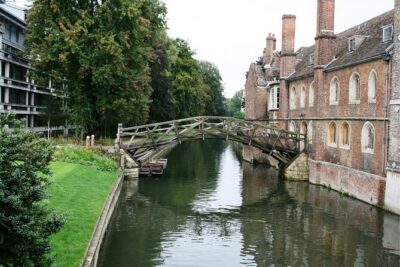
Cambridge Scavenger Hunt and Highlights Self-Guided Tour
Read our review →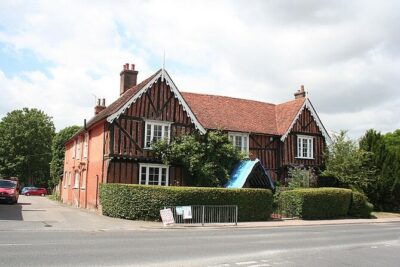
The Stories behind the Village Green: A Self-Guided Audio Tour in Long Melford
Read our review →Browse the lists this tour appears in