
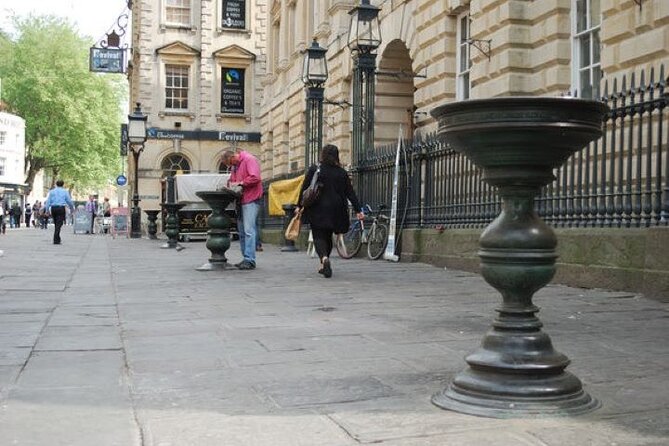
Reviewed · CITY TOURS
Guided Walking Tour of Bristol Old City and Harbour
Bristol reveals itself best on foot. This 2-hour-15-minute walk links the city’s cathedral, docks, Old City, street art, churches, bridges, and historic trading quarters, giving you a useful first look at Bristol rather than a quick march past one landmark. Guide Mike leads a maximum of eight people, so the outing feels personal and questions are easy to ask.
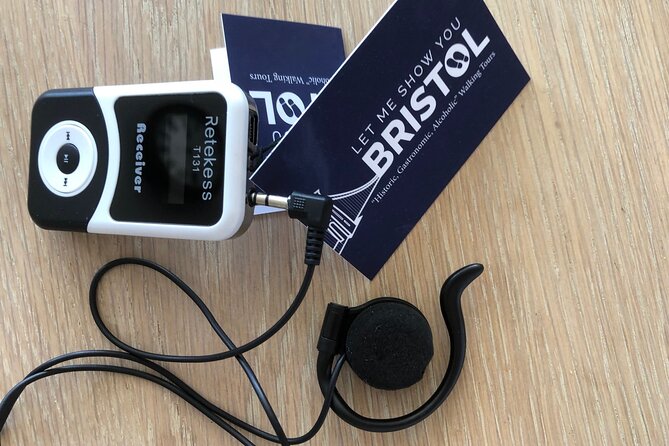
I especially like the small group and the supplied audio receivers. You can hear Mike in busy streets without clustering around him, and his supporting pictures and drawings help explain how Bristol changed over time. The main drawback is the pace: some people call it leisurely, while others describe it as fast and covering roughly 12,000 steps. Comfortable shoes are not optional.
In This Review
- Key points to know before booking
- Starting at College Green and Bristol Cathedral
- Canon’s Marsh and the working docks
- Bristol City Docks and Pero’s Bridge
- Prince Street Bridge, M Shed, and the Matthew
- Bathurst Basin and Bristol’s difficult stories
- Queen Square and the route around the harbour
- Bristol Old Vic, King Street, and Welsh Back
- Baldwin Street and the Saxon roots of Bristol
- St John on the Wall and the surviving city gate
- Edward Colston’s statue and the return to College Green
- What the guide adds to the experience
- Pace, equipment, and physical effort
- Is $29.86 good value?
- Who should book this walk?
- Final verdict: book it for a smart first look at Bristol
- FAQ
- Where does the Bristol Old City and Harbour tour start?
- What time does the tour begin?
- How long does the walking tour last?
- How large is the tour group?
- Are audio receivers provided?
- What should I bring?
Key points to know before booking
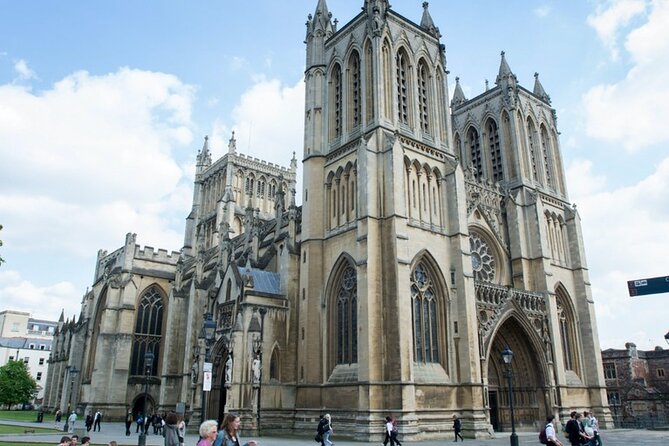
- A compact route with wide coverage: In just over two hours, you move from College Green and Bristol Cathedral through the harbour, Queen Square, King Street, Baldwin Street, and the Old City.
- Limited to eight people: The small group makes it easier to hear the guide, ask questions, and adjust the conversation to your interests.
- Audio receivers are included: This is a major help near roads, docks, and busy public areas.
- History reaches into the present: The route covers Saxon Bristol, medieval defenses, merchant buildings, shipping, social change, Banksy, and modern street art.
- Mike adds personal detail: His stories include Bristol residents, local buildings, historic images, and practical suggestions for places to explore after the walk.
- Bring water and wear good shoes: The tour is not difficult in a technical sense, but it covers a large central area on foot.
Starting at College Green and Bristol Cathedral
The meeting point is outside the Bristol Marriott Royal Hotel on College Green, with a 2:00 pm start. This is a practical place to begin because Bristol Cathedral is close by, and you quickly move into the city’s central story.
The first stop takes in Bristol Cathedral, St Marks, the Council House, Park Street, and other buildings around the green. You have about 10 minutes here, so do not expect an interior tour or a long architectural study. Instead, Mike uses the setting to establish how central Bristol developed and how its civic, religious, and commercial buildings relate to one another.
The nearby Well Hung Lover street-art piece adds a modern twist to the opening section. The route’s interest comes from this mix of old stone and newer art. You are not being shown a city preserved under glass. You are seeing a place where older buildings, public life, and street art share the same streets.
More Walking Tours in Bristol
- Blackbeard to Banksy – The Ultimate Walking Tour of Bristol
★ 5.0 · 1,961 reviews - Air Raid Shelter + St. Nicholas Market Walking Tour
★ 5.0 · 1,950 reviews - Ghosts, Ghouls & Gallows :The Original Bristol Ghost Walk
★ 5.0 · 262 reviews
Canon’s Marsh and the working docks
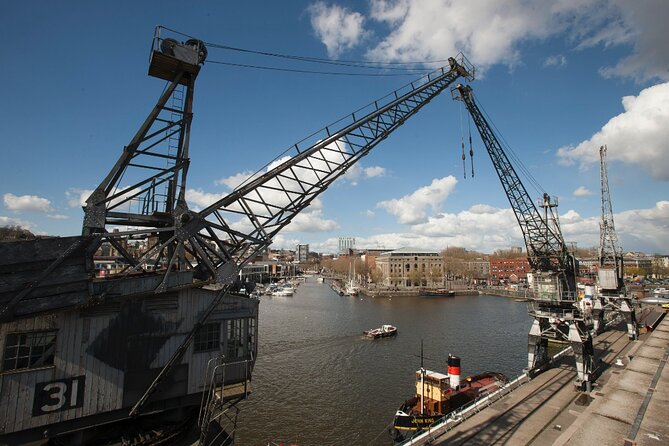
From the cathedral area, the walk heads toward Canon’s Marsh. The stop includes Oporto Quay, Limekiln Dock, cranes, and shipping, with time to look at the working character of the harbour.
This part is useful because it helps you understand Bristol as a port city rather than simply a collection of attractive streets. The cranes and dock spaces give context to the city’s trade and movement. Mike also explains how the waterfront fits into Bristol’s wider story, including the changes that have shaped the modern centre.
You should pay attention to the walking transitions here. The formal stops are short, often around 10 minutes, but the route between them is where the tour connects separate parts of the city. If you prefer long pauses for photographs, you may find the schedule a little tight.
Bristol City Docks and Pero’s Bridge
The next section follows the city docks toward the medieval trench and crosses Pero’s Bridge to Arnolfini. The walk gives you changing views of the water, old dock edges, and newer cultural buildings.
Pero’s Bridge is one of the route’s memorable crossings, and Arnolfini provides a clear example of how the harbour area has taken on a cultural role. The medieval trench, meanwhile, points back to an earlier Bristol, before the waterfront became the public promenade and arts district you see today.
This is one of the places where the audio receiver earns its keep. You can look around, take in the water, and still hear the explanation without standing shoulder to shoulder with the guide. It is a small piece of equipment, but it makes a real difference on a walking tour.
Prince Street Bridge, M Shed, and the Matthew
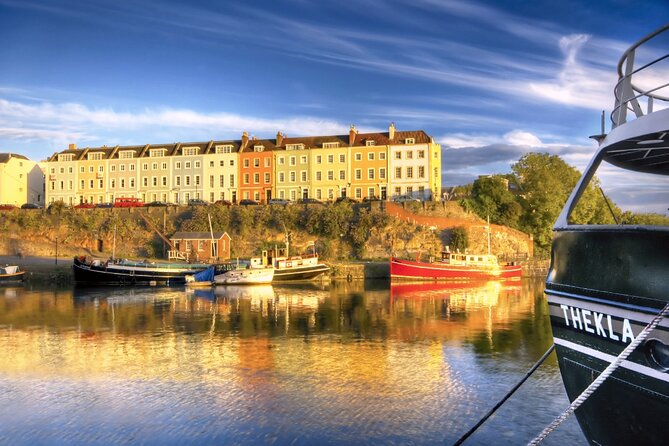
At Prince Street Bridge, the route opens up several important harbour sights. You see the M Shed, the Matthew, Container Village, and the remains of an old prison.
The value here is variety. In one short stretch, you encounter museum space, a ship, reused containers, and prison ruins. Mike connects these sights to Bristol’s past and present rather than treating them as isolated photo stops. The walk is particularly good for getting a sense of the harbour’s scale and its changing uses.
You will not be entering the M Shed or the Matthew as part of the tour, and admission to attractions is not included because the experience is an outdoor guided walk. That is not a serious weakness if your goal is orientation. In fact, I think the route works well early in a Bristol visit, since you can decide which places deserve a separate visit later.
A completely different sort of day out:
- (9pm) The House Magicians Comedy & Magic Show – Smoke & Mirrors
★ 5.0 · 356 reviews - West Country Games – the most popular group activity in the South West!
★ 5.0 · 315 reviews - The House Magicians’ Comedy Magic Show at Smoke & Mirrors in Bristol (Sat 7pm)
★ 5.0 · 296 reviews - The House Magicians Comedy Magic Shows
★ 5.0 · 263 reviews
Bathurst Basin and Bristol’s difficult stories
Bathurst Basin brings you to the Old Mill Pond, Guinea Street, Redcliffe Church, and houses linked with slave captains. The route also points out the home featured in A House Through Time.
This is an important section because Bristol’s past is not presented as a simple sequence of grand buildings and famous residents. Trade, wealth, social change, and difficult parts of the city’s story appear alongside the architecture. The stop encourages you to look at ordinary streets and homes as historical evidence, not just the major landmarks.
Redcliffe Church adds another layer, while the old mill pond helps explain the practical workings of the waterfront. You get a better sense of how people lived and worked around the docks, even though the stop itself is brief.
The subject matter may require attention rather than passive sightseeing. Mike’s strength, judging from the tour description and feedback, is his ability to connect dates, places, and people in a way that keeps the story moving.
Queen Square and the route around the harbour
The tour then works around the docks toward Queen Square. You see the King William statue, the American Consulate, and the Spy Glass Inn, associated with Treasure Island.
Queen Square changes the mood. Its open space and formal layout contrast with the tighter lanes and industrial edges of the dock area. The route gives you a chance to see how Bristol’s public spaces reflect different periods of the city’s growth.
The Treasure Island connection adds a literary note without turning the walk into a separate literary tour. Mike also takes questions, and the small group allows the conversation to move toward subjects that interest you. Previous participants have found this useful when asking about art, local history, and places to visit after the walk.
Bristol Old Vic, King Street, and Welsh Back
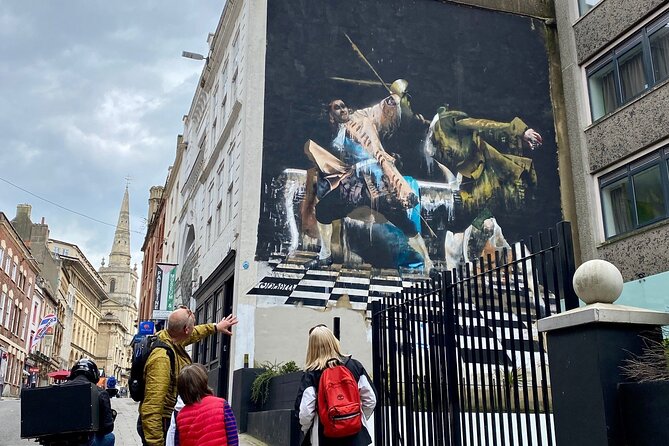
From Queen Square, the route continues to Bristol Old Vic, King Street, and Welsh Back. This is another compact section, with roughly 10 minutes set aside for the main sights.
The Old Vic and King Street offer a strong look at Bristol’s cultural and civic life. Welsh Back returns you to the waterfront, but from a different angle than the earlier dock stops. By now, the route is showing you how closely Bristol’s theatre district, trading streets, and water routes sit together.
I like this part because it helps you build a mental map. Bristol can feel scattered when you first arrive, with hills, docks, broad squares, and narrow lanes pulling you in different directions. Walking from one area to another with a guide makes the centre easier to understand.
Baldwin Street and the Saxon roots of Bristol
Baldwin Street is the gateway to the Old City portion of the tour. Here, Mike explains the origins of Bristol as a Saxon settlement before leading you toward Castle Park and the older commercial quarters.
The route then takes in churches, law courts, merchants’ trading haunts, the Corn Exchange, and the Nails and guild meeting places. These details are especially useful because they show how the Old City functioned. You are not just looking at attractive façades. You are learning where business was conducted, where agreements were made, and how civic life was organized.
This section is packed with names and dates, so the audio system and Mike’s visual aids matter. His use of old photographs, drawings, or other supporting material helps you compare the present street with earlier versions of Bristol.
The tradeoff is density. There is a lot to absorb in a short time. If you enjoy a fast-moving history lesson, this will be a highlight. If you want to enter every church or examine each building at length, you will need to return independently.
St John on the Wall and the surviving city gate
At St John on the Wall, you walk through one of the remaining Old City gates. The stop also includes the conduit and nearby street art.
This is a fine example of what the tour does best. A single passage links Bristol’s defenses, water supply, historic street plan, and modern public art. The city’s older boundaries are easier to understand when you physically pass through one of the surviving gates.
The street art keeps the story current. Bristol is closely associated with Banksy, and the tour points you toward murals and other works rather than limiting the experience to formal monuments. You should not expect a complete Banksy tour, but art is woven into the wider route in a way that feels natural.
Edward Colston’s statue and the return to College Green
The final stop is the statue of Edward Colston, along with the cenotaph, before the tour returns to the Marriott Royal Hotel.
This ending gives the walk a serious civic note. After seeing Bristol’s docks, merchants’ houses, trading buildings, and public squares, you finish by considering how the city remembers its past. The stop is brief, but its place on the route makes sense because the tour has already introduced many of the people, businesses, and systems that shaped Bristol.
Returning to the original meeting point is convenient. You are not left in an unfamiliar part of town, and you can use the route as a guide for planning the rest of your afternoon or the following day.
What the guide adds to the experience
Mike is the main reason this tour feels more substantial than a simple landmark walk. He brings strong local knowledge, remembers dates and names, and explains Bristol with clear enthusiasm. His manner is described as friendly, funny, and easy-going, but he also seems willing to adjust the conversation to the group.
That flexibility matters. One outing continued beyond the advertised two hours when the group was enjoying the discussion. Another was adapted when a participant experienced a health problem. Those details suggest a guide who pays attention to people rather than delivering a fixed speech at all costs.
Mike also gives practical suggestions for the rest of your stay. Advice about the Clifton Bridge area, pubs, restaurants, and other places can help you turn the walk into a useful first-day briefing.
Pace, equipment, and physical effort
The tour is listed at about 2 hours 15 minutes, though it can run closer to two and a half hours. Ten-minute stops are common, with Queen Square receiving about 15 minutes. The rest of the time is spent walking between locations and listening to commentary.
Descriptions of the pace vary. Some people find it relaxed, while another specifically warns that it is fast and that you need to keep up. The guide has also joked about reaching 12,000 steps. I would plan for a steady, fairly active walk rather than a gentle stroll.
Wear comfortable shoes with reliable soles. Bring water, and dress for the day’s weather. The tour requires good weather, and if conditions force a cancellation, you are offered another date or a full refund.
The audio receivers are one of the best practical features. Each participant receives one, allowing you to hear Mike clearly in busy areas. The maximum group size of eight adds to that benefit and makes it easier to stop for questions.
Is $29.86 good value?
At $29.86 per person, the tour offers solid value if you want a guided introduction to central Bristol. You are paying for more than a route between landmarks. The price includes a local guide, a carefully linked walk through several districts, audio equipment, historic visual material, and suggestions for further exploring.
There are no attraction admissions included, but the itinerary is built around exterior sights and public spaces. That keeps the cost down and lets you choose later which museums or buildings deserve your own admission fee.
The strongest value comes on a first visit. In a little over two hours, you see enough of the harbour and Old City to get your bearings, identify places you want to revisit, and understand the basic shape of Bristol. People who already live in the city can also find value here, especially if they want more context for familiar streets.
Who should book this walk?
I would recommend it to first-time visitors who want history, architecture, harbour views, and street art in one outing. It also suits returning visitors who want a better explanation of Bristol’s development and the stories behind buildings they may have passed before.
It is a good choice for curious families, couples, solo visitors, and small groups who prefer conversation over a large headset crowd. The English-only format is clear, and service animals are allowed. The tour is near public transport, and most people can participate, but the walking distance and steady pace should guide your decision.
I would look elsewhere if you want long indoor visits, a slow photography walk, or a tour focused only on Banksy. This experience gives you a broad, connected view of Bristol, not an exhaustive stop at every attraction.
Final verdict: book it for a smart first look at Bristol
I would book this tour early in a Bristol stay, especially if you want an efficient introduction before exploring on your own. Mike’s enthusiasm, the small group, and the audio receivers make the route more useful than a standard walk-by sightseeing tour.
Book it if you are happy to walk steadily, listen closely, and cover a lot of ground. Skip it if you need frequent rest stops or want to spend most of the afternoon inside attractions. For everyone else, $29.86 buys a well-organized introduction to Bristol’s harbour, Old City, art, buildings, and complicated past.
Free cancellation is available up to 24 hours before the 2:00 pm start for a full refund. Changes made within 24 hours are not accepted, and cancellations caused by poor weather or an insufficient minimum group are handled with an alternative date or refund.
FAQ
Where does the Bristol Old City and Harbour tour start?
The tour starts at the Bristol Marriott Royal Hotel on College Green, Bristol BS1 5TA, UK.
What time does the tour begin?
The scheduled start time is 2:00 pm.
How long does the walking tour last?
The advertised duration is approximately 2 hours 15 minutes. It may last closer to two and a half hours depending on the group and discussion.
How large is the tour group?
The maximum group size is eight people.
Are audio receivers provided?
Yes. Audio receivers are included so you can hear the guide clearly during the walk.
What should I bring?
Wear comfortable shoes, bring water, and wear clothing suited to the weather. Coffee and tea are not included.
Just added in Bristol
- Wine & Cheese in the Somerset Valleys – with Michelin-star lunch!★ 5.0 · 12 reviews
- Fun, Flexible Treasure Hunt Around Bristol with Cryptic Clues & Hidden Gems★ 5.0 · 101 reviews
- Guided Walking Tour Suspension Bridge Clifton Splendour & City.★ 5.0 · 100 reviews
- Bristol’s Brilliant Pubs: A Self-Guided GPS Audio Tour of the Old City★ 5.0 · 1 review
- 2 Hours Private Walking to Bristol Cider Tour with Cheese★ 5.0 · 1 review
- Brunel Guided Tour in Bristol★ 5.0 · 4 reviews
- Avon Gorge Rock Climbing Experiences★ 5.0 · 21 reviews
- Sip and Paint Parties★ 5.0 · 5 reviews
City Tours, compared.


Liverpool City Sights Hop On Hop Off City Tour – 24hr Ticket
Read our review →
1.5-hour Oxford City and University Walking Tour
Read our review →
City Sightseeing London Hop-On Hop-Off Bus Tour & Bookable Extras
Read our review →
City Sightseeing Oxford Hop-On Hop-Off Bus Tour
Read our review →
Browse the lists this tour appears in