Reviewed · LONDON TOURS
Castles, Crusaders, Communists & Courts
London rewards curiosity. This tour takes you beyond the usual sights, linking Smithfield, Clerkenwell, and Fleet Street through stories of executions, saints, plague victims, crusaders, communists, and courtroom drama. I like the unusual route and the way it connects places that most visitors pass without a second glance.
I also like that this is a private tour, with only your group and an in-person guide. The one drawback is its price: at $241.08 per person, it makes the most sense for people who value personal guiding and small, offbeat stops rather than a cheap overview of central London.
In This Review
- Key points at a glance
- Why this tour feels different from standard London sightseeing
- St. Paul’s Cathedral and the Old Bailey
- The Viaduct Tavern and the dark side of Fleet Street
- William Wallace at Smithfield
- St. Bartholomew the Great and a crusader’s vision
- Charterhouse Square and London’s plague pits
- The Knights of St John at Clerkenwell
- The Crown Tavern, Lenin, Stalin, and Dickensian Clerkenwell
- Ely Place and the odd boundaries of London
- Lincoln’s Inn, one of central London’s quietest great squares
- Finishing at the Royal Courts of Justice
- Price, private guiding, and what you receive
- Who should book this London walk?
- Should you book Castles, Crusaders, Communists & Courts?
- FAQ
- How long is the tour?
- What time does the tour begin?
- Where does the tour start?
- Where does the tour finish?
- Is this a private tour?
- Is admission included at every stop?
- Is public transport included?
- Is the tour suitable for people with limited mobility?
- Can I cancel for a full refund?
Key points at a glance
- William Wallace’s execution site: See the place where the Scottish hero associated with Braveheart met his end at Smithfield.
- A real plague pit: Charterhouse Square sits beside one of London’s major known plague pits, with a recently unearthed skeleton connected to the Black Death.
- Knights of St John history: Enter the old gatehouse and view part of the order’s collection of weapons and armor.
- Lenin and Stalin in Clerkenwell: Visit the Crown Tavern, linked to the first meeting between the two future communist leaders.
- London’s quiet legal quarter: Walk through Ely Place and Lincoln’s Inn, two refined spaces that feel far removed from nearby streets.
- Private guiding with Stephen: The guide’s personal storytelling is central to the tour, especially for visitors who want places beyond the standard sightseeing circuit.
Why this tour feels different from standard London sightseeing
Many London walking tours gather around Westminster, Tower Bridge, or the City’s major monuments. This one follows a less obvious line through the western City of London and Clerkenwell, finishing near the Royal Courts of Justice. Its subject matter is unusually broad, but the route has a clear theme: power, punishment, faith, disease, politics, and law.
You will not simply collect famous landmarks. You will see the places behind the stories. A pub may connect to public executions. A quiet square may cover a plague burial ground. A handsome legal garden may hide centuries of religious and political change.
That makes the guide especially important. The buildings and lanes do not always explain themselves. You need someone to point out what happened there, what has changed, and why a plain-looking corner matters.
The tour is listed at about three hours. That is enough time to cover the main stops without turning the day into a full walking marathon, though you should still expect to be on your feet and moving through central London streets. A moderate level of physical fitness is recommended.
The route also suits repeat visitors particularly well. If you have already seen St. Paul’s Cathedral from the outside, walked Fleet Street, and visited the major royal sights, this gives you a different view of the city.
A few more to weigh up in London
- Stonehenge, Windsor Castle, and Bath from London
★ 4.5 · 18,662 reviews - London Big Bus Hop-On Hop-Off Tour with Optional River Cruise
★ 3.5 · 10,803 reviews - London Small Group Tour of Historical Pubs
★ 5.0 · 10,422 reviews
St. Paul’s Cathedral and the Old Bailey
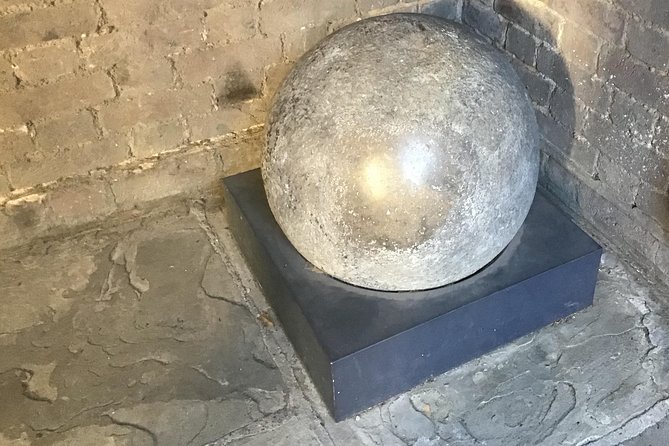
The tour includes a short look at St. Paul’s Cathedral, one of London’s great religious landmarks. The present cathedral is the latest in a long line of sanctuaries on this site, with religious use reaching back before Roman times.
The stop is brief, around ten minutes, and admission is not included. That timing matters. You should think of St. Paul’s as a starting point for the story rather than a cathedral visit. If you want to climb the dome, explore the interior, or see the crypt, plan a separate visit.
From there, the route connects London’s religious past with its legal past at the Old Bailey. This court is famous for major criminal cases and is described as the oldest court in the Western world. The planned stop is only about five minutes, so you will mainly hear context and view the building rather than attend a court session.
Do not expect courtroom access. Admission is not included, and the tour does not promise entry. The value here is the setting and the stories attached to it.
The Viaduct Tavern and the dark side of Fleet Street
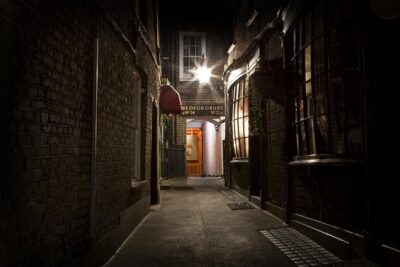
The Viaduct Tavern provides one of the tour’s more atmospheric stops. The pub is known for jail cells beneath it, where prisoners supposedly awaited their fate before public execution nearby.
The connection to Charles Dickens adds another layer. Dickens repeatedly used London’s poverty, prisons, courts, and execution culture in his writing, and this stop helps you picture the grim city behind the grand Victorian facades.
The visit lasts around five minutes, and drinks or food are not included. You may be able to look at the pub as part of the guided stop, but you should not treat it as a scheduled refreshment break.
This is a good example of the tour’s style. You are not spending an hour inside a museum. Instead, you are being shown a physical place and given the story that makes it memorable.
William Wallace at Smithfield
The William Wallace Memorial marks the place where Wallace was executed in 1305. The Scottish resistance leader became famous to modern audiences through the film Braveheart, but the real event was far more brutal than any cinematic version.
The memorial stop is short and admission is free. The point is not a long museum presentation. It is the chance to stand at the site and understand how Smithfield functioned as a place of public punishment.
That setting helps correct a common London mistake. Visitors often see the city as a collection of polished monuments, but its past also includes public executions, disease, poverty, and harsh justice. This tour is willing to spend time on that less comfortable side.
If you have a strong interest in medieval Scotland or Wallace, the five-minute stop may feel too short. If you enjoy seeing the exact places behind major events, it is a powerful pause.
A completely different sort of day out:
- Stonehenge, Windsor Castle and Bath with Pub Lunch in Lacock
★ 4.5 · 7,402 reviews - Tower of London and Crown Jewels Exhibition Ticket
★ 4.5 · 6,677 reviews - Thorpe Park Admission Ticket
★ 4.0 · 5,915 reviews - Stonehenge, Windsor Castle and Bath Full Day Guided Tour
★ 4.5 · 5,346 reviews
St. Bartholomew the Great and a crusader’s vision
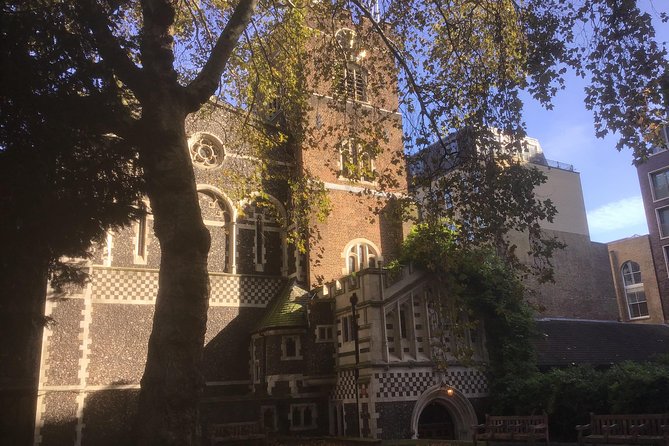
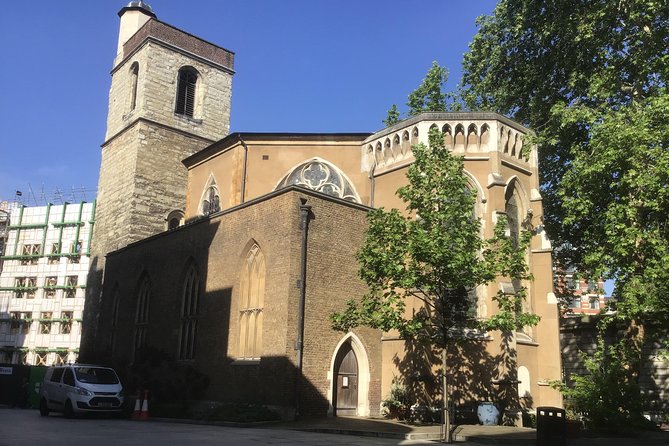
St. Bartholomew the Great is one of the tour’s main highlights. This ancient church is closely linked to the foundation of one of the world’s oldest hospitals and to the story of a crusader who reportedly had a vision of a saint in the Holy Land.
The church has also appeared in films, which may make it familiar even if you have never visited. More important, it lets you see how medieval religious foundations shaped the surrounding area.
You receive about fifteen minutes inside, with admission included. That is a welcome change after the brief exterior stops. The guide can tie the church to nearby places created through the same religious encounter, giving the story a broader setting.
I would pay close attention here. A church can seem like another old building if you only photograph the doorway, but its foundation story gives the surrounding streets a clear connection to crusading, charity, hospitals, and medieval faith.
The stop may be less satisfying if you want a long, quiet church visit. Fifteen minutes is enough for an introduction, not a full architectural study.
Charterhouse Square and London’s plague pits
Charterhouse begins as a religious story and turns sharply toward disease and death. The area started as a priory and lies beside one of London’s largest known plague pits.
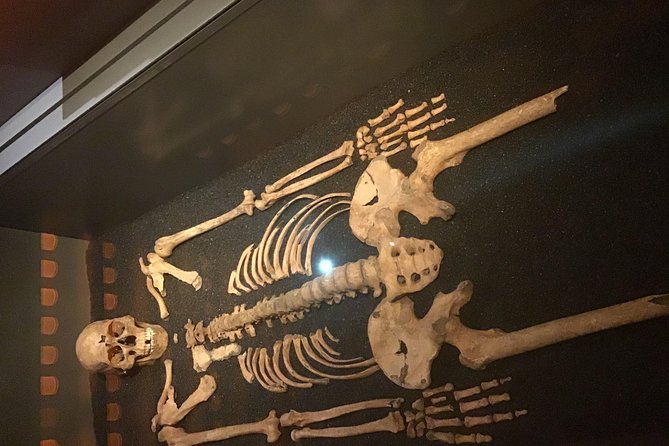
You will see Charterhouse Square and hear about the burial ground created during the Black Death. The tour also includes a recently discovered skeleton associated with a plague victim. That detail gives the subject a direct, human scale. This is not just a date in a history book. It is evidence of an individual who lived through one of Europe’s worst disasters.
The stop takes about fifteen minutes and is free. The subject matter can be unsettling, especially for children or anyone uncomfortable with human remains. Still, it is one of the most memorable parts of the route because it brings London’s crowded medieval past into the present.
Charterhouse also shows how dramatically the city can change. A quiet square and historic buildings now occupy ground connected to mass death. You can walk from a refined church setting into a place shaped by catastrophe within minutes.
The Knights of St John at Clerkenwell
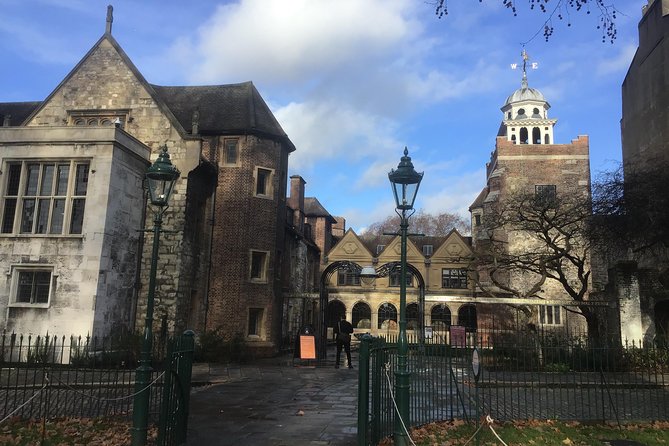
The Museum of the Order of St John brings the crusader theme back into focus. The old gatehouse belonged to the Knights of St John, the religious military order associated with the Crusades.
The visit includes a quick look inside at weapons, armor, and other items from the order’s collection. Admission is free, and the stop lasts about fifteen minutes.
This is another place where a guide adds real value. The order’s name, symbols, and buildings can be difficult to understand without explanation. A short visit works well as part of a walking route, though anyone fascinated by military orders may want more time than the schedule allows.
The tour does not promise a full museum visit. Think of it as a focused introduction to a surviving piece of Clerkenwell’s medieval past.
The Crown Tavern, Lenin, Stalin, and Dickensian Clerkenwell
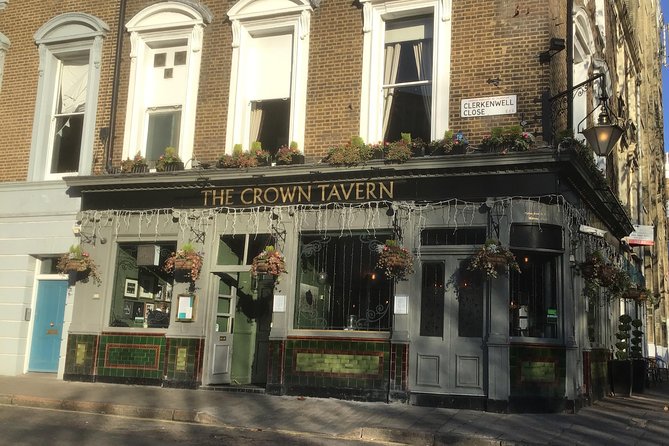
Clerkenwell gives the tour its strongest political and social contrast. In the nineteenth century, the district was known for severe poverty and helped inspire some of Charles Dickens’s writing.
The Crown Tavern adds a striking political footnote. It is associated with the first meeting between Lenin and Stalin, long before they became central figures in Soviet history.
The stop lasts only about five minutes, and any food or drink is not included. If you want to sit down in the pub, you would need to arrange that separately. The short visit is enough to identify the building and hear the story, but not enough for a leisurely meal.
I like this part because it links ordinary streets to world politics. The same district that housed people in dreadful poverty also became a meeting place for two men who helped shape the twentieth century.
Nearby, the Marx Memorial Library continues Clerkenwell’s communist connection. It is a working institute, and the stop is brief. Admission is not included, so you should expect an exterior or introductory look rather than a long research visit.
This section of the tour is especially useful if you enjoy political history but do not want a formal lecture. The stories are rooted in specific pubs, streets, and institutions.
Ely Place and the odd boundaries of London
Ely Place provides a welcome change of mood. It is a beautiful old street connected to a royal wedding and to a terrible act by Henry VIII.
It also has an unusual legal and administrative identity. Technically, it forms part of Cambridgeshire despite being in the middle of London. That kind of boundary oddity is exactly the sort of detail you can easily miss when walking alone.
The stop lasts about ten minutes and is free. It is less about entering a major attraction and more about noticing how old privileges and boundaries survived inside a modern capital.
After the darker stories of executions, plague, and poverty, Ely Place gives the route a calmer visual pause. You can appreciate the street itself while hearing how royal power and ancient jurisdictions shaped London.
Lincoln’s Inn, one of central London’s quietest great squares
Lincoln’s Inn is the longest stop on the tour, at about twenty-five minutes. That is appropriate because there is more to see here than at many of the quick street-side stops.
The square is described as the largest in London, though it is rarely visited by tourists. It includes handsome halls, a chapel, gardens, and the buildings of one of the great Inns of Court.
This is likely to be one of the tour’s strongest moments for anyone who enjoys architecture and quiet urban spaces. The gardens and old buildings offer a sharp contrast with the traffic and crowds of central London.
You should not assume that every interior will be open. The tour includes the square and its surroundings, but the published details do not promise full access to the halls or chapel. Still, the setting alone gives you a better sense of London’s legal quarter.
Lincoln’s Inn also helps the tour reach its final subject: the law. After seeing punishment from the outside, you arrive in the district where lawyers, judges, and legal institutions have worked for centuries.
Finishing at the Royal Courts of Justice
The route ends at the Royal Courts of Justice, near the end of Fleet Street and on the border between the City of London and the City of Westminster.
The building is one of London’s grand court complexes, but the scheduled stop is only about five minutes. Admission is not included, and the experience does not promise a court tour.
The meeting information also lists the Royal Courts of Justice as the start and end point, just outside the building and a short walk from Temple Underground Station. Since the route description begins with the City and Smithfield sights, I would confirm the exact walking order and meeting instructions with the operator before setting out. That is a small practical point, but it prevents confusion on a busy London morning.
The starting time is listed as 9:30 a.m. The operator has also suggested later starts around 10:30 or 11 a.m. at times, particularly to avoid rush hour. Ask about the current start time when you book.
Price, private guiding, and what you receive
At $241.08 per person, this is not a bargain walking tour. The price needs to be judged against the private format, the three-hour duration, and the number of unusual places packed into the route.
Only your group participates, so you can ask questions, adjust the pace within reason, and spend more time on subjects that interest you. That is valuable at sites such as Charterhouse, St. Bartholomew’s, and Lincoln’s Inn, where a personal explanation adds much more than a quick photograph.
The tour includes an in-person guide. Tube travel before or after the tour is not included, and admission is not included at several stops. St. Bartholomew the Great is listed with admission included, while several other locations are viewed briefly or from outside.
The strongest praise centers on the private, insider feel. One especially enthusiastic response describes the tour as a way to reach overlooked places with no tourist crowds and singles out the guide, Stephen. That is the clearest reason to book: you are paying for access to an unusual route and personal storytelling, not for a long list of included tickets.
Group discounts are offered, and the tour is available with a mobile ticket. Free cancellation is available if you cancel at least 24 hours before the start time.
Who should book this London walk?
I would recommend it most strongly to:
- Repeat visitors who have already seen London’s major landmarks
- People interested in medieval religion, the Crusades, plague, executions, communism, or legal history
- Couples, families, or small groups who prefer private guiding
- Visitors who enjoy narrow lanes and overlooked buildings more than large attractions
- Anyone who wants a story-led walk through several different periods of London history
I would hesitate if you want a low-cost introduction to London, a long indoor museum visit, or extensive time inside St. Paul’s Cathedral and the Royal Courts of Justice. The tour moves quickly between many subjects, and several stops last only five minutes.
You should also be comfortable walking for roughly three hours. Service animals are allowed, and the route is near public transport, but a moderate physical fitness level is advised.
Should you book Castles, Crusaders, Communists & Courts?
Book this tour if you want London with the labels removed. You will see famous names such as St. Paul’s, Fleet Street, William Wallace, Lenin, Stalin, and the Knights of St John, but the real pleasure comes from the smaller streets and lesser-known buildings connecting them.
The value is strongest for a private group that wants a guide such as Stephen to explain what it is seeing. At $241.08 per person, the cost is hard to justify for a casual first-time visitor on a tight budget. For a history-minded visitor seeking an unusual three-hour route, it offers a thoughtful look at London’s darker, stranger, and more human side.
FAQ
How long is the tour?
The tour lasts approximately three hours.
What time does the tour begin?
The listed start time is 9:30 a.m. The operator has also suggested later starts around 10:30 or 11 a.m. to help avoid rush hour, so confirm the current time when booking.
Where does the tour start?
The meeting point is outside the Royal Courts of Justice at Stop M, London WC2A 2LL, a short walk from Temple Underground Station.
Where does the tour finish?
The Royal Courts of Justice is listed as both the start and end point.
Is this a private tour?
Yes. Only your group and the guide will participate.
Is admission included at every stop?
No. Admission is included at St. Bartholomew the Great. Several other stops list admission as not included or involve free exterior access.
Is public transport included?
No. Tube travel before or after the tour is not included.
Is the tour suitable for people with limited mobility?
A moderate level of physical fitness is recommended. The supplied details do not provide a full accessibility assessment, so contact the operator with specific mobility questions before booking.
Can I cancel for a full refund?
Yes, if you cancel at least 24 hours before the experience start time. Cancellations or changes made less than 24 hours before the start are not refunded.
Just added in London
- Private Transfers between London & Windsor★ 5.0 · 9 reviews
- Private Transfer: Heathrow Airport to London Kings Cross or St Pancras Stations★ 5.0 · 3 reviews
- London to Southampton Transfers★ 5.0 · 7 reviews
- Private 3-hour Tour of The Iconic Tower of London & Tower Bridge★ 4.5 · 6 reviews
- London to Southampton Cruise Port | Private Transfer★ 5.0 · 6 reviews
- Private Tours to Stonehenge & Oxford★ 4.0 · 4 reviews
- Private Tour to Stonehenge and Windsor Castle★ 5.0 · 11 reviews
- Private Tour to Westminster Abbey with optional Houses of Parliament in London★ 4.0 · 15 reviews
London Tours, compared.
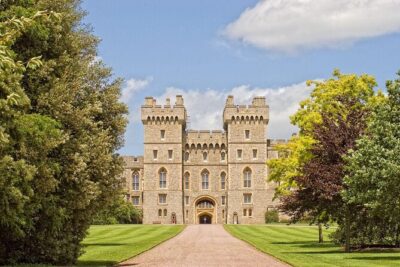
Stonehenge, Windsor Castle, and Bath from London
Read our review →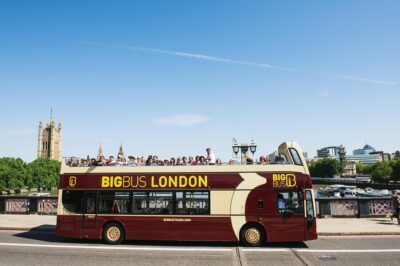
London Big Bus Hop-On Hop-Off Tour with Optional River Cruise
Read our review →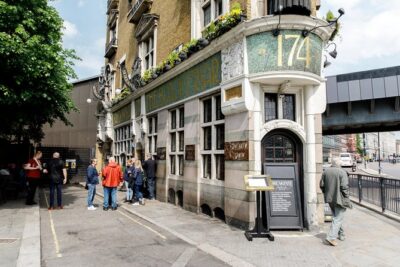

Stonehenge, Windsor Castle and Bath with Pub Lunch in Lacock
Read our review →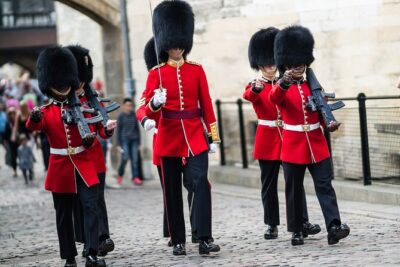
Tower of London and Crown Jewels Exhibition Ticket
Read our review →
Stonehenge, Windsor Castle and Bath Full Day Guided Tour
Read our review →
Windsor Castle, Stonehenge, and Oxford Day Trip from London
Read our review →